Manual Forklifts
Source manual forklifts directly from vetted suppliers and manufacturers across Asia. Designed for importers, industrial distributors, and brands requiring OEM or private-label production, our network delivers reliable material handling equipment at scale. Secure competitive wholesale pricing and consistent quality for your bulk orders.
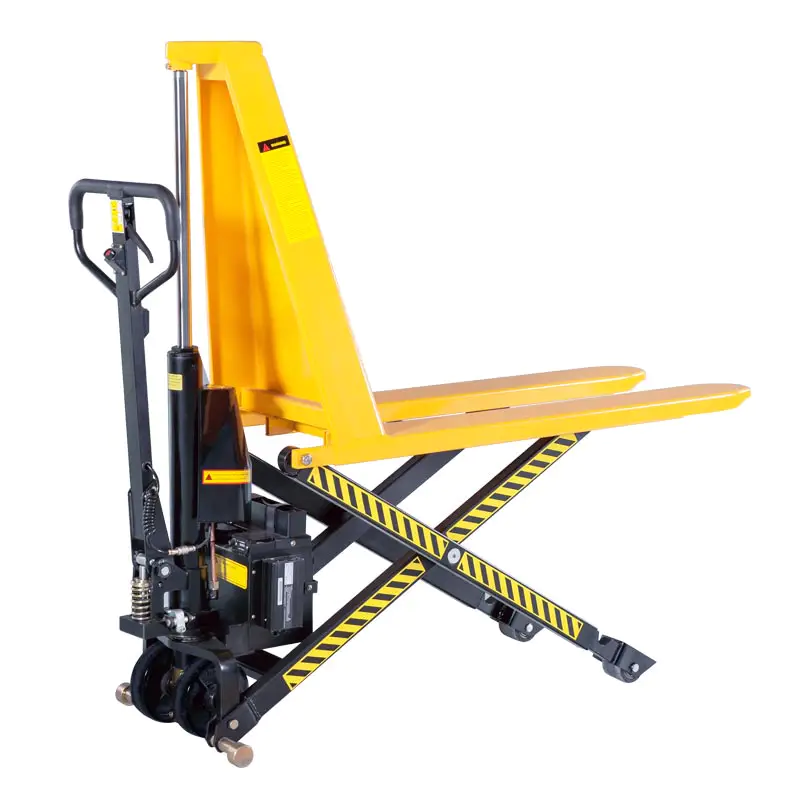
Manual forklifts—often referred to as manual hydraulic stackers or hand pallet stackers—are the backbone of low-volume, short-distance material handling in warehouses and retail stockrooms. Sourcing these units in bulk requires navigating a highly fragmented supplier base where outward appearances are identical, but internal hydraulic and structural integrity vary wildly. Relying solely on spec sheets can lead to importing units that suffer from premature hydraulic failure or dangerous mast deflection under heavy loads.
Core Specifications and Structural Integrity
When evaluating a manufacturer's manual stacker, the difference between a durable unit and a fast-failing one lies in the steel profile and the hydraulic pump assembly. Professional buyers must dictate these specifications rather than accepting the factory's default configuration.
The mast is the most critical structural component. Standard light-duty stackers often use basic C-channel steel, which is prone to warping if the operator frequently handles off-center loads. Heavy-duty applications require thickened C-channel or I-beam construction to minimize deflection at maximum lift heights (typically up to 3.0 meters).
| Component | Standard Duty | Heavy Duty |
|---|---|---|
| Mast Profile | Basic C-channel steel | Thickened C-channel or I-beam |
| Hydraulic Pump | Welded steel body | Integrated cast iron |
| Wheel Material | Solid Nylon | Polyurethane (PU) on iron core |
| Fork Design | Fixed width | Adjustable forged forks |
The hydraulic pump is the engine of a manual forklift. Cheaper welded pumps are highly susceptible to oil leaks at the seams after repeated use. Integrated cast iron pumps, while slightly more expensive, eliminate these weak points and offer significantly longer service lives.
Need help identifying manufacturers that use genuine cast pumps and structural-grade steel? Let us vet your supply chain.
Talk to our teamManufacturing Quality and Defect Prevention
Quality is won or lost on the factory floor, specifically in the welding and hydraulic assembly stations. Inconsistent weld penetration at the mast base can lead to catastrophic failure, while poor sealing in the hydraulic cylinder causes "load drop"—where the forks slowly lower on their own under weight.
Implementing rigorous quality control and inspection protocols before shipment is non-negotiable for material handling equipment.
Critical Factory Inspection Points
- Hydraulic pressure retention: The unit must hold its maximum rated load for 24 hours with zero millimeter drop.
- Mast deflection measurement: Checking for permanent deformation after lifting maximum capacity to full height.
- Weld penetration: Visual and sometimes ultrasonic inspection of the fork carriage and mast base welds.
- Powder coating thickness: Ensuring adequate rust prevention, particularly for units used in humid environments.
For distributors looking to build a brand, factories offer extensive OEM/ODM services. This goes beyond custom paint colors (RAL matching) to include stamped logos on the chassis, custom instructional decals, and customized fork lengths for specific regional pallet standards (such as EURO or CHEP pallets).
Pricing, MOQ, and Lead Times
The manual forklift manufacturing hub in China is heavily concentrated in Zhejiang (specifically Ningbo and Hangzhou) and Hebei provinces. Pricing is primarily driven by the cost of raw steel and the quality of the hydraulic pump.
Because these are heavy, bulky items, shipping them efficiently requires strategic container loading. A standard 20ft container can typically hold around 30 to 45 manual stackers, depending on the mast height and whether they are shipped fully assembled or with the forks detached. Conducting thorough factory audits ensures your chosen supplier has the actual capacity to meet your volume requirements and load containers safely to prevent transit damage.
Looking to optimize your container loads and secure better wholesale pricing? Speak to our sourcing experts.
Get a free consultationFrequently Asked Questions
Sourcing manual forklifts in bulk is an exercise in risk management. By specifying integrated cast pumps, demanding structural-grade steel for the mast, and strictly enforcing pre-shipment load testing, you can build a reliable product line that minimizes after-sales headaches.
Get Sourcing Help for Manual Forklifts
Tell us your requirements and our experts will connect you with verified manufacturers.