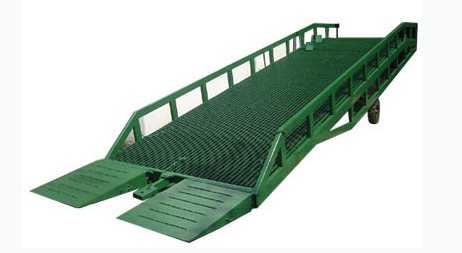
Loading Ramps, Plates & Boards
Source commercial-grade loading ramps, dock plates, and bridge boards directly from vetted manufacturers. Designed for importers, industrial distributors, and brands seeking reliable bulk supply or OEM production. Secure competitive pricing, strict quality control, and scalable manufacturing for heavy-duty material handling equipment.
Sourcing loading ramps, dock plates, and bridge boards at scale requires strict adherence to metallurgical standards and load-bearing geometries. A failure in a dock board is not just a product defect; it is a severe workplace safety hazard. For volume buyers, the challenge lies in finding manufacturing partners who combine certified welding processes with consistent, traceable raw materials, rather than those who simply compete on raw metal weight.
Material Specifications and Structural Integrity
The core of any loading plate or ramp is its material composition. Industrial applications demand high yield strength to withstand dynamic impact loads from forklifts and pallet jacks.
| Material Profile | Typical Yield Strength | Weight Characteristic | Primary Application |
|---|---|---|---|
| Aluminum (6061-T6) | 35,000 to 40,000 psi | Lightweight (Portable) | Hand trucks, delivery vans, light pallet jacks |
| Aluminum (6005-T5) | 35,000 psi | Medium (Extruded) | Walk ramps, modular staging |
| High-Carbon Steel | 50,000+ psi | Heavy (Requires forklift to move) | Heavy-duty dock boards, high-capacity forklifts |
When developing private-label equipment, specifying the exact alloy and temper is critical. A common factory shortcut is substituting 6061-T6 aluminum with lower-grade 6063, which machines easily but lacks the necessary tensile strength for heavy dynamic loads. If you are utilizing OEM/ODM Services for custom ramp designs, mandate material test reports (MTRs) for every batch of raw extrusion.
Manufacturing Processes and Factory Verification
The structural failure of a ramp typically occurs at the weld seams or hinge points, not the primary plate. Evaluating a factory's fabrication capabilities is essential before committing to a volume order.
Critical Manufacturing Checkpoints
- Welding Automation: Look for robotic MIG/TIG welding to ensure consistent penetration and bead uniformity.
- Welder Certification: Manual welders must hold valid certifications (e.g., AWS D1.2 for aluminum) to prevent porosity and cold welds.
- Deck Profiling: Anti-slip diamond tread or punched traction patterns must be deep enough to perform in wet conditions without compromising structural thickness.
- Edge Beveling: Leading edges must be precisely machined to ensure smooth transitions and prevent tire damage on material handling equipment.
Relying solely on a supplier's claimed capacity is a risk. Conducting comprehensive Factory Audits ensures the facility has the in-house machinery—such as heavy-duty press brakes and automated extrusion saws—to maintain tight tolerances across production runs.
Need to verify a manufacturer's welding certifications and load-testing capabilities?
Talk to our teamLoad Testing and Quality Control
Stated weight capacities must be backed by empirical testing. A standard dock board rated for 10,000 lbs must typically withstand a static load significantly higher than its working limit to account for dynamic impact (the force of a forklift braking or accelerating on the incline).
Effective Quality Control & Inspection for loading equipment should include:
- Deflection Testing: Measuring how much the board bows under its maximum rated load and ensuring it returns to true flat when the load is removed.
- Weld Penetration Checks: Ultrasonic or dye penetrant testing on critical load-bearing joints.
- Dimensional Verification: Ensuring the width, length, and crown angle match the approved CAD drawings exactly.
Sourcing Mechanics: Pricing, MOQs, and Logistics
Loading equipment is highly sensitive to commodity pricing, specifically global aluminum and steel indices.
Because ramps and dock boards are bulky, shipping empty air destroys margins. Factories must optimize nesting and stacking in containers. Utilizing professional Shipping & Freight consolidation ensures that custom steel racks or specialized palletizing are used to maximize container space without scratching or warping the products in transit.
Struggling with high freight costs for bulky material handling equipment?
Get a free consultationProcuring industrial loading equipment requires balancing raw material costs with non-negotiable safety standards. By strictly controlling the extrusion quality, enforcing rigorous weld inspections, and optimizing container loading, buyers can secure highly competitive landed costs without compromising end-user safety.
Get Sourcing Help for Loading Ramps, Plates & Boards
Tell us your requirements and our experts will connect you with verified manufacturers.