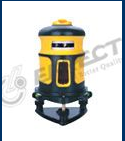
Laser Levels
Source high-precision laser levels directly from vetted manufacturers and suppliers. This catalog is built for importers, hardware distributors, and tool brands seeking reliable wholesale and custom OEM production. Find bulk pricing on professional-grade rotary, line, and point laser leveling tools.
Sourcing laser levels at scale requires balancing delicate optoelectronic precision with rugged, job-site durability. For importers and distributors buying in volume, the primary challenge lies in verifying that a manufacturer's stated accuracy holds up after international shipping and under real-world conditions, rather than just on a controlled factory testing bench.
Core Specifications and Diode Selection
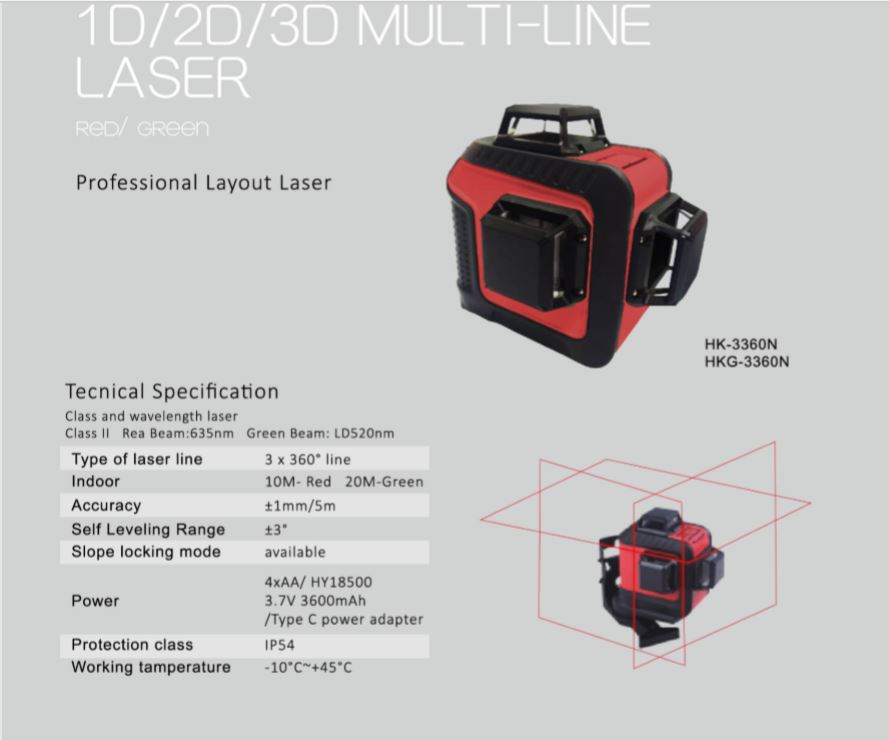
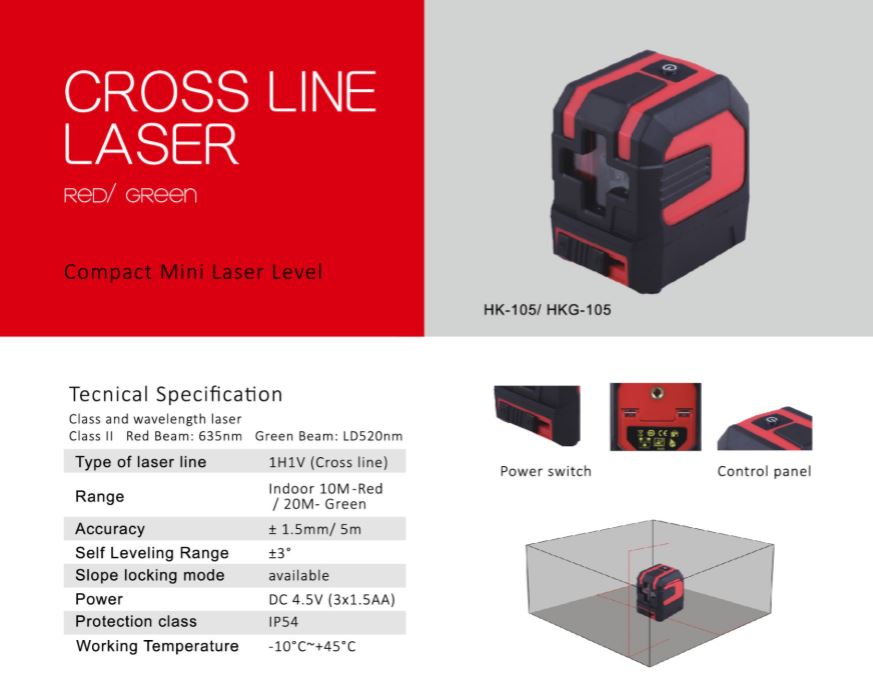
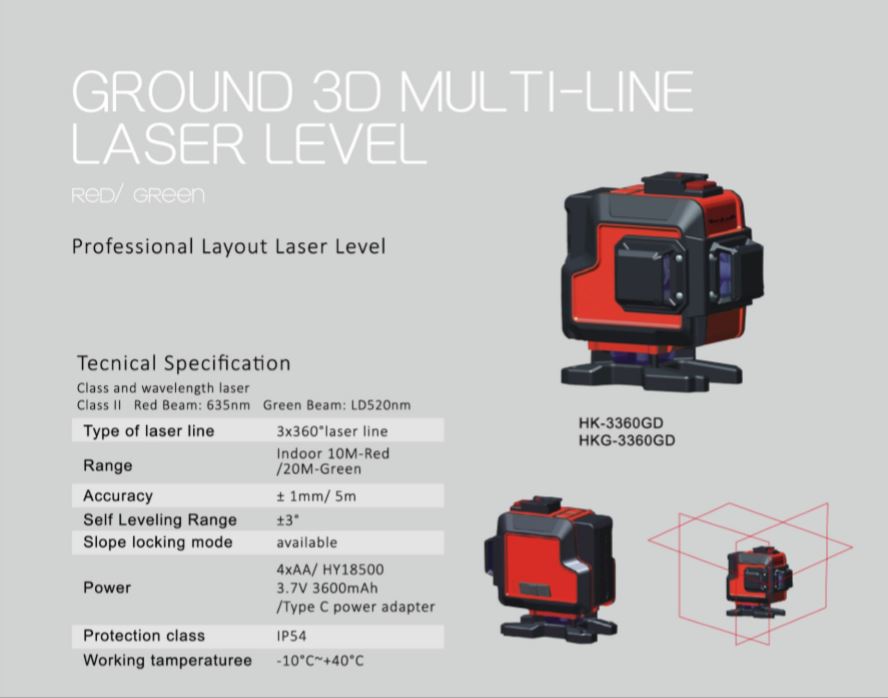
The heart of any laser level is its diode, which dictates visibility, power consumption, and overall unit cost. The industry has largely shifted toward green diodes for professional applications, though red diodes remain viable for entry-level or indoor-specific SKUs. When evaluating a supplier, their choice of diode component—often sourced from established brands like Osram or Sharp versus generic alternatives—is a primary indicator of product lifespan and thermal stability.
| Specification | Green Diode (505-532nm) | Red Diode (630-670nm) |
|---|---|---|
| Visibility | High (up to 4x brighter to the human eye) | Standard (best for indoor use) |
| Power Consumption | Higher (requires robust Li-ion solutions) | Lower (often runs on standard AA) |
| Thermal Output | Higher (requires better heat dissipation) | Minimal |
| Typical Cost | Premium | Economical |
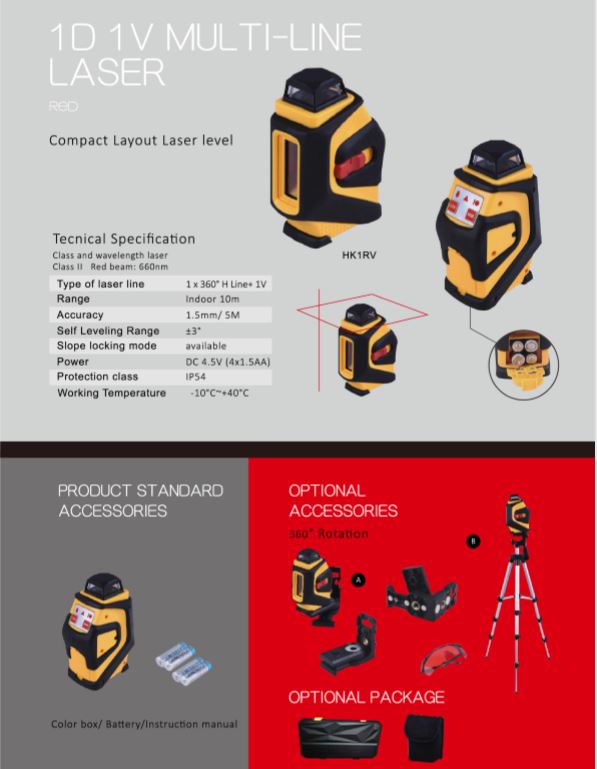
Beyond the diode, buyers must specify the self-leveling mechanism. Most commercial units utilize a magnetic dampened pendulum system. The quality of the copper dampening mechanism and the bearings used in the pendulum dictate how quickly the laser settles (typically under 3 seconds) and its leveling range (usually ±3 or ±4 degrees).
Navigating the optoelectronics supply chain requires deep technical vetting. Let us help you identify manufacturers with proven calibration and diode integration capabilities.
Talk to our teamManufacturing Tolerances and Quality Control
Laser level manufacturing is highly dependent on calibration. A factory can purchase premium diodes, but if their calibration environment lacks strict temperature controls or their testing jigs are out of alignment, the final product will fail in the field. This makes rigorous Quality Control & Inspection essential before any shipment leaves the facility.
Critical Inspection Focus Areas
- Pendulum lock engagement: Ensuring the lock fully secures the diode assembly to prevent transit damage.
- Calibration verification: Testing accuracy at 10m intervals against a known master reference.
- Housing seals: Verifying IP54 or IP65 ratings via dust and water ingress testing.
- Drop testing: Confirming the over-molded TPR (Thermoplastic Rubber) housing absorbs standard 1m drops without losing calibration.
Conducting thorough Factory Audits is highly recommended for this category. You need to verify that the supplier has dedicated dark rooms for beam testing and automated calibration equipment, rather than relying solely on manual adjustment by line workers.
OEM Customization, MOQs, and Lead Times
For brands looking to establish their own tool lines, OEM/ODM Services offer significant flexibility. Customization typically involves altering the TPR over-mold colors, branding the keypad, and specifying battery configurations. Many modern professional units are moving toward interchangeable 3.7V or 7.4V Li-ion battery packs, often with USB-C charging integrated directly into the pack.
Pricing is heavily influenced by the number of laser lines (e.g., 2-line cross, 3D 12-line, or 4D 16-line), the diode origin, and the complexity of the housing molds. Be wary of suppliers offering 16-line green lasers at prices that seem too good to be true; these often utilize factory-reject diodes that suffer from beam divergence at distances greater than 5 meters.
Planning a bulk order or custom OEM run? We manage the negotiation, factory oversight, and logistics from end to end.
Get a free consultationFrequently Asked Questions
Successfully importing laser levels means securing a supply chain that prioritizes calibration stability. A perfectly calibrated tool is useless if the pendulum lock fails during ocean transit. By partnering with manufacturers who understand the nuances of optoelectronic assembly and ruggedized packaging, you protect your brand's reputation on the job site.
Get Sourcing Help for Laser Levels
Tell us your requirements and our experts will connect you with verified manufacturers.