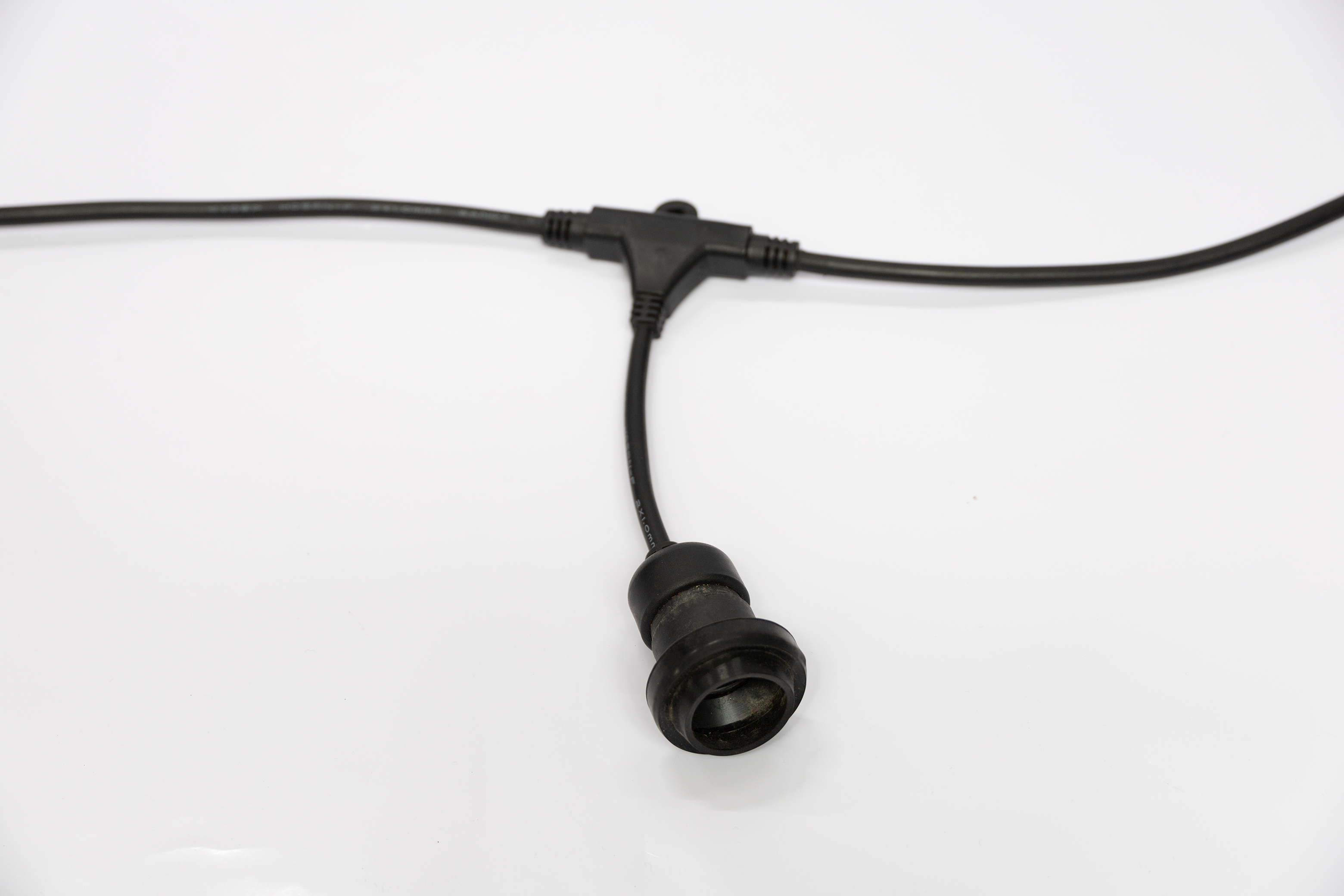
Lamp Cords & Cord Covers
Source premium Lamp Cords & Cord Covers from vetted manufacturers and wholesale suppliers. Designed for importers, lighting distributors, and brands requiring OEM/private-label production, our catalog offers reliable, certified components ready for high-volume procurement and global markets.
Lamp cords and cord covers are safety-critical components in any lighting assembly. While they may seem like simple commodities, specifying the wrong conductor material, inadequate insulation, or unverified plugs can lead to catastrophic product failures, regulatory recalls, and severe liability. For high-volume buyers, managing the procurement of these components requires strict attention to wire gauges, copper purity, and regional electrical certifications.
Specifying Lamp Cords: Conductors and Insulation
The core of any lamp cord dictates its safety, flexibility, and cost. Manufacturers typically quote based on the cross-sectional area of the conductor and the material of the outer jacket.
For the North American market, 18 AWG (American Wire Gauge) is the baseline standard for portable lamps (SPT-1 or SPT-2 wire). For European and international markets, 0.75 mm² (H03VVH2-F or H03VV-F) is standard. Specifying thinner wire (such as 20 AWG or 0.5 mm²) to cut costs is a common trap that directly violates UL and VDE safety standards for general lighting.
The Copper vs. CCA Dilemma
The most significant hidden cost-cutting measure in wire manufacturing is the substitution of Bare Copper (BC) with Copper Clad Aluminum (CCA). CCA is lighter and significantly cheaper, but it has higher electrical resistance, generates more heat, and is brittle, making it entirely unsuitable for flexible lamp cords.
| Conductor Type | Resistance | Flexibility / Lifespan | Regulatory Compliance |
|---|---|---|---|
| Bare Copper (BC) | Low (Optimal) | High (Withstands bending) | Compliant (UL/CE/VDE) |
| Tinned Copper | Low | High (Corrosion resistant) | Compliant (Premium applications) |
| Copper Clad Aluminum (CCA) | High (Overheating risk) | Low (Brittle, breaks easily) | Non-Compliant for power cords |
Verification is Critical
Some suppliers will quote "pure copper" but ship CCA or a low-purity copper alloy. Verifying conductor resistance and material composition prior to mass production is essential to avoid non-compliant shipments.
Need help verifying supplier capabilities and raw materials? We run strict audits to ensure your lighting components meet exact specifications.
Talk to our teamCertifications and Market Compliance
A lamp cord is only as good as its certifications. Because cords include the plug, the inline switch, and the wire itself, each sub-component must often carry its own certification mark, or the entire assembly must be tested as a whole.
- North America: Requires UL or ETL listing. Plugs must meet NEMA standards (typically 1-15P for ungrounded lamps).
- Europe: Requires CE marking and VDE (Germany) or equivalent national certifications. Plugs are typically Europlug (CEE 7/16) or Schuko.
- UK & Middle East: BS 1363 standard with fused plugs.
- Australia/New Zealand: SAA approvals.
Navigating these requirements requires rigorous Compliance & Testing. It is common to find suppliers using fraudulent UL file numbers or applying CE marks without the underlying Technical Construction File (TCF). Always demand the original test reports and verify the file numbers directly with the testing laboratories.
Manufacturing Variances and Quality Control
Producing lamp cords involves wire drawing, PVC or silicone extrusion, and injection molding for the plugs and switch housings. Defects can occur at any stage, making in-line and pre-shipment Quality Control & Inspection vital.
Key Inspection Points for Lamp Cords
- Conductor resistance testing to ensure copper purity and correct gauge.
- Insulation thickness and concentricity (preventing exposed wires during bending).
- Pull-test on molded plugs to ensure the wire does not detach from the pins.
- Inline switch mechanical lifecycle testing (typically rated for 10,000+ actuations).
- High-voltage (Hi-Pot) testing to check for insulation breakdown or leakage.
For decorative applications, braided fabric cord covers are highly popular. The quality of the yarn (rayon, cotton, or polyester) and the tightness of the weave determine how well the cord resists fraying. Loose braiding will bunch up during assembly, ruining the aesthetic of the final lighting fixture.
Pricing Drivers, MOQs, and Lead Times
Pricing for lamp cords fluctuates directly with the global spot price of copper and PVC resin. When comparing quotes, ensure the copper weight is clearly defined.
If you are developing proprietary lighting fixtures, leveraging OEM/ODM Services allows you to specify custom cord lengths, specific inline switch placements (e.g., exactly 40cm from the plug), and custom-molded branded plugs. Grouping multiple variations (different lengths of the same wire) can sometimes help negotiate lower MOQs per SKU.
Consolidating lighting component suppliers can drastically reduce your unit costs. Let us review your BOM and streamline your procurement.
Get a free consultationProcuring lamp cords at scale is an exercise in risk management. The margin saved by accepting sub-standard copper or unverified plugs is quickly erased by a single container rejection at customs or a failed compliance audit. Structuring airtight specifications and maintaining rigorous oversight on the factory floor is the only reliable way to protect your supply chain.
Get Sourcing Help for Lamp Cords & Cord Covers
Tell us your requirements and our experts will connect you with verified manufacturers.