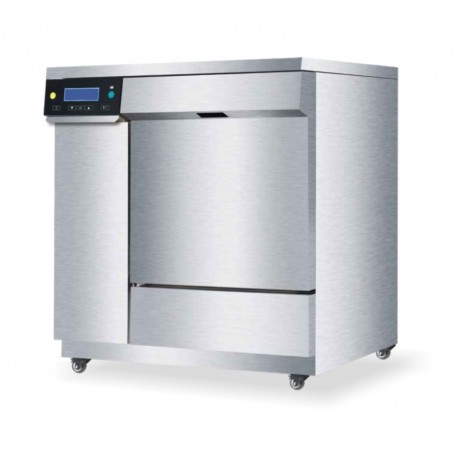
Lab Drying Equipment
Source professional Lab Drying Equipment from vetted suppliers and manufacturers in China and across Asia. Designed for importers, wholesalers, distributors, and brands seeking reliable bulk purchasing or OEM production, our network delivers precision drying ovens and freeze dryers built to rigorous international standards.
Sourcing lab drying equipment at scale requires balancing thermal precision with manufacturing consistency. Whether you are importing forced-air drying ovens for general laboratory distribution or commissioning OEM vacuum dryers for specialized industrial applications, the core challenge remains the same: ensuring unit-to-unit temperature stability, durable chamber construction, and strict adherence to target market electrical standards.
Critical Specifications to Define
When negotiating with manufacturers, vague specifications lead to compromised performance. Factories will naturally default to the most cost-effective components unless directed otherwise. Buyers must explicitly define the control systems, metallurgy, and thermal tolerances.
Essential Technical Requirements
- Chamber Material: Specify SUS304 or SUS316 stainless steel for the inner chamber; avoid generic 'stainless' which may corrode under chemical off-gassing.
- Controller Type: Demand microprocessor PID controllers for accurate ramp-and-soak profiles and minimal temperature overshoot.
- Temperature Uniformity: Specify acceptable deviation (e.g., plus or minus 1 degree Celsius at 100 degrees Celsius) and the testing methodology required.
- Insulation: Require high-density aluminum silicate or fiberglass to prevent exterior heat transfer and reduce energy consumption.
- Sensors: Specify PT100 RTD sensors over cheaper thermocouples for superior accuracy and stability.
Need help verifying technical specifications and matching them with capable overseas manufacturers?
Talk to our teamManufacturing Pitfalls and Quality Control
The visual appearance of a drying oven rarely indicates its thermal reliability. Factories aggressively competing on price often cut corners in areas invisible to the buyer until the unit is tested under load in a laboratory environment.
| Component | Budget / Standard Assembly | Precision / OEM Standard |
|---|---|---|
| Temperature Sensor | Type K Thermocouple | PT100 RTD Sensor |
| Air Circulation | Passive or weak single fan | High-volume forced convection |
| Door Seal | Standard rubber gasket | High-temp molded silicone |
| Exterior Housing | Thin cold-rolled steel | Heavy-gauge powder-coated steel |
Catching these discrepancies requires rigorous Quality Control & Inspection before the container is loaded. Inspectors must verify temperature calibration against independent thermal loggers, not just the unit's own display panel. Furthermore, ensuring electrical safety (CE, LVD, EMC, or UL) through independent Compliance & Testing is non-negotiable for North American and European markets.
OEM/ODM Customization for Brands
For distributors building a private label, OEM/ODM Services offer a path to market differentiation. Customization in this category typically involves modifying the HMI (touchscreen interfaces), integrating data-logging capabilities (USB or RS485 ports for PC connectivity), and tailoring the form factor or voltage (110V/60Hz versus 220V/50Hz) to specific regional requirements. A capable factory will have an in-house R&D team able to adjust airflow dynamics when chamber dimensions are altered.
MOQs, Lead Times, and Pricing Dynamics
Lab equipment production is less automated than consumer electronics, relying heavily on manual welding, assembly, and extended calibration testing. This impacts both production speed and minimum order quantities.
Optimize your procurement strategy and negotiate better terms with vetted lab equipment factories.
Get a free consultationFrequently Asked Questions
Procuring lab drying equipment is an exercise in technical risk management. Success depends on partnering with factories that understand thermal dynamics and respect international compliance standards. By enforcing strict quality protocols and clear technical requirements, you can build a resilient, profitable supply chain.
Get Sourcing Help for Lab Drying Equipment
Tell us your requirements and our experts will connect you with verified manufacturers.