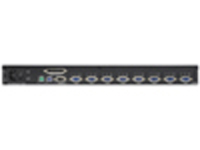
KVM Switches
Source reliable KVM switches in bulk directly from vetted manufacturers and suppliers. Designed for importers, wholesalers, distributors, and brands seeking OEM/private-label production, our network delivers high-performance networking devices optimized for data centers, enterprise IT, and professional workstations.
Sourcing KVM (Keyboard, Video, Mouse) switches at scale requires navigating a complex landscape of chipset availability, signal integrity standards, and firmware compatibility. For enterprise IT, data centers, and professional workstations, a failing switch means critical downtime. The primary challenge for volume buyers is identifying manufacturers capable of delivering consistent PCBA quality and reliable EDID (Extended Display Identification Data) emulation across diverse operating systems and hardware configurations.
Critical Specifications for Volume Buyers
The performance and reliability of a KVM switch are dictated by its internal architecture. When evaluating a factory's technical capability, buyers must look beyond external casing and focus on the controller ICs and video processing chipsets.
Key specifications to define with your supplier include:
- Video Bandwidth & Protocol: HDMI 2.0/2.1, DisplayPort 1.4, and support for 4K at 60Hz with 4:4:4 chroma subsampling, or 8K resolutions. Signal degradation is a common failure point in poorly manufactured units.
- EDID Emulation: True EDID emulation prevents computers from rearranging desktop icons or dropping display resolutions when switched away. Lower-tier manufacturers often use basic passthrough, which causes display handshake issues.
- USB Standards: Distinction between basic USB 2.0 for HID (Human Interface Devices like keyboards/mice) and USB 3.0/3.2 hubs for high-speed peripheral sharing.
- Switching Latency: The time it takes for the video and peripheral connection to establish after a switch event. Professional grades aim for near-zero latency.
| Specification | Desktop / SOHO Grade | Enterprise / Rackmount Grade |
|---|---|---|
| Ports | 2 to 4 Ports | 8 to 32+ Ports (Cascadable) |
| EDID Management | Basic Passthrough or Static | Dynamic EDID Emulation |
| Control Methods | Push-button, Hotkey | OSD, IP Control, RS-232 |
| Chassis | Plastic or Light Aluminum | Heavy-duty 1U/2U Steel |
Struggling to find a manufacturer with reliable chipset supply and proven EDID stability? We can help vet suppliers and secure your supply chain.
Talk to our teamManufacturing Processes and Quality Control
The core of a reliable KVM switch is its printed circuit board assembly (PCBA). Poor soldering on the SMT (Surface Mount Technology) line, inadequate shielding, or improper grounding leads to cross-talk, signal loss, and peripheral dropouts.
Conducting thorough Factory Audits is essential to verify that a supplier maintains strict anti-static (ESD) environments and utilizes advanced automated optical inspection (AOI) on their SMT lines. Furthermore, firmware stability is just as critical as hardware. A factory must have a robust R&D team capable of updating firmware to resolve compatibility issues with new operating systems or high-polling-rate gaming peripherals.
Quality Inspection Checklist
Implementing rigorous Quality Control & Inspection before container loading is non-negotiable. Ensure your inspection protocol includes:
- Hot-plug detection testing across Windows, macOS, and Linux environments.
- EDID retention verification during rapid switching cycles.
- Video signal integrity checks using oscilloscopes to measure eye diagrams for HDMI/DP ports.
- Stress testing of USB power delivery and data transfer rates under full peripheral load.
- Physical port durability and insertion/extraction life-cycle testing.
Customization and OEM/ODM Opportunities
For brands looking to differentiate in the market, off-the-shelf solutions are rarely sufficient. Engaging factories for OEM/ODM Services allows you to customize both the hardware and the user experience. This includes designing custom aluminum enclosures, integrating proprietary hotkey protocols, developing custom On-Screen Display (OSD) menus, and securing necessary compliance certifications (FCC, CE, RoHS) under your own brand name.
Buying Mechanics: Pricing, MOQs, and Lead Times
The KVM switch market is heavily influenced by global semiconductor availability. Prices fluctuate based on the specific video processing chips (e.g., Silicon Image, Valens) and USB controllers utilized.
Need accurate pricing and lead times for custom KVM switch production? Let us negotiate with top-tier factories on your behalf.
Get a free consultationFrequently Asked Questions
Successfully sourcing KVM switches requires a deep understanding of the underlying chipsets and a rigorous approach to firmware testing. By partnering with factories that prioritize signal integrity and robust R&D, buyers can secure high-performance networking devices that meet the demanding standards of modern IT infrastructure.
Get Sourcing Help for KVM Switches
Tell us your requirements and our experts will connect you with verified manufacturers.