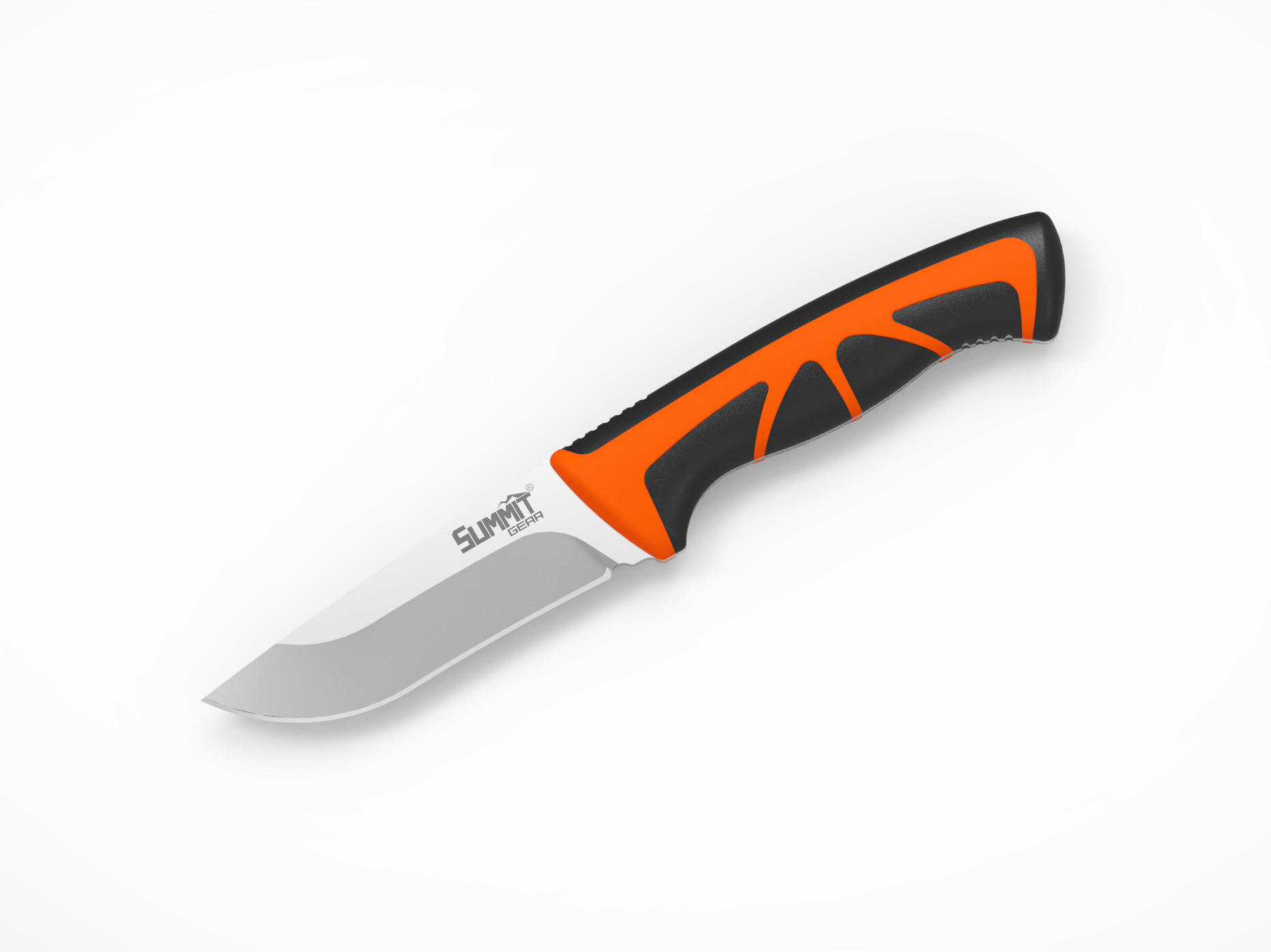
Knives & Tools
Source high-quality camping knives and multi-tools directly from vetted manufacturers and wholesale suppliers. Designed for importers, distributors, and outdoor brands seeking reliable OEM and private-label production, our network delivers precision-engineered gear built for rugged environments.
Sourcing outdoor knives and multi-tools at volume requires balancing metallurgical science with strict factory-floor tolerances. A poorly heat-treated blade, a misaligned pivot, or a failing locking mechanism isn't just a defect—it is a critical failure in the field. For professional buyers, navigating the Asian manufacturing landscape means looking past polished supplier catalogs to verify heat treatment protocols, CNC machining accuracy, and assembly line consistency.
Steel Selection and Blade Metallurgy
The foundation of any cutting tool is its steel grade and the subsequent heat treatment. While many suppliers claim to use premium alloys, true performance is dictated by the factory's tempering and quenching processes. Specifying the right steel determines edge retention, corrosion resistance, toughness, and unit cost.
| Steel Grade | Typical HRC | Primary Application | Cost Profile |
|---|---|---|---|
| 3Cr13 / 420 Series | 52 to 54 | Entry-level multi-tools, promotional gear | Low |
| 8Cr13MoV / 440C | 56 to 58 | Mid-range folding knives, daily carry | Moderate |
| D2 Tool Steel | 59 to 61 | Heavy-duty bushcraft, tactical fixed blades | High |
| Sandvik 14C28N | 57 to 59 | Premium camping and hunting knives | High |
When contracting a factory, it is essential to require independent material composition reports. Unverified suppliers often substitute lower-grade steels (like 3Cr13 disguised as 440C) to cut costs.
Need help verifying supplier material claims and manufacturing capabilities? Let's discuss your next production run.
Talk to our teamManufacturing Tolerances and Quality Control
A knife's performance relies heavily on its geometry and assembly. Factory capabilities vary wildly, especially regarding CNC precision for folding mechanisms.
When establishing your quality control parameters, focus on these critical failure points:
Critical Inspection Points for Knives & Tools
- Blade Centering: The blade must sit perfectly dead-center between the liners when closed, indicating accurate pivot machining.
- Lock Engagement: Liner and frame locks should engage at 25 to 40 percent of the blade tang. Early lockup causes instability; late lockup accelerates wear.
- Heat Treatment Verification: Rockwell Hardness (HRC) testing must be performed per batch, not just on pre-production samples.
- Detent Strength: The ceramic or steel detent ball must hold the blade securely when closed and provide crisp deployment.
- Edge Grind Symmetry: Secondary bevels must be ground at identical angles on both sides to prevent cutting deflection.
Navigating the Yangjiang Manufacturing Hub
The vast majority of global knife and multi-tool production is concentrated in Yangjiang, Guangdong. While this clustering provides an incredible supply chain for raw materials, handle scales (G10, Micarta, FRN), and specialized hardware, it also creates a dense ecosystem of trading companies posing as direct manufacturers.
Securing reliable production requires separating assembly workshops from fully integrated factories that handle CNC milling, grinding, and heat treatment in-house. Conducting thorough factory audits is non-negotiable to ensure your partner has the actual machinery and quality management systems required for your target price point.
MOQs, Tooling, and Production Realities
Tooling costs and minimum order quantities (MOQs) depend heavily on your customization requirements. Off-the-shelf white-label products require minimal investment, while custom OEM/ODM services for proprietary designs involve significant upfront tooling for blade blanks, handle molds, and custom hardware.
Tooling Ownership
When paying for custom molds (such as injection-molded FRN handles or specific stamping dies), ensure your manufacturing contract explicitly states that you own the tooling. Without this, factories may use your molds to produce white-label goods for competitors.
Ready to scale your knife and tool production with reliable manufacturing partners?
Get a free consultationFrequently Asked Questions
Sourcing knives and multi-tools is an exercise in managing tolerances and verifying material science. Success belongs to buyers who look beyond aesthetic designs and focus heavily on factory capabilities, heat treatment consistency, and rigorous on-site quality control.
Get Sourcing Help for Knives & Tools
Tell us your requirements and our experts will connect you with verified manufacturers.