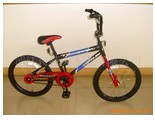
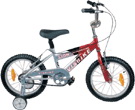
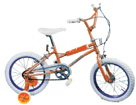
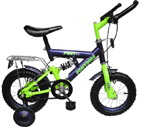
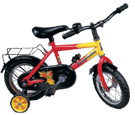
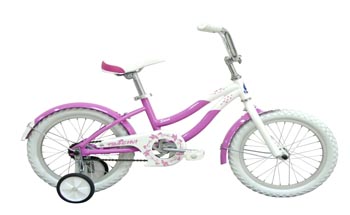
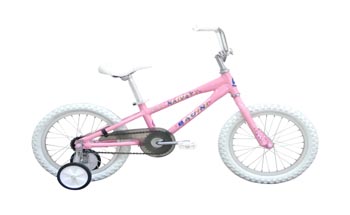
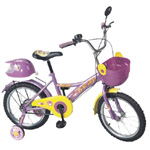
Kids' Bikes
Source high-quality Kids' Bikes from vetted manufacturers and suppliers across Asia. Designed for importers, regional distributors, and brands seeking reliable wholesale or custom OEM production. Partner with factories capable of meeting strict international safety standards and delivering consistent quality at scale.
Sourcing kids' bikes at volume requires balancing strict safety regulations with competitive manufacturing costs. The primary challenge lies in ensuring consistent weld integrity, non-toxic finishes, and reliable braking systems across production runs, all while hitting your target wholesale price point. For procurement managers and brands, success depends on partnering with factories that maintain rigorous internal quality systems, rather than those competing solely on price.
Frame Materials and Component Specifications
The core of any children's bicycle is the frame. The material chosen dictates the weight, durability, and wholesale cost of the final unit. Specifying the right material is crucial for matching your product to the intended retail tier.
| Material | Weight Profile | Cost Impact | Target Market |
|---|---|---|---|
| High-Tensile Steel | Heavy | Low | Mass-market retail |
| Aluminum Alloy (6061) | Lightweight | Medium to High | Specialty bike shops, premium brands |
| Magnesium Alloy | Ultra-light | High | High-end lightweight balance & pedal bikes |
Beyond the frame, buyers must strictly define component specifications in their Bill of Materials (BOM). Specify the bottom bracket type (one-piece crank vs. sealed bearing), brake style (coaster, V-brake, or mechanical disc), and tire compound. Ambiguity in the BOM allows factories to substitute cheaper components, impacting both performance and safety.
Struggling to find a factory with verifiable welding standards? We can help vet suppliers and secure reliable production capacity.
Talk to our teamManufacturing Processes and Quality Control
Quality is won or lost on the factory floor, particularly during welding and assembly. For steel and aluminum frames, TIG (Tungsten Inert Gas) welding is standard for higher-end models, offering cleaner, stronger joints compared to cheaper MIG welding.
Paint application is another critical failure point. Powder coating provides a more durable, chip-resistant finish than standard liquid paint, which is essential for children's products. However, the pre-treatment of the metal (sandblasting and chemical washing) must be thorough to prevent rust from forming beneath the paint layer.
Implementing rigorous Quality Control & Inspection during production—not just post-assembly—is vital.
Critical Factory Inspection Points
- Weld penetration and uniformity around the bottom bracket and head tube
- Frame alignment tolerances (rear triangle symmetry)
- Brake cable tension and pad alignment prior to packaging
- Tire bead seating on the rim to prevent blowouts during inflation
- Verification of non-toxic, lead-free paint certificates for each batch
Global Safety Standards and Compliance
Children's bicycles are heavily regulated across all major markets. In the US, bikes must comply with CPSC 16 CFR Part 1512, which mandates specific testing for braking performance, steering geometry, and frame fatigue. In the European Union, EN ISO 8098 is the governing standard for bicycles with a maximum saddle height between 435 mm and 635 mm.
Furthermore, all accessible materials—especially handlebar grips and saddles—must pass chemical testing for heavy metals (like lead) and phthalates. Failing to secure the proper Compliance & Testing documentation can result in customs seizures or costly product recalls. Always require third-party lab testing reports rather than relying solely on the factory's internal certificates.
Typical MOQs, Pricing Drivers, and Lead Times
Pricing in bicycle manufacturing is highly sensitive to raw material costs (steel/aluminum indices) and component lead times. Shimano or Tektro components, for example, often dictate the overall production timeline.
For brands looking to differentiate, OEM/ODM Services allow for custom frame geometries, bespoke chain guards, and proprietary colorways. Keep in mind that custom tooling will increase upfront costs and extend the initial lead time.
Need to negotiate lower MOQs or consolidate shipments from multiple component suppliers? Let's discuss your supply chain strategy.
Get a free consultationSuccessfully importing children's bicycles requires a deep understanding of component compatibility, safety regulations, and factory capabilities. By setting strict specifications upfront and maintaining active oversight throughout production, you can build a reliable supply chain that delivers safe, profitable products to your market.
Get Sourcing Help for Kids' Bikes
Tell us your requirements and our experts will connect you with verified manufacturers.