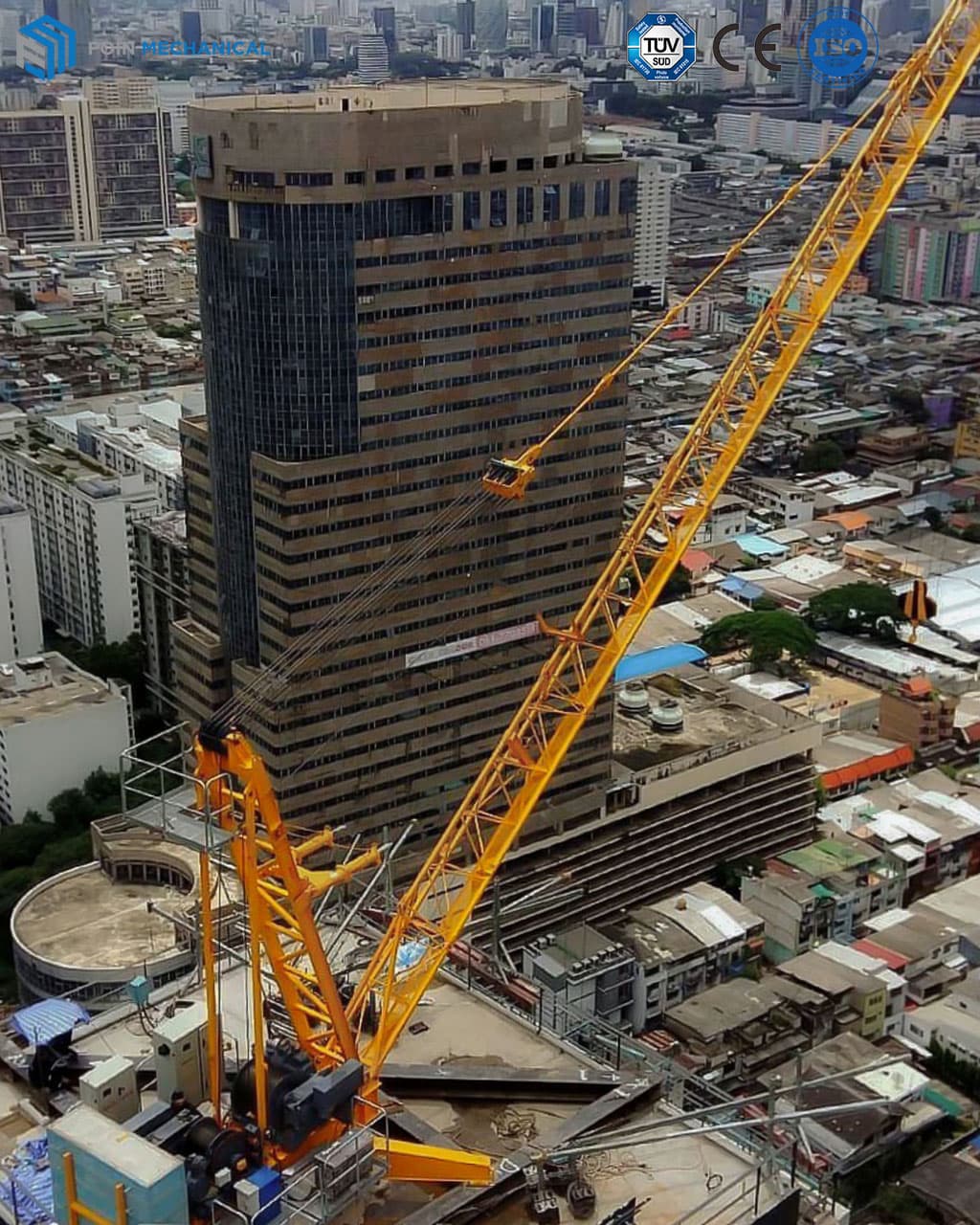
Jib Cranes
Source industrial-grade Jib Cranes from vetted suppliers and manufacturers across Asia. Designed for heavy machinery importers, industrial equipment distributors, and procurement managers buying in bulk, our catalog offers reliable, high-capacity lifting solutions for manufacturing applications.
Sourcing jib cranes in volume requires balancing structural safety with cost efficiency. The primary challenge for importers and distributors lies in verifying that a manufacturer's stated load ratings match their actual fabrication standards on the factory floor. Structural integrity is not just a specification; it is a direct result of consistent welding practices, raw material quality, and rigorous pre-shipment testing.
Critical Specifications for Bulk Orders
When negotiating with manufacturers, precise specifications prevent costly misunderstandings. Generic requests often result in equipment that fails local compliance or underperforms in industrial environments.
You must clearly define the following parameters for the factory:
- Safe Working Load (SWL): Typically ranging from 250 kg up to 10 tons. Ensure the factory understands this is the operational limit, not the failure point.
- Jib Arm Length (Span): The working radius. Longer spans require thicker steel profiles and reinforced pivot points to prevent deflection under load.
- Slewing Angle: Specify whether the application requires 180-degree, 270-degree, or full 360-degree continuous rotation. 360-degree models require specialized slip rings for powered hoists.
- Clearance Height: The distance from the floor to the underside of the jib arm. This dictates the maximum lifting height of the hoist.
Need help standardizing your jib crane specifications for Asian manufacturers? We can bridge the technical gap.
Talk to our teamManufacturing Standards: Where Quality is Won or Lost
The structural reliability of a jib crane comes down to the steel grade and the welding process. In Chinese manufacturing, the standard carbon steel used for structural components is Q235B. However, for heavy-duty applications or larger load capacities (over 3 tons), Q345B (equivalent to S355 in Europe) is preferred due to its higher yield strength.
| Material Spec | Q235B (Standard) | Q345B (Heavy Duty) |
|---|---|---|
| Yield Strength | 235 MPa | 345 MPa |
| Typical Use Case | Light to medium loads (up to 2T) | Heavy loads, long spans (3T+) |
| Cost Impact | Baseline | Premium (approx. 10-15% higher) |
Welding is the most common failure point. Top-tier factories utilize automated Submerged Arc Welding (SAW) for the main column and jib arm seams, ensuring deep penetration and uniform bead profiles. Manual welding on critical load-bearing joints introduces human error. Conducting Factory Audits is the most effective way to verify a supplier's welding automation and raw material sourcing before placing a deposit.
Quality Control and Load Testing Requirements
Never accept a batch of jib cranes without documented, verifiable load testing. Reputable manufacturers should have dedicated testing rigs on-site.
Pre-Shipment Inspection Checklist for Jib Cranes
- Static Load Test: Hoist loaded to 125 percent of SWL for 10 minutes to check for permanent deformation.
- Dynamic Load Test: Hoist operated through all motions at 110 percent of SWL.
- Non-Destructive Testing (NDT): Ultrasonic or magnetic particle inspection on critical welds.
- Coating Thickness: Verification of primer and epoxy topcoat thickness (typically 120 microns total) for corrosion resistance.
- Electrical Safety: Insulation resistance and grounding continuity checks for motorized slewing units.
Implementing strict Quality Control & Inspection protocols ensures that these tests are actually performed on your specific batch, not just copied from a previous compliance report. If you are importing into strictly regulated markets, ensuring your supplier cooperates with third-party Compliance & Testing for CE, OSHA, or AS/NZS standards is non-negotiable.
Pricing Drivers, MOQs, and Logistics
Jib cranes are highly material-dependent. Pricing fluctuates with global steel indices and the specific configuration of the slewing mechanism (manual vs. motorized).
Because jib cranes are bulky and heavy, logistics planning is as critical as the factory negotiation. The main columns and arms take up significant container volume. Efficient packing, such as nesting columns or shipping the hoist units separately, can optimize container space. Coordinating this requires experienced Shipping & Freight management to prevent cost overruns at the port.
Struggling with high freight costs for bulky structural equipment? Let us optimize your container loading and shipping strategy.
Get a free consultationFrequently Asked Questions
Successfully importing jib cranes requires looking past the initial quotation to understand the factory's engineering capabilities and quality management systems. By enforcing strict weld standards and mandatory load testing before shipment, buyers can secure reliable industrial equipment that performs safely for decades.
Get Sourcing Help for Jib Cranes
Tell us your requirements and our experts will connect you with verified manufacturers.