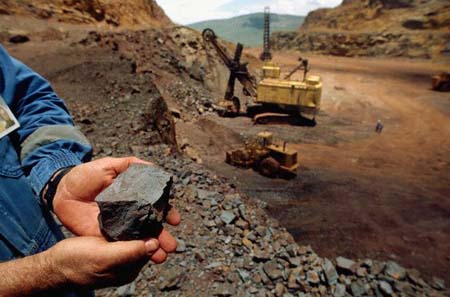
Iron Ore
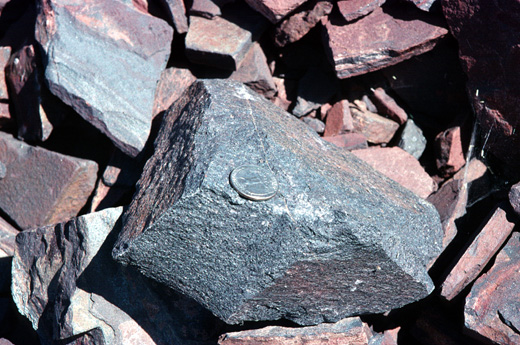
Source bulk Iron Ore from vetted suppliers and manufacturers. Designed for industrial importers, steel mills, and procurement managers, our network provides high-grade hematite and magnetite ores. Secure reliable supply chains with rigorous quality testing and competitive wholesale pricing.
Sourcing iron ore in bulk requires absolute precision. The efficiency and profitability of steelmaking and heavy industrial applications hinge directly on the chemical grade, physical form, and impurity profiles of the ore you procure. Navigating global supply chains for metallic minerals demands strict verification of supplier capabilities, independent assay reports, and highly coordinated bulk logistics.
Critical Specifications and Chemical Composition
When negotiating contracts with mining operations or trading houses, the base price is dictated by the Fe (iron) content, but the penalties and premiums are driven by the impurity profile. A standard benchmark is 62 percent Fe, though high-grade ores (65 percent Fe and above) command significant premiums due to their lower emissions and higher efficiency in blast furnaces.
You must strictly define the maximum allowable limits for gangue minerals and deleterious elements.
Key Chemical Parameters to Specify
- Fe Content: Specify the exact baseline (e.g., 62 percent) and the rejection point (e.g., under 58 percent).
- Silica (SiO2) and Alumina (Al2O3): High levels increase slag volume and fuel consumption. Typically capped around 4 to 5 percent combined.
- Phosphorus (P): Causes brittleness in steel. Standard limits are strictly under 0.08 percent.
- Sulfur (S): Leads to hot shortness in steel. Must be kept to absolute minimums, typically under 0.05 percent.
- Moisture Content: Critical for shipping safety and pricing. Free moisture usually ranges from 4 to 9 percent.
If a supplier cannot provide consistent historical assay data or resists third-party testing, it is a red flag. Implementing robust Compliance & Testing protocols, including independent laboratory analysis at the port of loading, is non-negotiable for bulk mineral buyers.
Physical Forms: Fines, Lumps, and Pellets
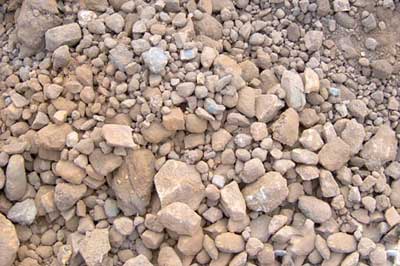
Iron ore is traded in several physical forms, each requiring different handling and downstream processing. Your choice depends entirely on your facility's sintering or pelletizing capabilities.
| Physical Form | Typical Size | Primary Application | Furnace Readiness |
|---|---|---|---|
| Fines | Under 6mm | Sinter plants | Requires agglomeration (sintering) |
| Lumps | 6.3mm to 31.5mm | Direct reduction / Blast furnace | Direct charge ready |
| Pellets | 9mm to 16mm | Blast furnace / DRI | Agglomerated and ready |
Need reliable assay verification and supplier vetting for your next bulk ore shipment? Connect with our sourcing experts.
Talk to our teamQuality Control and Shipping Risks
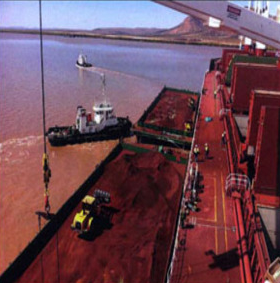
The most significant risk in shipping iron ore, particularly fines, is liquefaction. If the moisture content exceeds the Transportable Moisture Limit (TML), the cargo can shift during transit, endangering the vessel.
Beyond safety, excess moisture means you are paying freight for water. Accurate draft surveys and moisture sampling at the time of loading are critical. Conducting comprehensive Factory Audits on the supplier's stockpile management and loading facilities helps ensure they have the infrastructure to protect the ore from heavy rainfall prior to loading.
Moisture Penalties
Always include a moisture penalty clause in your contract. If the agreed price assumes 8 percent moisture, and the cargo loads at 10 percent, the invoice must be adjusted downward to reflect the dry metric ton (dmt) equivalent.
Pricing Mechanics, MOQs, and Bulk Logistics
Iron ore is a high-volume, low-margin commodity. Pricing is typically indexed to standard benchmarks (like the Platts 62 percent Fe CFR China index) with adjustments made for grade variations and freight rates.
- Minimum Order Quantities (MOQs): Bulk shipments are dictated by vessel sizes. A standard Supramax holds around 50,000 tons, while Panamax vessels carry up to 75,000 tons. Capesize vessels (150,000+ tons) offer the best economies of scale but require deep-water ports.
- Lead Times: Depending on the origin (e.g., Australia, Brazil, or emerging markets in Asia and Africa), sailing times range from 10 to 45 days, plus 2 to 4 weeks for stockpile accumulation and vessel chartering.
Managing the logistics of a bulk mineral shipment is highly complex. Coordinating laycan windows, managing demurrage risks, and executing customs clearance requires specialized Shipping & Freight expertise. A delay at the loading port can easily wipe out your margin through daily demurrage penalties.
Streamline your mineral supply chain. Let us handle supplier vetting, assay verification, and bulk freight logistics.
Get a free consultationFrequently Asked Questions
Securing a reliable supply of iron ore requires looking past the benchmark price and rigorously managing grade consistency, moisture limits, and freight execution. Engaging an experienced Product Sourcing partner ensures your contracts are watertight and your shipments arrive on spec.
Get Sourcing Help for Iron Ore
Tell us your requirements and our experts will connect you with verified manufacturers.