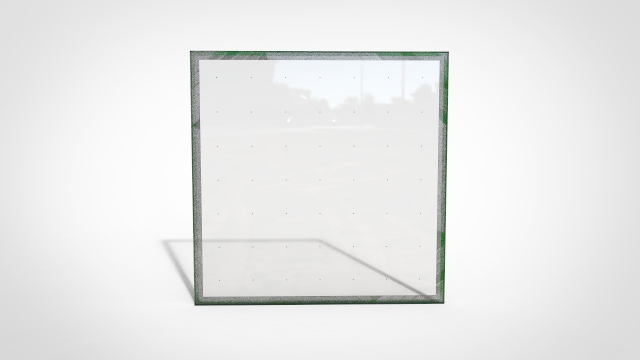
Insulated Glass
Source high-performance insulated glass directly from vetted manufacturers and suppliers. Designed for importers, distributors, and large-scale procurement managers, our network provides bulk access to energy-efficient IGU units tailored to your exact architectural and commercial specifications.
Sourcing insulated glass units (IGUs) in bulk requires strict attention to thermal performance metrics, structural integrity, and long-term durability. For large-scale commercial builds or residential distribution, the core challenge lies in finding a manufacturer capable of consistent gas-fill retention and flawless primary and secondary sealing across thousands of units. Minor factory-level defects can lead to premature seal failure, internal condensation, and costly site replacements.
Specifying Insulated Glass for Bulk Production
When importing IGUs, providing precise specifications is critical. Factories price and produce based on the exact configuration of the glass lites, the spacer system, and the cavity fill. Relying on generic "double glazing" requests will result in inconsistent U-values and solar heat gain coefficients (SHGC).
| Component | Standard Specification | High-Performance Option |
|---|---|---|
| Glass Lites | Clear Float (4mm - 6mm) | Double/Triple Silver Low-E (Tempered) |
| Spacer Bar | Standard Aluminum | Warm-edge (Composite/Stainless Steel) |
| Cavity Fill | Dehydrated Air | Argon or Krypton (over 90 percent fill rate) |
| Secondary Sealant | Polysulfide (Standard commercial) | Structural Silicone (Frameless/Curtain wall) |
When dealing with Low-E coatings, specify whether you require hard coat (pyrolytic) or soft coat (sputtered) glass. Soft coat provides superior thermal performance but requires the factory to edge-delete the coating precisely before sealing; failure to do so compromises the primary polyisobutylene (PIB) seal.
Manufacturing Tolerances and Quality Control
The lifespan of insulated glass is entirely dependent on the factory's quality control during the sealing process. The primary PIB seal stops moisture ingress, while the secondary seal (silicone or polysulfide) provides structural strength.
To ensure longevity, rigorous Quality Control & Inspection must be implemented at the factory level.
Critical IGU Factory QC Checks
- Edge Deletion: Verify soft-coat Low-E is properly removed at the margins to ensure primary sealant adhesion.
- Desiccant Saturation: Ensure the molecular sieve in the spacer is active and sufficient to absorb residual cavity moisture.
- Sealant Depth and Continuity: Check for uninterrupted PIB application and correct mixing ratios for two-part secondary sealants.
- Dew Point Testing: Confirm the internal cavity achieves a dew point of under -40°C.
- Gas Fill Verification: Test argon concentration to ensure it meets the required threshold (typically 90 percent or higher).
Need to ensure your glass supplier meets strict thermal and structural standards? Let us manage the vetting and QC process.
Talk to our teamEvaluating Glass Processors
Not all glass factories are equipped to handle high-volume, high-performance IGU production. The best manufacturers utilize automated, world-class processing lines (such as Bystronic or Lisec) which minimize manual handling and ensure consistent spacer application and gas filling.
Before committing to a large order, conducting comprehensive Factory Audits is essential. You need to verify the processor's machinery maintenance, their access to premium raw float glass (from brands like Xinyi, SG, or AGC), and their compliance with international standards such as IGCC/IGMA (North America) or EN 1279 (Europe).
Pricing, MOQs, and Logistics Reality
Procuring glass in bulk is as much a logistics challenge as it is a manufacturing one. Glass is dense, heavy, and fragile, making freight optimization a primary cost driver.
- Minimum Order Quantities (MOQs): Typically, factories require an MOQ of 100 to 200 square meters per specific configuration, or a minimum of one 20ft container to ensure safe packing and loading.
- Lead Times: Standard clear or single-silver Low-E IGUs usually take 15 to 25 days. Complex makeups, such as triple-glazed units with custom ceramic fritting or specific high-performance soft coats, can extend lead times to 30 to 45 days.
- Shipping & Handling: IGUs must be packed in reinforced plywood crates or on steel A-frames, interleaved with protective powder or cork pads. Because glass maximizes container weight limits long before it fills the volume, coordinating efficient Shipping & Freight is critical to keeping your landed cost per square meter competitive.
Optimize your glass procurement, from factory floor to final delivery. Speak with our sourcing experts today.
Get a free consultationFrequently Asked Questions
Successfully sourcing insulated glass in volume requires balancing advanced thermal specifications with rigorous factory-level oversight and heavy-freight logistics. By partnering with experienced sourcing professionals, you can secure competitive pricing without compromising the structural integrity or energy performance of your glass units.
Get Sourcing Help for Insulated Glass
Tell us your requirements and our experts will connect you with verified manufacturers.