Ink
Source high-quality printer ink from vetted suppliers and manufacturers across Asia. Designed for importers, wholesale distributors, and brands seeking reliable OEM and private-label production, our bulk ink solutions cover standard dye and pigment formulations alongside specialized sublimation, eco-solvent, and UV-curable inks.
Sourcing printer ink in bulk requires precise chemical matching to target printheads. A slight deviation in viscosity, surface tension, or particle size does not just result in poor color reproduction—it can permanently destroy expensive commercial and desktop printing equipment. For bulk buyers, securing a reliable factory means looking past unit pricing and digging into their chemical formulation capabilities, filtration standards, and batch-to-batch consistency.
Chemical Specifications and Printhead Compatibility
Printer ink is not a universal commodity. Formulations must be engineered for specific printhead technologies (such as thermal or piezoelectric) and specific brands (like Epson, HP, Canon, or Brother). When specifying ink requirements with a manufacturer, you must define the exact physical and chemical parameters to ensure performance and prevent nozzle clogging.
| Ink Formulation | Primary Application | Critical Specs to Verify |
|---|---|---|
| Dye-Based | Office, photo, indoor graphics | pH level, surface tension (dynes/cm), UV resistance additives |
| Pigment | Archival printing, outdoor, textile | Particle size (must be under 100nm), suspension stability |
| Sublimation | Apparel, ceramics, hard substrates | Transfer rate at specific temperatures, color gamut (ΔE) |
| UV-Curable | Industrial signage, rigid media | Curing wavelength compatibility, viscosity at operating temp |
For pigment and sublimation inks, particle size is the most critical metric. If the factory's milling process leaves particles larger than the printhead nozzle diameter, clogs are inevitable. Quality manufacturers use multi-stage sub-micron filtration systems to ensure all particles remain well under the danger threshold.
Struggling with inconsistent ink batches or printhead clogging? Let us connect you with verified chemical manufacturers.
Talk to our teamManufacturing Standards and Quality Control
The difference between a tier-one ink manufacturer and a lower-grade supplier usually lies in their environmental controls and raw material sourcing. High-quality ink production requires dust-free cleanrooms and rigorous degassing processes.
When evaluating a factory, pay attention to their testing protocols. You can verify these capabilities through thorough Factory Audits before placing a volume order.
Critical Factory Verification Points
- Multi-stage filtration: Confirm the use of absolute filters (e.g., 0.2 micron) in the final filling stage.
- Degassing capabilities: Essential for piezo printheads to remove dissolved oxygen and prevent air bubbles during high-speed printing.
- Accelerated aging tests: Ensure the factory tests for pigment settling and viscosity changes over time.
- Batch-to-batch color consistency: The factory should use spectrophotometers to maintain a Delta E (ΔE) of less than 1.0 between batches.
Implementing strict Quality Control & Inspection prior to shipment is vital. Pre-shipment checks should include viscosity testing, pH measurement, and actual print tests on the target equipment to verify color density and drying time.
Packaging, OEM, and Compliance
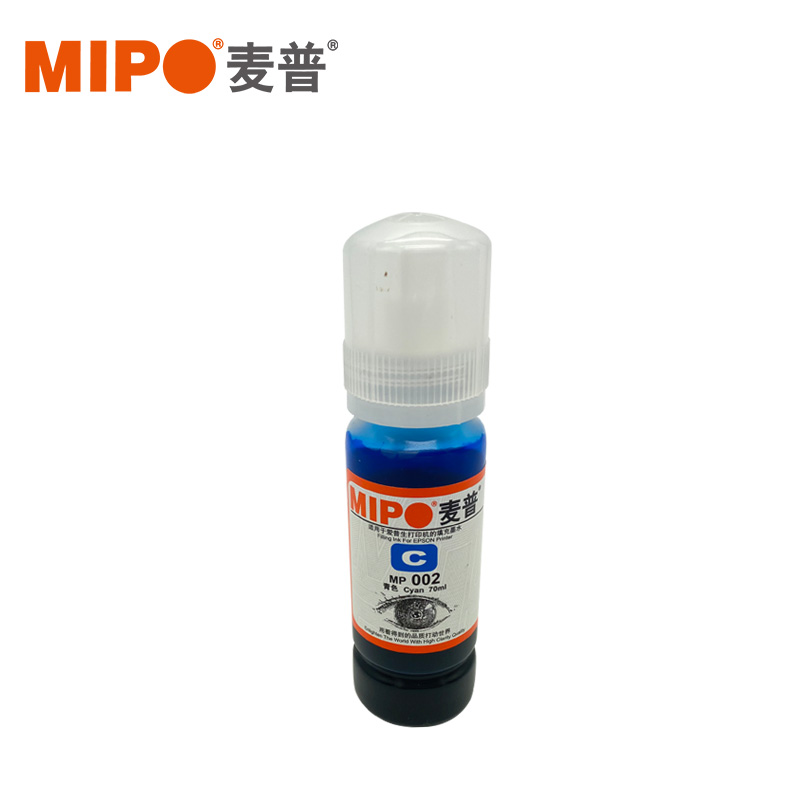
Ink is shipped in two primary formats: bulk drums for commercial use (re-bottling or industrial printing) and finished retail packaging.
If you are building a consumer or office supply brand, factories offer comprehensive OEM/ODM Services. This includes custom bottle molds, keyed caps (to match specific eco-tank printer models), and vacuum-sealed foil bags for cartridges.
Furthermore, ink is a chemical product. Importing it into markets like the EU or North America requires strict adherence to chemical safety regulations. Ensure your supplier provides accurate, up-to-date Material Safety Data Sheets (MSDS/SDS) and can pass necessary Compliance & Testing for frameworks like REACH and RoHS.
Typical MOQs, Pricing Drivers, and Lead Times
Ink pricing is highly sensitive to the cost of raw materials (especially high-grade colorants and solvents) and the required filtration standards.
Custom formulations—such as matching a specific proprietary OEM ink—will require a longer development phase, higher MOQs, and significant testing before mass production can begin.
Ready to scale your ink sourcing? We handle supplier vetting, chemical compliance, and logistics.
Get a free consultationFrequently Asked Questions
Successful ink sourcing is a matter of chemical precision and supply chain discipline. By partnering with factories that maintain strict environmental controls and rigorous batch testing, you protect both your brand's reputation and your customers' hardware. Merhein provides the on-the-ground technical oversight necessary to secure stable, high-performance ink supply chains.
Get Sourcing Help for Ink
Tell us your requirements and our experts will connect you with verified manufacturers.