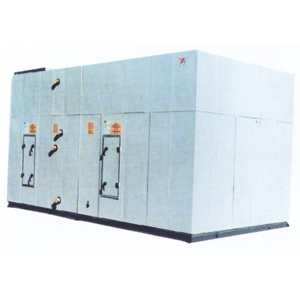
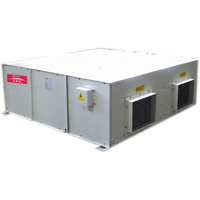
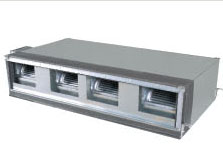
Industrial Fans
Source industrial fans from vetted suppliers and manufacturers across Asia. Designed for importers, HVAC distributors, and brands seeking reliable OEM or private-label production, our network delivers high-volume ventilation solutions built to rigorous performance, continuous-duty, and safety standards.
Sourcing industrial fans at scale requires balancing aerodynamic efficiency with continuous-duty reliability. A failure in a high-velocity ventilation system doesn't just mean a broken fan; it means compromised facility operations, halted production lines, or severe safety hazards. Buying directly from overseas manufacturers offers significant margin advantages, but verifying motor longevity, dynamic impeller balance, and true airflow metrics requires rigorous oversight on the factory floor.
Critical Specifications for Industrial Ventilation
Procuring industrial-grade fans requires specifying exact aerodynamic and electrical parameters. Manufacturers will build exactly to your spec sheet, so omitting critical tolerances will result in underperforming units.
When negotiating with suppliers, you must define:
- Airflow and Static Pressure: Specify the required Cubic Feet per Minute (CFM) or Cubic Meters per Hour (CMH) against the system's expected static pressure (measured in Pascals or inches of water). Fans that perform well in free air often fail under duct resistance.
- Motor Efficiency Class: Look for IE2, IE3, or IE4 efficiency ratings depending on your target market's regulatory requirements.
- Ingress Protection (IP Rating): Standard industrial environments typically require IP55, while washdown or outdoor applications demand IP65 or higher.
- Bearing Lifespan: Specify the L10 life of the bearings (e.g., 40,000 or 80,000 hours). Cheap bearings are the number one cause of premature motor failure.
| Motor Technology | Efficiency | Control | Typical Application |
|---|---|---|---|
| AC Induction | Moderate (IE2/IE3) | Requires VFD for variable speed | Standard exhaust, heavy industrial |
| Electronically Commutated (EC) | High (IE4/IE5) | Built-in precise speed control | Data centers, precision HVAC, cleanrooms |
| Brushless DC | High | PWM or voltage control | Telecom, compact equipment cooling |
Manufacturing Tolerances and Quality Control
The physical construction of the fan determines its acoustic performance and operational lifespan. The difference between a premium industrial fan and a budget alternative is often invisible to the naked eye, hidden in the thickness of the housing or the quality of the copper winding.
Need help verifying supplier quality? Our engineering team can review your specifications and establish rigorous testing protocols.
Discuss your QC requirementsTo prevent catastrophic failures in the field, your quality control & inspection protocols must catch defects before the units are containerized.
Critical Factory Inspection Points
- Dynamic Balancing: Verify that impellers are dynamically balanced to ISO 1940 standards (typically G6.3 or G2.5) to prevent destructive vibration.
- Motor Winding Quality: Ensure 100% pure copper wiring is used; some budget factories substitute copper-clad aluminum (CCA) which overheats under continuous load.
- Insulation Resistance: Test the dielectric strength (Hipot testing) to ensure motor insulation integrity.
- Housing Gauge and Coating: Measure sheet metal thickness and verify powder-coating adhesion to prevent premature rust in humid environments.
OEM Customization and Compliance
If you are developing proprietary ventilation equipment, partnering with the right manufacturer for OEM/ODM services is crucial. Industrial fan factories generally have extensive tooling for standard blade profiles, but custom aerodynamic designs require new injection molds for plastics or specialized stamping dies for metals.
If your market requires specialized certifications—such as ATEX for explosive environments or UL/CE marks for electrical safety—you cannot take a supplier's word at face value. Validating a supplier's true capabilities and existing certification portfolio requires comprehensive factory audits before any funds change hands.
MOQs, Lead Times, and Pricing Drivers
Pricing in the industrial fan sector is highly volatile, driven primarily by the cost of copper, electrical steel, and aluminum.
Ready to optimize your supply chain? Speak with our sourcing experts to benchmark your current pricing and explore qualified manufacturers.
Get a sourcing assessmentSuccessful procurement of industrial fans requires looking past the initial unit cost and focusing on the total cost of ownership. A poorly manufactured fan will cost exponentially more in maintenance, downtime, and replacement than the savings gained at the factory gate. Working with an experienced sourcing partner ensures your specifications are met, your quality is verified, and your supply chain remains resilient.
Get Sourcing Help for Industrial Fans
Tell us your requirements and our experts will connect you with verified manufacturers.