Hydrogen Fuel Cells
Source commercial-grade hydrogen fuel cells from vetted manufacturers and suppliers across Asia. Designed for importers, distributors, and energy brands requiring reliable OEM and bulk production, our network delivers high-efficiency fuel cell stacks and integrated systems built to rigorous international standards.
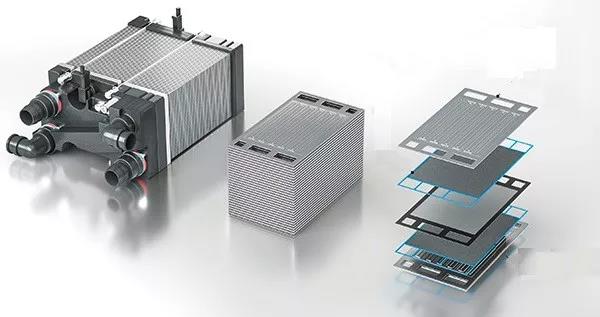
Sourcing commercial hydrogen fuel cells requires navigating a highly specialized supply chain where membrane electrode assembly (MEA) precision and bipolar plate manufacturing dictate system performance. The primary challenge for buyers is verifying that a factory's claimed power density, platinum loading efficiency, and stack longevity hold up under real-world duty cycles, rather than just optimal lab conditions.
Critical Specifications for Bulk Procurement
When evaluating suppliers for Proton Exchange Membrane (PEM) or Solid Oxide Fuel Cells (SOFC), buyers must look beyond top-line wattage. The underlying materials dictate both the lifespan of the unit and its suitability for specific applications, from stationary backup power to heavy-duty mobility.
A major differentiator in stack design is the choice of bipolar plates, which account for a significant portion of the stack's weight and cost.
| Plate Material | Corrosion Resistance | Form Factor & Weight | Typical Application |
|---|---|---|---|
| Machined Graphite | Excellent, highly stable | Thicker, heavier | Stationary power, backup systems |
| Stamped Metallic | Requires specialized coatings | Ultra-thin, high power density | Automotive, aerospace, portable |
| Composite | Moderate to High | Balanced weight/thickness | Material handling, light mobility |
Beyond the plates, you must specify the exact operating voltage ranges, peak current density (measured in A/cm²), and the cooling mechanism (liquid vs. air-cooled). Ensure the supplier can provide detailed polarization curves for the exact stack configuration you are ordering.
Evaluating fuel cell manufacturers requires deep technical vetting. Let us help you verify factory capabilities and secure reliable production lines.
Talk to our teamManufacturing Quality and Factory Vetting
The core of a PEM fuel cell is the MEA. If the catalyst coating is uneven by even a few microns, localized hot spots will degrade the membrane prematurely, drastically reducing the stack's operational lifespan. Validating a supplier means looking closely at their cleanroom standards and automated coating lines.
Executing rigorous Factory Audits is essential before committing to a supplier. You need to confirm they possess the testing infrastructure to validate the stacks before they leave the facility.
MEA Coating Consistency
Verify the factory uses automated roll-to-roll slot-die coating or ultrasonic spray systems to ensure uniform platinum group metal (PGM) distribution.
Sealing and Gasketing
Check the compression and curing processes. Poor gasketing leads to reactant crossover (hydrogen and oxygen mixing), which is a critical safety and performance failure.
End-of-Line Testing
Ensure the manufacturer performs full-stack leak testing, pressure drop analysis, and initial break-in (conditioning) protocols on every unit.
To prevent defective units from shipping, implement strict Quality Control & Inspection protocols. This should include reviewing the factory's accelerated stress test (AST) data and verifying that the voltage output across individual cells remains balanced under load.
Customization and System Integration
Buyers rarely purchase a bare stack in isolation. Integrating the stack with the Balance of Plant (BOP)—including air compressors, hydrogen recirculation blowers, cooling pumps, and control modules—is where many projects face delays.
If you are developing a proprietary energy solution, leveraging OEM/ODM Services allows you to customize the stack dimensions, modify the manifold porting for specific fluid dynamics, and integrate custom firmware for the fuel cell control unit (FCCU). Ensure your manufacturing partner has in-house engineering capabilities to model thermal management and fluid flow before tooling begins.
Pricing Drivers, MOQs, and Lead Times
Fuel cell pricing is highly sensitive to raw material markets, specifically the cost of platinum group metals and specialized fluoropolymer membranes.
Because fuel cells are high-value, low-volume items in the commercial procurement phase, negotiating favorable payment terms and managing the supply chain for BOP components requires significant leverage.
Need to negotiate better terms or manage complex fuel cell logistics? Our sourcing experts can streamline your entire procurement cycle.
Get a free consultationFrequently Asked Questions
Procuring hydrogen fuel cells at scale is an exercise in risk management. Success depends entirely on matching your specific duty-cycle requirements with a manufacturer whose coating, sealing, and testing capabilities are proven, not just promised.
Get Sourcing Help for Hydrogen Fuel Cells
Tell us your requirements and our experts will connect you with verified manufacturers.