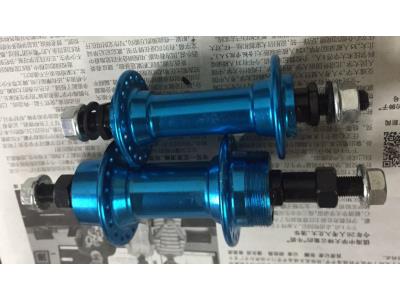
Hubs
Source premium bicycle hubs directly from vetted manufacturers and wholesale suppliers across Asia. Built for importers, distributors, and cycling brands looking for reliable bulk purchasing or custom OEM/private-label production.
Bicycle hubs are the mechanical heart of a wheelset, demanding tight tolerances and durable materials to withstand intense radial and lateral loads. For high-volume buyers, the sourcing challenge lies in balancing precision—specifically bearing alignment and freehub engagement—with cost-effective production at scale. Sourcing hubs in bulk requires navigating a complex supply chain of forging plants, CNC machining centers, and bearing suppliers, mostly concentrated in Taiwan and mainland China.
Technical Specifications and Manufacturing Methods
When specifying hubs for bulk production, the manufacturing method directly dictates both the unit cost and the structural integrity of the final product. Entry-level hubs rely on gravity casting or basic forging, while performance hubs demand cold forging followed by extensive multi-axis CNC machining to strip away excess weight without compromising flange strength.
| Specification | Standard / Commuter Tier | Performance / Enthusiast Tier |
|---|---|---|
| Shell Material | Forged 6061 Aluminum | Forged & CNC Machined 7075-T6 |
| Bearing Type | Cup and Cone / Loose Ball | Sealed Cartridge (e.g., NBK, Enduro) |
| Freehub Mechanism | 3-Pawl (24-36 points of engagement) | 6-Pawl or Ratchet (54 to over 120 points) |
| Axle Material | Cr-Mo Steel | 7075 Aluminum or Titanium |
Need help identifying the right factory capabilities for your specific hub designs?
Talk to our teamQuality Control Defect Zones
Hub manufacturing is unforgiving when it comes to tolerances. A bearing seat machined a fraction of a millimeter too wide will result in premature bearing failure, while poor axle concentricity causes drag and drivetrain wear. Catching these issues requires rigorous Quality Control & Inspection before the batch leaves the factory.
Critical Inspection Points for Hubs
- Bearing Seat Tolerances: Must be verified with go/no-go gauges to ensure a press-fit that does not bind the cartridge bearing.
- Flange Integrity: Inspect for micro-cracks post-forging, especially on straight-pull spoke designs.
- Freehub Concentricity: Check for cassette wobble under rotation, indicating a misaligned freehub body or axle.
- Anodizing Consistency: Ensure UV-resistant dyes are used and batch colors match perfectly, particularly on high-end colored hubs.
- Pawl Spring Tension: Verify uniform spring engagement to prevent slipping under heavy torque loads.
Prior to committing to a large order, conducting comprehensive Factory Audits is essential to verify that the supplier actually possesses the in-house CNC equipment they claim, rather than outsourcing the critical machining steps to unvetted third parties.
Pricing, MOQs, and Lead Times
The economics of hub sourcing are heavily influenced by the level of customization. Off-the-shelf open molds offer lower barriers to entry, while custom shell profiles or proprietary engagement systems require significant upfront investment in tooling and testing.
If you are developing a proprietary hub design, utilizing professional OEM/ODM Services ensures your CAD files are properly translated into production-ready blueprints, protecting your intellectual property while optimizing the design for manufacturability.
Compare pricing and lead times from vetted hub manufacturers tailored to your volume requirements.
Get a free consultationBuyer FAQ
Navigating the hub supply chain means managing the intersection of raw material costs, machining precision, and bearing sourcing. Partnering with experienced professionals ensures your production runs meet exact specifications without costly delays or quality fade.
Get Sourcing Help for Hubs
Tell us your requirements and our experts will connect you with verified manufacturers.