Heat Sinks
Source high-quality lighting heat sinks in bulk directly from vetted manufacturers and factories in China. Designed for importers, distributors, and lighting brands seeking reliable OEM/ODM production, our network delivers precision-engineered thermal management solutions for commercial, industrial, and architectural LED applications.
Effective thermal management is the primary bottleneck in high-power LED lighting. A poorly specified heat sink accelerates lumen depreciation, shifts color temperatures, and ultimately causes premature driver or chip failure. When sourcing heat sinks in volume, the challenge is balancing thermal resistance requirements with tooling costs, manufacturing scalability, and material weight.
Procurement teams must navigate different fabrication methods, each offering distinct trade-offs between thermal conductivity, shape complexity, and upfront investment.
Manufacturing Processes and Material Selection
The fabrication process dictates both the alloy you can use and the resulting thermal conductivity of the heat sink. Selecting the wrong process for your fixture design will either compromise thermal performance or unnecessarily inflate your tooling and unit costs.
| Process | Typical Material | Thermal Conductivity | Tooling Cost | Shape Complexity |
|---|---|---|---|---|
| Extrusion | AL6063 | Approx. 200 W/m·K | Low | 2D profiles only |
| Die-Casting | ADC12 / A380 | Approx. 96 W/m·K | High | Complex 3D geometries |
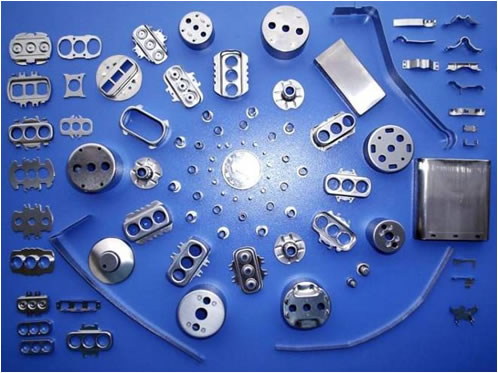
| Cold Forging | AL1060 / AL1070 | Approx. 220 W/m·K | Medium-High | Pin-fin / Cylindrical |
| Stamping | Copper / AL1050 | High | Medium | Thin-wall fins |
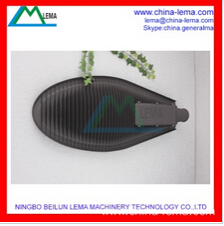
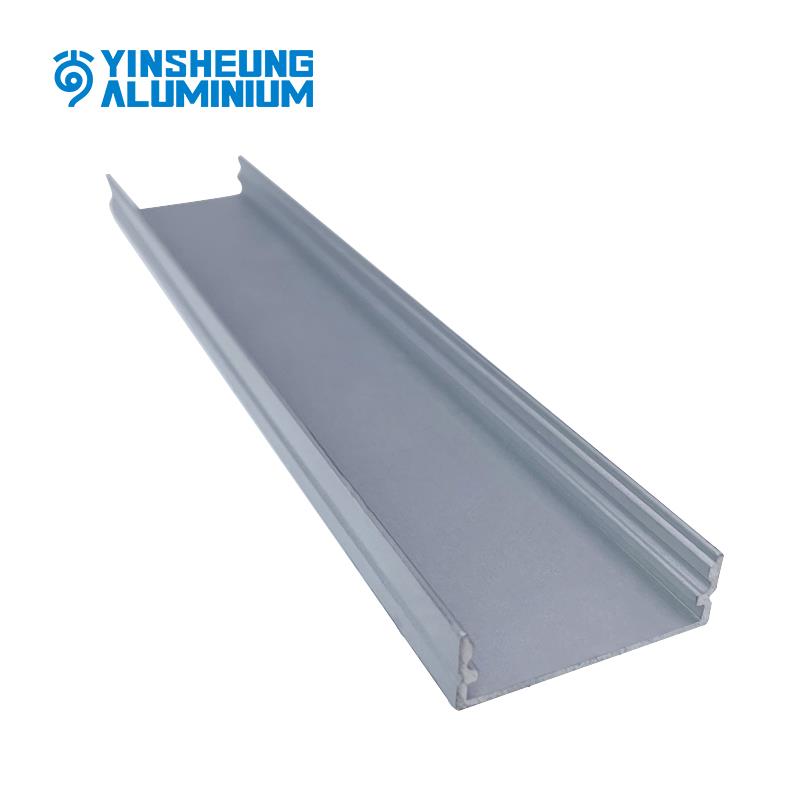
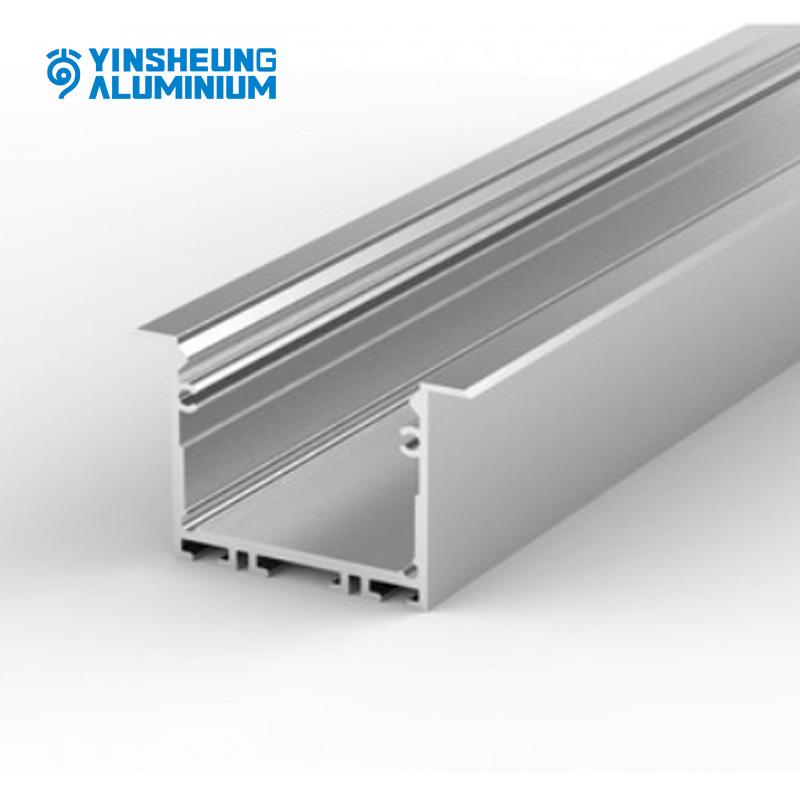
Aluminum Extrusion remains the standard for linear fixtures, street lights, and standard high-bays. Tooling dies for AL6063 are inexpensive and fast to produce. However, extrusion limits the design to a two-dimensional profile stretched along a single axis.
Die-Casting is necessary for complex housings where the heat sink acts as the structural body of the fixture (common in floodlights and specialized downlights). While it allows for high integration, the silicon content required to make the aluminum flow into the mold (like in ADC12) significantly reduces thermal conductivity compared to pure aluminum.
Unsure which manufacturing process aligns with your target unit cost and thermal requirements? We can help you evaluate factory capabilities and tooling options.
Discuss your project with our teamCritical Specifications and Quality Control
Quality is won or lost in the machining tolerances and surface treatments. A heat sink with excellent raw material conductivity can still fail if the mounting surface is uneven or the surface finish restricts thermal radiation.
Key Quality Control Checkpoints for Heat Sinks
- Mounting Surface Flatness: Must be machined to a flatness of under 0.1mm to ensure maximum contact with the LED PCB and minimize the need for thermal paste.
- Anodizing Thickness: For extruded and forged sinks, a black anodized finish increases surface emissivity. Ensure thickness is consistent (typically 10 to 15 microns).
- Porosity in Die-Casting: Check for internal air pockets (porosity) which act as thermal insulators and weaken structural integrity.
- Thread and Tapping Tolerances: Ensure CNC-machined screw holes align perfectly with standardized LED modules (e.g., Zhaga consortium standards) to prevent assembly bottlenecks.
Catching defects like warping or improper anodizing after the goods arrive is costly. Implementing rigorous Quality Control & Inspection directly at the factory ensures that CNC tolerances and surface treatments meet your exact engineering specifications before shipment.
Sourcing Mechanics: Tooling, MOQs, and Lead Times
Your sourcing strategy for heat sinks will be heavily dictated by the tooling requirements of your chosen manufacturing method.
Managing Custom Designs and Tooling
If you are developing proprietary lighting fixtures, you will need custom tooling. Extrusion dies typically cost a few hundred dollars, making it easy to iterate. Die-casting molds, however, can cost thousands or tens of thousands of dollars. When engaging in OEM/ODM Services for custom die-cast housings, it is critical to verify the supplier's in-house tooling maintenance and mold-flow analysis capabilities.
Before investing heavily in custom molds, we strongly recommend conducting comprehensive Factory Audits to verify that the manufacturer actually owns the heavy machinery (like 800-ton die-casting machines) rather than subcontracting the critical thermal components to unvetted third parties.
Need to source custom-tooled heat sinks without the risk of intellectual property leaks or substandard materials? Let us manage the supplier vetting and production process.
Talk to our sourcing expertsFrequently Asked Questions
Managing the Total Cost of Ownership
Sourcing heat sinks is rarely about finding the absolute lowest price per kilogram of aluminum. The true cost of a substandard heat sink is realized when expensive LED chips fail in the field, leading to warranty claims and damaged brand reputation. By aligning the right manufacturing process with your thermal requirements and maintaining strict oversight on tooling and machining tolerances, you can secure reliable, scalable production for your lighting fixtures.
Get Sourcing Help for Heat Sinks
Tell us your requirements and our experts will connect you with verified manufacturers.