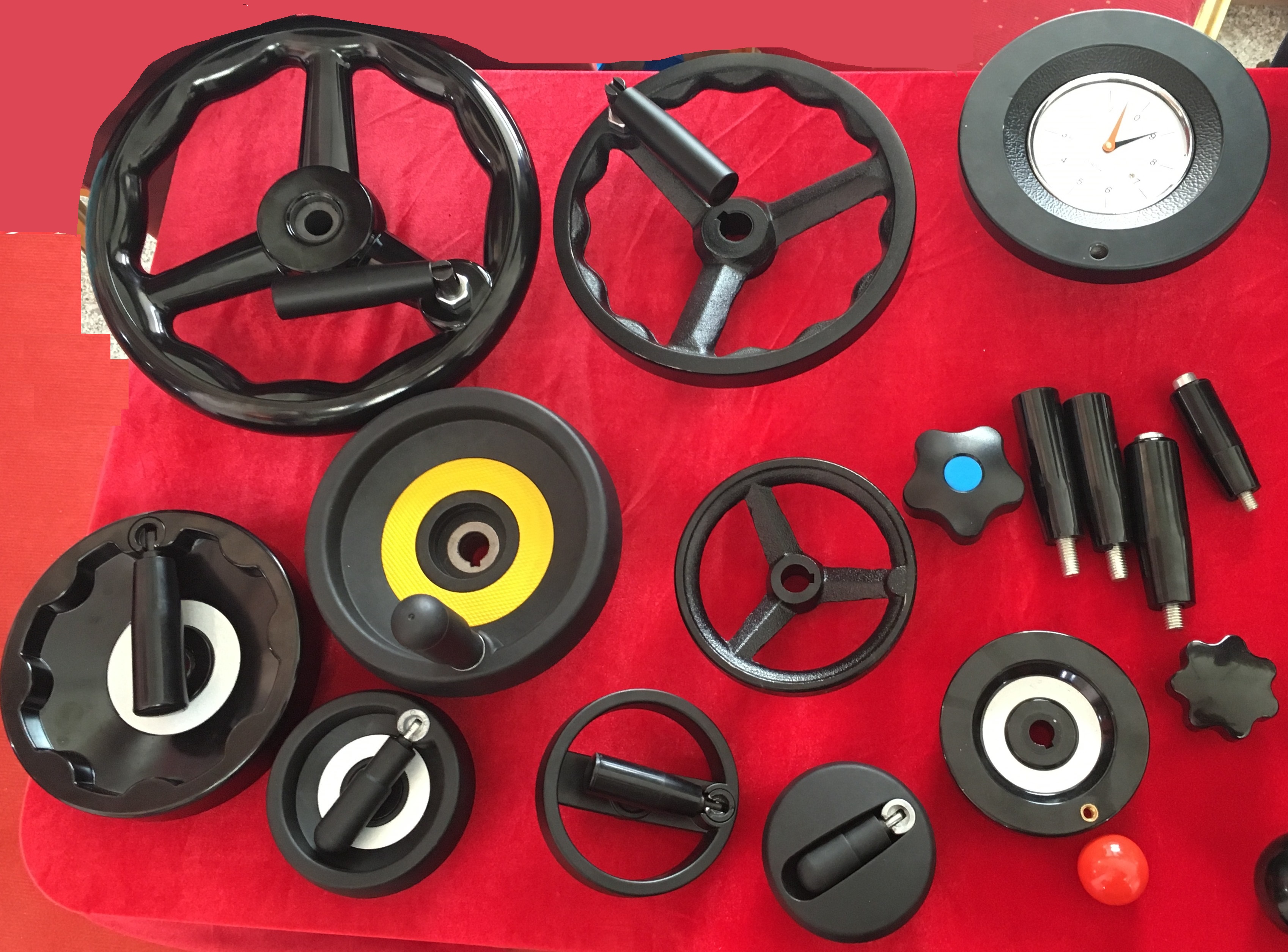
Handwheel
Source industrial handwheels from vetted manufacturers and factories in China and Asia. Designed for importers, distributors, and procurement managers buying in bulk, our catalog covers standard and custom machine tool accessories for OEM production and wholesale distribution.
Sourcing industrial handwheels in volume requires balancing mechanical precision with unit cost. Whether you are procuring cast iron wheels for heavy-duty lathes or phenolic resin variants for light machinery, the factory's machining capabilities directly impact the concentricity and operational feel of the final product. A reliable supply chain depends on partnering with manufacturers who control both the initial casting or molding and the secondary CNC machining.
Specifying Handwheels for Production
When communicating with factories, vague specifications lead to inconsistent batches. The outer diameter (OD) and material are only the baseline; the hub and bore dictate the component's actual utility.
| Material | Common Applications | Manufacturing Process | Key Advantage |
|---|---|---|---|
| Cast Iron | Heavy machine tools, valves | Sand casting | High inertia and durability |
| Aluminum | Milling machines, packaging tech | Die casting / Gravity casting | Lightweight, corrosion resistant |
| Bakelite / Phenolic | Light machinery, medical devices | Injection / Compression molding | Electrical insulation, smooth finish |
| Stainless Steel | Food processing, marine | Investment casting | Maximum corrosion resistance |
Critical Bore and Hub Tolerances
The bore is where most quality failures occur. Factories typically produce "blanks" (solid hubs) and machine the bores to order. You must specify:
- Bore Type: Round, square, hexagonal, or threaded.
- Keyways: Specify the standard (e.g., DIN 6885) and tolerance class. Broaching keyways accurately requires specific tooling that smaller workshops may outsource.
- Concentricity: The bore must be perfectly centered relative to the outer rim. Runout (wobble) during operation is a primary reason for batch rejection.
Manufacturing Realities and Quality Control
The production of metal handwheels involves high-heat processes followed by precision machining. Surface defects from casting can compromise both aesthetics and structural integrity. Implementing strict Quality Control & Inspection protocols before shipment is essential to catch these defects before they reach your warehouse.
Key Inspection Points for Handwheels
- Bore runout and concentricity checks using dial indicators.
- Visual inspection for casting porosity, sand inclusions, or molding flash.
- Verification of keyway dimensions using go/no-go gauges.
- Handle attachment integrity (testing the threading and folding mechanisms).
- Surface finish consistency (powder coating adhesion, chrome plating thickness, or polishing).
Need reliable handwheel manufacturers? Let us verify factory capabilities and secure your supply chain.
Talk to our teamSourcing Mechanics: MOQs, Pricing, and Lead Times
Procurement managers must navigate varying production thresholds depending on the material and customization level. Buying standard profiles off-the-shelf differs significantly from commissioning custom designs.
OEM Customization and Factory Selection
If you are developing proprietary equipment, you will likely require OEM/ODM Services to produce handwheels with custom spoke designs, specific ergonomic grips, or branded center caps.
Pricing is driven primarily by raw material commodity rates (iron, aluminum, resin) and the complexity of the secondary machining. A common sourcing pitfall is selecting a supplier based solely on the casting price, only to discover they outsource the CNC boring to substandard local shops. Conducting thorough Factory Audits ensures your chosen supplier has the necessary in-house machining centers to maintain tight tolerances.
Optimize your machine tool accessory procurement with transparent pricing and strict quality control.
Get a free consultationFrequently Asked Questions
Sourcing machine tool accessories shouldn't be a gamble on tolerances. By defining your bore specifications clearly and verifying the factory's machining setup, you ensure consistent quality across production runs.
Get Sourcing Help for Handwheel
Tell us your requirements and our experts will connect you with verified manufacturers.