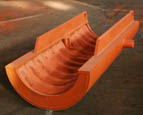
Glass Machinery Parts
Source high-quality glass machinery parts from vetted suppliers and manufacturers in China and Asia. Designed for importers, wholesalers, distributors, and equipment brands looking for reliable OEM/ODM production in bulk. Secure competitive pricing and reliable supply chains for your heavy-duty industrial components.
Sourcing replacement components and operational consumables for glass processing equipment requires balancing aggressive wear resistance with absolute dimensional precision. When procuring glass machinery parts in bulk—whether for distribution, aftermarket supply, or direct integration into OEM equipment—the primary challenge is securing consistent metallurgical and material quality across large production runs. A batch of uneven polishing wheels or out-of-tolerance conveyor rollers can lead to catastrophic glass breakage, equipment jamming, and costly line downtime.
Critical Specifications for Glass Processing Components
Glass manufacturing and processing—encompassing cutting, edging, beveling, and tempering—places extreme stress on machinery parts. Buyers must specify exact material grades and hardness levels to ensure longevity in high-friction, wet, and abrasive environments.
| Component Category | Critical Material Metric | Common Failure Point |
|---|---|---|
| Abrasives & Grinding Wheels | Diamond concentration & bond hardness | Uneven wear causing edge chipping |
| Conveyor & Transfer Rollers | Polyurethane Shore A hardness | Delamination from steel core |
| Vacuum Suction Cups | Nitrile/Silicone tear resistance | Loss of vacuum seal due to micro-tears |
| Cutter Heads & Blades | Tungsten carbide grain size | Premature dulling or micro-fractures |
When negotiating with factories, it is crucial to request material data sheets (MDS) for every component lot. A supplier claiming high-grade diamond abrasives must be able to prove the mesh size and concentration. Similarly, rubber and polyurethane components must be tested for degradation under constant exposure to water and glass dust.
Tolerance Strictness
Glass processing leaves zero room for dimensional variance. A thickness variation of just 0.1mm on a series of transport rollers can cause the glass sheet to track off-center, leading to immediate shattering during the edging process.
Quality Control and Manufacturing Consistency
The barrier to entry for manufacturing basic industrial parts is low, which means the market is flooded with suppliers producing visually acceptable but structurally inferior components. Implementing rigorous quality control and inspection protocols is non-negotiable.
Pre-Shipment Verification Checklist
- Dynamic balance testing for all rotational parts (grinding wheels, large rollers).
- Durometer testing for rubber and polyurethane components across multiple batch samples.
- Dimensional tolerance checks using CMM (Coordinate Measuring Machines) for metal fixtures.
- Adhesion testing for bonded components (e.g., vulcanized rubber to steel shafts).
- Verification of anti-corrosion treatments on parts exposed to cooling water.
Struggling with inconsistent component lifespans? Let our sourcing engineers help you identify and vet manufacturers capable of meeting strict industrial tolerances.
Talk to our teamProduction Economics: MOQs, Lead Times, and Tooling
Understanding the cost drivers in glass machinery part manufacturing helps in negotiating better bulk pricing and planning inventory cycles. Consumables like polishing pads and suction cups are typically produced in high volumes with low unit costs, while structural metal components or custom cutter heads require significant machining time.
If you are developing proprietary components for new equipment, leveraging specialized OEM/ODM services is essential. However, before investing in custom tooling or molds, conducting thorough factory audits ensures the supplier has the actual in-house CNC and molding capabilities they claim, rather than subcontracting to unvetted third parties.
Need to streamline your supply chain or negotiate better terms for custom machinery parts? We manage the entire process from factory vetting to final delivery.
Get a free consultationFrequently Asked Questions
Building a reliable supply chain for glass machinery parts means looking beyond unit price and focusing heavily on material science and manufacturing precision. A proactive approach to product sourcing—where factory capabilities are matched exactly to your technical requirements—is the most effective way to eliminate costly line failures and protect your brand's reputation in the industrial market.
Get Sourcing Help for Glass Machinery Parts
Tell us your requirements and our experts will connect you with verified manufacturers.