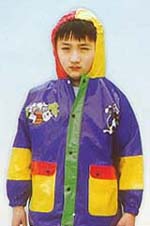
Girls' Coats & Outerwear
Source premium Girls' Coats & Outerwear from vetted suppliers and manufacturers across Asia. This catalog is designed for importers, wholesalers, distributors, and retail brands seeking reliable bulk production, OEM, and private-label manufacturing. Partner with our sourcing experts to secure competitive pricing and compliant, high-quality outerwear.
Sourcing girls' outerwear at scale requires a precise balance of thermal performance, durability, and strict adherence to children's apparel safety regulations. Whether you are developing private-label winter coats, lightweight rain shells, or transitional jackets, the margin for error in manufacturing is virtually zero. Success depends on clearly defined technical specifications and rigorous oversight on the factory floor.
Defining Technical Specifications for Outerwear
When communicating with manufacturers, vague requirements lead to inconsistent samples and production delays. Professional buyers must specify exact material parameters to ensure the final product meets market expectations for warmth and weather resistance.
Shell Fabrics and Weatherproofing
The outer shell determines both the aesthetic and the functional durability of the coat. Key specifications include:
- Fabric Weight and Weave: Typically measured in denier (D) or GSM. A 300D polyester Oxford offers high abrasion resistance for heavy winter coats, while a 40D nylon taffeta is better suited for lightweight, packable jackets.
- Water Resistance: Specify the hydrostatic head rating. A standard water-resistant coat typically requires a minimum 3000mm rating, while performance outerwear should target 5000mm to 10000mm.
- DWR Treatments: Specify C0 (fluorocarbon-free) Durable Water Repellent finishes to meet modern environmental and chemical compliance standards in North America and the EU.
| Insulation Type | Key Specifications | Typical Application |
|---|---|---|
| Synthetic Polyfill | 120-250 GSM, cluster or flat | Standard winter coats, budget-friendly OEM |
| Down Insulation | 500-800 Fill Power, 80/20 or 90/10 cluster ratio | Premium outerwear, extreme cold |
| Fleece Lining | 150-300 GSM, anti-pill finish | Transitional jackets, localized core warmth |
Need help translating your outerwear concepts into factory-ready tech packs? Our sourcing engineers can manage the specification process.
Talk to our teamManufacturing and Quality Control
Children's outerwear is subject to some of the most rigorous safety regulations in the apparel industry. Overlooking these during the design or sourcing phase can result in customs seizures or costly product recalls.
Critical Safety Compliance
Factories accustomed to adult apparel often fail to automatically apply pediatric safety standards. You must explicitly build these into your tech packs and compliance testing protocols.
Children's Outerwear Safety Checklist
- Zero drawstrings or cords in the hood and neck area (per ASTM F1816 / EN 14682).
- Waist and hem drawstrings must be secured, not exceed 75mm outside the garment, and have no free ends.
- All snaps, buttons, and zipper pulls must pass a 90 Newton pull test to prevent choking hazards.
- Fabrics must pass 16 CFR Part 1610 (Standard for the Flammability of Clothing Textiles).
- Zippers must include a top chin guard to prevent skin pinching.
In-Line Inspection Focus Areas
Outerwear manufacturing involves complex assembly, often requiring specialized machinery for seam sealing, down filling, and quilting. Implementing strict quality control during production is essential. Inspectors should verify that seam taping is applied evenly without bubbling, ensuring waterproof integrity. Down-filled garments require weight checks per baffle to prevent cold spots and verify that the factory is not shorting the fill weight to save costs.
Needle Control Policies
Ensure your manufacturer enforces a strict metal and needle control policy. Broken sewing needles left in children's garments are a severe liability. Finished coats must pass through a calibrated metal detector before packing.
Sourcing Mechanics: MOQs, Lead Times, and Pricing
The outerwear supply chain is highly seasonal. Securing capacity requires planning well in advance of the autumn/winter retail delivery window.
If you are utilizing OEM/ODM services for custom designs, expect the following typical parameters:
Pricing is driven primarily by insulation type, shell fabric technicality, and hardware (e.g., YKK zippers vs. generic). Consolidating your hardware and fabric choices across multiple coat styles can help negotiate better pricing and lower MOQs per SKU.
Looking to optimize your outerwear supply chain? Let us evaluate your current pricing and match you with audited, high-capacity manufacturers.
Get a free consultationFrequently Asked Questions
Navigating the complexities of children's outerwear manufacturing requires precise technical oversight and reliable factory partnerships. By standardizing your material specs and enforcing strict safety compliance from day one, you protect your brand and your margins. If you need experienced eyes on your production line, our team is ready to manage the process from factory audit to final shipment.
Get Sourcing Help for Girls' Coats & Outerwear
Tell us your requirements and our experts will connect you with verified manufacturers.