Gears
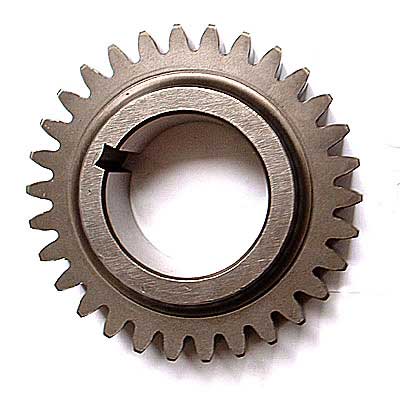
Source high-quality industrial gears from vetted manufacturers and suppliers in China and Asia. Designed for importers, wholesalers, distributors, and OEM brands requiring precision bulk production, our network delivers reliable power transmission components tailored to your exact torque, material, and tolerance specifications.
Sourcing industrial gears at scale requires balancing unit cost with non-negotiable precision. A gear that fails prematurely or generates excessive noise due to poor profile accuracy can compromise an entire machinery assembly. When sourcing bulk gears from overseas manufacturers, the primary challenge is validating that a supplier's machining capabilities, metallurgical controls, and heat treatment processes actually meet their claimed quality grades.
Essential Specifications for Custom Gear Procurement
To avoid manufacturing delays and misaligned expectations, your RFQ must go beyond basic dimensions. Professional gear manufacturers require a complete data package to accurately quote and produce your components.
Critical Gear Specifications for OEM Sourcing
- Basic Geometry: Module (or Diametral Pitch), Number of Teeth, Pressure Angle, and Face Width.
- Quality Standard: Specify the required grade (e.g., DIN 3962, ISO 1328, or AGMA 2015) to dictate allowable pitch and profile deviations.
- Material Grade: Exact steel grades (e.g., C45, 42CrMo4, or the common Chinese equivalent 20CrMnTi for case-hardened gears).
- Heat Treatment: Required surface hardness (HRC), core hardness, and effective case depth.
- Backlash & Tolerances: Center distance tolerances and required backlash allowance.
- Finishing Requirements: Specify if gear teeth require grinding, shaving, or honing post-heat treatment.
Manufacturing Capabilities and Quality Control
The difference between a low-cost gear and a high-performance transmission component lies in the finishing and metallurgical control. Many factories can hob a gear blank, but high-speed or high-torque applications require precision grinding and strict heat treatment protocols.
| Process | Typical Quality Grade | Application | Cost Impact |
|---|---|---|---|
| Milling / Hobbing | DIN 8 to DIN 9 | Low-speed machinery, manual drives | Baseline |
| Hobbing + Shaving | DIN 7 | Medium-speed industrial equipment | Moderate |
| Hobbing + Heat Treat + Grinding | DIN 4 to DIN 6 | High-speed transmissions, precision robotics | High |
When evaluating a factory, pay close attention to their heat treatment facilities. Inconsistent case hardening leads to brittle teeth or premature wear. Furthermore, the heat treatment process inherently causes metal distortion. If you require a DIN 6 or better quality grade, the factory must have CNC gear grinding equipment (such as Reishauer or Gleason machines) to correct this distortion after hardening.
Because equipment claims can be exaggerated, conducting Factory Audits is a standard practice to verify the presence and condition of both grinding machinery and Coordinate Measuring Machines (CMM) or dedicated gear inspection centers.
Heat Treatment Distortion
Always specify whether dimensional tolerances apply before or after heat treatment. For tight-tolerance applications, ensure your supplier plans for post-heat-treatment grinding rather than relying solely on pre-treatment hobbing.
To ensure batch consistency, robust Quality Control & Inspection protocols should mandate the review of gear inspection charts (showing profile, lead, and pitch errors) and material test reports (MTRs) before shipment.
Need to source precision gears from manufacturers with verified CNC grinding and metallurgical capabilities?
Talk to our teamPricing, MOQs, and Lead Times
Gear pricing is highly variable, driven by material costs, the diameter/module of the gear, and the extent of post-machining operations.
- Material: Carbon steels (like C45) are cost-effective for standard applications, while alloy steels (like 42CrMo) increase raw material costs by 20 to 30 percent.
- Machining Time: Precision gear grinding is a slow process. Specifying a DIN 5 gear instead of a DIN 7 gear can double the unit cost due to the increased machine time on expensive equipment.
- Tooling: If you are utilizing OEM/ODM Services for custom profiles, splines, or forged blanks, expect initial tooling costs for custom hobs or forging dies.
Managing the Supply Chain
Heavy industrial components like gears require robust packaging to prevent rust and physical damage during transit. Gears must be properly oiled or vacuum-sealed with VCI (Volatile Corrosion Inhibitor) packaging, and separated by dividers in sturdy wooden crates.
Looking to optimize your gear procurement strategy with competitive pricing and reliable quality?
Get a free consultationSuccessful gear sourcing is rarely about finding the absolute lowest unit price; it is about finding a factory whose equipment profile and quality culture match your application's demands. By clearly defining your metallurgical and tolerance requirements upfront, you can secure reliable, high-performance components that keep your production lines moving.
Get Sourcing Help for Gears
Tell us your requirements and our experts will connect you with verified manufacturers.