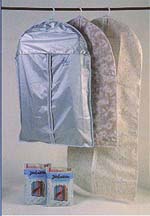
Garment Bags
Source high-quality garment bags directly from vetted manufacturers and suppliers. Designed for importers, wholesalers, and brands looking for reliable OEM or private-label production, our network delivers bulk orders tailored to your specifications. Ensure durability and style for your apparel protection needs.
Garment bags appear straightforward, but at scale, the balance between fabric breathability, water resistance, and structural integrity defines the product's lifespan. Whether you are outfitting a luxury suit brand, supplying a uniform rental service, or importing retail storage solutions, sourcing garment bags requires strict attention to material weight, zipper quality, and seam construction. A minor specification error in bulk production can lead to torn hanger holes, derailed zippers, or trapped moisture ruining the garments inside.
Core Material Specifications
Selecting the right material dictates both the cost and the functional performance of the garment bag. Buyers must specify the exact metric for the chosen material to avoid factory substitution with inferior, thinner alternatives.
| Material | Specification Metric | Performance Characteristics |
|---|---|---|
| Non-woven Polypropylene | 80 - 120 GSM | Highly breathable, cost-effective, dust protection |
| PEVA | 0.10mm - 0.15mm thickness | Waterproof, easy to wipe clean, available in clear or frosted |
| Polyester / Oxford Cloth | 210D - 600D | Durable, water-resistant (with PU coating), premium feel |
| Cotton Canvas | 8oz - 12oz | Maximum breathability, natural aesthetic, heavier weight |
When utilizing OEM/ODM Services to develop a custom line, ensure your tech pack clearly states the material metrics. Factories will default to 60 GSM non-woven or 0.08mm PEVA if a weight or thickness is not explicitly contracted, resulting in flimsy bags that tear easily under the weight of heavy garments.
Construction and Quality Checkpoints
The failure points on a garment bag are almost entirely mechanical. Quality control must focus on the stress points: the zipper, the hanger opening, and the perimeter seams.
Critical Manufacturing Checkpoints
- Zipper Gauge: Specify #3 or #5 nylon coil zippers. #3 is standard for lightweight bags, while #5 is necessary for heavy-duty travel bags.
- Zipper Stops: Ensure top and bottom metal or reinforced plastic stops are installed to prevent the slider from derailing.
- Hanger Hole Reinforcement: The top opening must be reinforced with a PVC overlay, metal grommet, or heavy double-stitching to prevent tearing when loaded.
- Seam Binding: Perimeter seams should be finished with piping or non-woven binding rather than left raw, adding structural rigidity.
- Gusset Construction: For bags designed to hold multiple garments or bulky items, specify a side or bottom gusset (typically 4 to 5 inches) with reinforced corner stitching.
Struggling to find a manufacturer that consistently meets your material and stitching specifications?
Talk to our teamCatching these issues requires rigorous Quality Control & Inspection during the pre-shipment phase. Testing zipper pull strength and load-bearing capacity on the hanger opening should be standard procedure before any container is loaded.
Branding and Customization
Applying logos and custom hardware elevates a basic protective cover into a brand asset. The application method depends heavily on the base material.
Screen printing is the most common and cost-effective method for non-woven PP and PEVA bags. However, ink adhesion on PEVA requires specific curing processes to prevent peeling. For premium polyester or canvas bags, embroidery or heat transfer printing offers a higher-end finish. If you are developing branded retail packaging, coordinating with a Branding & Design specialist ensures your logo scales correctly across different bag lengths (e.g., 40-inch suit bags vs. 60-inch dress bags) without distortion.
Production Realities: MOQs, Lead Times, and Pricing
Garment bag production is highly scalable, but customization heavily influences minimum order quantities (MOQs) and lead times.
Pricing is driven primarily by material yield. A 60-inch bridal bag requires significantly more fabric and longer zipper tracks than a standard 40-inch suit bag. Additional features like clear PVC ID pockets, metal eyelets for folding, and custom-molded zipper pulls will incrementally increase the unit cost. When evaluating suppliers, conducting Factory Audits is crucial to verify their cutting and sewing capacity, ensuring they can handle your volume within the required timeframe.
Ready to optimize your garment bag sourcing and secure better factory pricing?
Get a free consultationFrequently Asked Questions
Sourcing garment bags at scale means managing a delicate equation of material specs, hardware reliability, and precise manufacturing. By defining your technical requirements clearly from day one, you protect both your margins and the garments your products are designed to cover. If you need experienced oversight to manage this process from factory selection to final delivery, our sourcing team is ready to assist.
Get Sourcing Help for Garment Bags
Tell us your requirements and our experts will connect you with verified manufacturers.