Gardening Knives
Source premium gardening knives from vetted Chinese suppliers and manufacturers. Designed for importers, wholesalers, and agricultural distributors, our network supports bulk wholesale orders and custom OEM/private-label production to meet strict performance and durability standards.
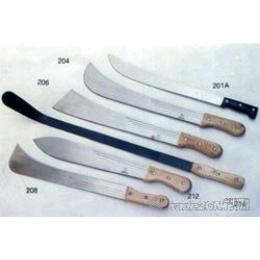
Gardening knives—ranging from precision grafting and budding knives to heavy-duty soil and weeding knives—demand a careful balance of edge retention, corrosion resistance, and ergonomic durability. Sourcing these tools in bulk requires navigating a highly fragmented supplier base. The difference between a professional-grade agricultural tool and a consumer novelty lies entirely in the factory's steel selection, heat treatment capabilities, and assembly tolerances.
Steel Selection and Heat Treatment
The core of any gardening knife is its blade material. Agricultural environments expose these tools to highly corrosive elements, acidic plant saps, and abrasive soils. Specifying the correct steel grade and ensuring consistent heat treatment is critical to the tool's field performance.
Manufacturers typically offer a range of stainless and high-carbon steels. Stainless variants (like 3Cr13 or 420J2) are standard for general-purpose garden knives due to their rust resistance, while high-carbon steels (like SK5) are preferred for professional grafting knives where a razor-sharp, long-lasting edge is required, despite the lower corrosion resistance.
| Material | Typical HRC | Corrosion Resistance | Primary Application |
|---|---|---|---|
| 3Cr13 Stainless | 50-52 | High | Entry-level pruning & weeding |
| 440C Stainless | 56-58 | Moderate | Premium soil knives (Hori-Hori) |
| SK5 High Carbon | 58-60 | Low (requires coating) | Professional grafting & budding |
Heat treatment determines the final Rockwell Hardness (HRC). If the factory rushes the tempering process, the blade will either be too brittle (prone to chipping on rocks) or too soft (losing its edge rapidly). When developing custom tools through OEM/ODM Services, explicitly define your target HRC and require hardness testing reports for every production batch.
Struggling to get consistent steel quality from your current supplier? Let us help you establish rigorous material specifications and find factories that adhere to them.
Talk to our teamManufacturing Tolerances and Assembly
Beyond the blade, the construction method dictates the knife's lifespan. For heavy-duty applications like soil excavation or root cutting, a full-tang construction is non-negotiable.
Handle materials also vary widely, from traditional hardwoods (rosewood or ash) to injection-molded TPR/PP (Thermoplastic Rubber / Polypropylene). If you are sourcing over-molded handles, the bond between the tang and the polymer must be flawless to prevent moisture ingress, which causes hidden corrosion and eventual structural failure.
Critical Quality Control Checkpoints
To ensure consistent shipments, your Quality Control & Inspection protocol must cover specific mechanical and visual checks:
Pre-Shipment Inspection Focus Areas
- Edge geometry: Verify the bevel angle matches specifications (typically 15-20 degrees per side for grafting, wider for soil knives).
- Handle integrity: Check for gaps between the tang and scales/molding where moisture can pool.
- Serration consistency: Ensure aggressive serrations (if specified) are cleanly ground without burrs.
- Sheath fit: Test retention and draw friction on leather or nylon scabbards.
- Corrosion resistance: Perform salt spray testing on coated carbon steel blades.
Pricing, MOQ, and Production Realities
Tooling, material costs, and order volume heavily influence the sourcing mechanics for gardening knives. Most established factories operate with minimum order quantities that justify their production runs, especially if custom branding or handle molds are required.
Pricing is highly elastic based on the steel grade. Upgrading a standard soil knife from 3Cr13 to 440C can increase the unit cost by 30 to 50 percent, but positions the product in a much higher retail tier. When evaluating factory quotes, ensure the supplier isn't substituting cheaper steel to win the bid. Conducting thorough Factory Audits before placing a deposit is the most effective way to verify a manufacturer's in-house machining and testing capabilities.
Ready to scale your garden tool inventory? We manage factory negotiations, verify tooling costs, and oversee production to keep your supply chain running smoothly.
Get a free consultationFrequently Asked Questions
Sourcing reliable gardening knives at scale means looking past the polish of a pre-production sample and verifying the underlying metallurgy and assembly processes. By establishing strict material specifications and maintaining oversight on the factory floor, you can build a resilient supply chain that delivers professional-grade tools batch after batch.
Get Sourcing Help for Gardening Knives
Tell us your requirements and our experts will connect you with verified manufacturers.