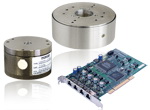
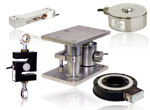
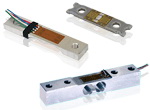
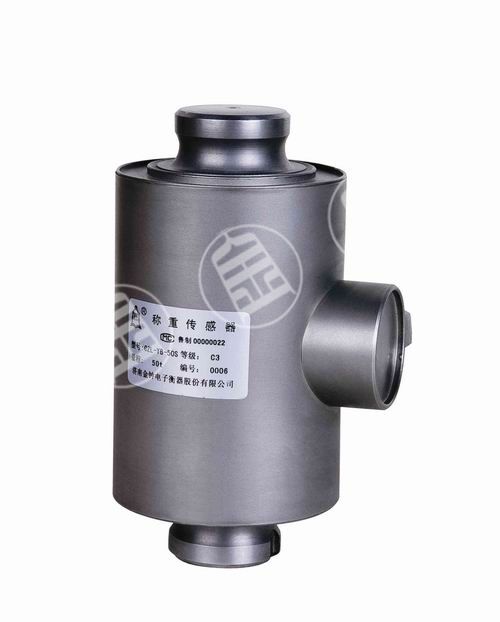
Force Sensors and Load Cells
Source high-precision Force Sensors and Load Cells from vetted suppliers and manufacturers across Asia. Designed for importers, distributors, and brands seeking reliable OEM and private-label production, our network delivers bulk components engineered for rigorous industrial and commercial applications.
Procuring force sensors and load cells at volume requires navigating a complex landscape of material science, precision machining, and electronic calibration. A sensor's reliability dictates the performance of the final product—whether it is an industrial weighbridge, a medical infusion pump, or a retail point-of-sale scale. For procurement managers and engineers, the challenge lies in identifying manufacturing partners who maintain strict environmental controls during production and possess the metrology infrastructure required for accurate, repeatable calibration.
Critical Specifications and Material Selection
The foundation of any load cell is its mechanical spring element and the strain gauges bonded to it. When specifying your requirements to a manufacturer, material selection directly impacts capacity, environmental resilience, and unit cost.
| Material | Typical Capacity Range | Primary Applications | Cost Profile |
|---|---|---|---|
| Aluminum Alloy | 100g to 500kg | Retail scales, bench scales, medical devices | Low to Moderate |
| Alloy Steel | 500kg to 50t+ | Floor scales, hoppers, industrial weighing | Moderate |
| Stainless Steel | 10kg to 100t+ | Food processing, chemical plants, washdown environments | High |
Beyond the base material, buyers must define the required accuracy class (such as OIML R60 C3, C4, or C6) and the acceptable combined error (typically expressed as a percentage of full scale, such as 0.02 percent FS). Environmental protection is equally critical; for harsh environments, specify IP67 for temporary immersion or IP68/IP69K for continuous immersion and high-pressure washdowns. Ensure the manufacturer uses laser welding for hermetic sealing rather than relying solely on potting compounds.
Manufacturing Process and Quality Control
The production of strain gauge load cells is highly sensitive to environmental factors. Quality is often won or lost in the bonding and curing phases. Evaluating a supplier's facility through comprehensive Factory Audits is essential to verify their production environment and metrology lab capabilities.
Surface Preparation and Bonding
The metal body must be precision-machined, sandblasted, and chemically cleaned. Strain gauges are then bonded in a strictly climate-controlled room to prevent dust and humidity contamination.
Curing and Baking
Adhesives undergo a multi-stage thermal curing process to ensure long-term stability and eliminate mechanical hysteresis.
Temperature Compensation
Resistors are added to the Wheatstone bridge circuit to compensate for zero-shift and span-shift across the specified operating temperature range.
Calibration and Sealing
Sensors are loaded with dead weights or hydraulic test rigs to verify linearity, repeatability, and creep before being hermetically sealed or potted.
Need to verify a supplier's calibration capabilities? Let our engineers audit their metrology labs and production controls before you place an order.
Talk to our teamTo prevent out-of-spec components from entering your supply chain, robust Quality Control & Inspection is non-negotiable. Pre-shipment inspections should include reviewing the factory's calibration reports for each batch, verifying zero balance, and conducting sample creep tests.
Customization and OEM/ODM Production
Standard load cells fit many applications, but specialized equipment often requires custom dimensions, unique mounting threads, or specific output configurations. Working with capable partners for OEM/ODM Services allows you to tailor the sensor to your exact mechanical constraints.
Key Variables for Custom Load Cell Sourcing
- Dimensional constraints and mounting hole configurations
- Cable length, shielding type, and connector specifications
- Output signal requirements (Analog mV/V, or integrated digital outputs like RS485/CAN bus)
- Overload protection limits (e.g., 150 percent safe overload, 300 percent ultimate overload)
- Specific temperature compensation ranges for extreme environments
Pricing, MOQs, and Lead Times
Pricing for force sensors varies drastically based on capacity, material, and precision class. A standard aluminum single-point load cell for a retail scale might cost under $5, while a high-capacity, hermetically sealed stainless steel canister load cell can exceed $200 per unit.
Struggling to negotiate favorable terms or manage long production lead times? We help buyers streamline their supply chain and secure competitive pricing.
Get a free consultationFrequently Asked Questions
Sourcing force sensors and load cells is an exercise in risk management. A supplier's catalog specifications mean little without the rigorous manufacturing controls and calibration infrastructure to back them up. By thoroughly auditing facilities and enforcing strict pre-shipment quality checks, buyers can secure highly accurate, reliable components at scale. If you are looking to optimize your sensor procurement or develop a custom weighing solution, expert on-the-ground support can bridge the gap between engineering requirements and factory-floor realities.
Get Sourcing Help for Force Sensors and Load Cells
Tell us your requirements and our experts will connect you with verified manufacturers.