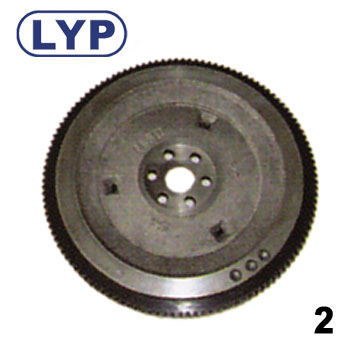
Flywheels
Source high-quality flywheels from vetted suppliers and manufacturers across Asia. This catalog is designed for automotive parts importers, wholesale distributors, and brands seeking reliable OEM production in bulk. Find competitive pricing on single-mass and dual-mass transmission components built to exact specifications.
Sourcing automotive flywheels at scale requires balancing unit cost with zero-tolerance precision. Whether you are supplying the aftermarket replacement sector with standard cast iron single-mass flywheels or developing performance billet units, the core challenge remains the same: ensuring your manufacturing partner consistently meets dynamic balancing and dimensional runout tolerances across high-volume production runs. A flywheel that fails on vibration or ring gear runout leads to catastrophic clutch failure and severe warranty liabilities.
Material Selection and Production Methods
The application dictates both the material and the manufacturing process. The vast majority of standard passenger and commercial vehicle flywheels are cast, while performance and heavy-duty applications demand forged or billet construction.
- Nodular / Ductile Cast Iron (e.g., QT450-10, QT500-7): The industry standard for OEM replacement single-mass flywheels (SMF). It offers excellent dampening properties and is highly cost-effective for large production runs. The primary risk here is internal porosity during the casting process.
- Billet Steel (e.g., 4140 Chromoly or 1045 Carbon Steel): CNC-machined from a solid block of steel. Used for performance, racing, or high-torque diesel applications. It eliminates the risk of casting voids and withstands significantly higher RPMs before bursting.
- Aluminum with Steel Friction Plates: Used for lightweight racing applications to reduce rotational mass. Requires precise fastening of the replaceable steel friction surface.
| Specification | Cast Iron SMF | Billet Steel | Dual-Mass (DMF) |
|---|---|---|---|
| Primary Market | Standard Aftermarket | Performance / Heavy Duty | Modern OEM Replacement |
| Manufacturing Method | Sand/Die Casting + CNC | CNC Machining | Stamping, Machining, Assembly |
| Tooling Costs | High (Casting Molds) | Low (Programmed CNC) | Very High (Complex Assembly) |
| Vibration Dampening | Moderate | Low | Exceptional |
Need to source custom flywheels or verify a manufacturer's machining capabilities? Let our engineering and sourcing teams evaluate your specifications and match you with the right facility.
Talk to our teamCritical Tolerances and Quality Control
A flywheel is fundamentally a rotational energy storage device; any imbalance is magnified at engine speeds. When evaluating a supplier, you must look beyond their casting capabilities and scrutinize their machining and balancing stations.
To prevent defects from leaving the factory floor, rigorous quality control and inspection protocols must be enforced, particularly focusing on dynamic balancing and surface finish.
Key Inspection Points for Flywheel Sourcing
- Dynamic Unbalance: Must be balanced to specific RPMs (often under 10 g-cm at 3000 RPM) using automated balancing machines.
- Friction Surface Runout: Axial runout should typically measure under 0.05mm to prevent clutch chatter and uneven wear.
- Ring Gear Hardness: Induction hardened teeth should measure between HRC 45 and HRC 55 to prevent starter motor stripping.
- Interference Fit: The starter ring gear must be heat-shrunk onto the flywheel with precise interference tolerances so it does not slip under load.
- Surface Finish (Ra): The clutch mating surface requires a specific Ra value (often 1.6 to 3.2 micrometers) to ensure proper clutch bed-in.
Conducting thorough factory audits before placing high-volume orders is essential. You need to verify that the supplier has in-house dynamic balancing equipment and magnetic particle inspection (MPI) capabilities to check for micro-cracks in castings.
Pricing, MOQs, and Lead Times
Flywheel pricing is highly sensitive to raw material costs (steel and iron indices) and the complexity of the manufacturing process. Dual-mass flywheels (DMF) are significantly more expensive due to their complex internal spring and planetary gear assemblies.
For brands requiring OEM/ODM services, expect an additional 20 to 30 days for initial tooling and sample approval if you are developing a new casting mold or a custom lightweight billet design. Tooling costs for cast flywheels typically range from $1,500 to $4,000 per SKU, depending on complexity and size, which is often amortized or refunded after a certain volume threshold is met.
Struggling with inconsistent balancing or high tooling costs? Connect with us to streamline your automotive parts supply chain and negotiate better terms with top-tier manufacturers.
Get a free consultationFrequently Asked Questions
Securing a reliable supply of flywheels means looking past the unit price and focusing heavily on a factory's metallurgical control and dynamic balancing consistency. When your manufacturing partner has the right automated equipment and quality management systems in place, you eliminate the downstream costs of warranty claims and compromised brand reputation.
Get Sourcing Help for Flywheels
Tell us your requirements and our experts will connect you with verified manufacturers.