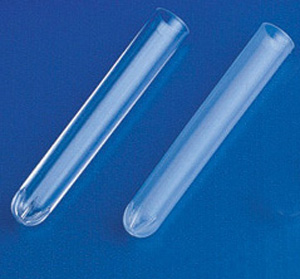
Flasks
Source high-quality laboratory flasks in bulk from vetted manufacturers and wholesale suppliers. Designed for distributors, procurement managers, and laboratory equipment importers, our supplier network delivers reliable borosilicate glass and precision plastic flasks at competitive wholesale prices.
Sourcing laboratory flasks in high volumes requires strict adherence to material purity, thermal shock resistance, and volumetric accuracy. Whether you are procuring boiling, Erlenmeyer, or volumetric flasks, the primary challenge lies in ensuring consistent wall thickness, proper stress relief, and accurate calibration across thousands of units.
Material Specifications and Volumetric Accuracy
The foundation of premium laboratory glassware is Borosilicate 3.3 glass, prized for its exceptionally low coefficient of thermal expansion and high chemical resistance. When specifying flasks to a manufacturer, you must define the material grade, wall thickness, and accuracy class. For plastic alternatives, materials like Polypropylene (PP) or Polymethylpentene (PMP) are common, but they require precise injection molding to maintain clarity and chemical resistance.
For volumetric flasks, accuracy is strictly governed by international standards (such as ISO 1042). Buyers must clearly communicate their tolerance requirements to the factory, as this dictates the calibration process and unit cost.
| Specification | Class A Flasks | Class B Flasks |
|---|---|---|
| Tolerance | Strict limits (e.g., ±0.06ml for 50ml) | Twice the Class A limit |
| Primary Use | Analytical chemistry, precision titration | General laboratory mixing and storage |
| Traceability | Often includes batch or individual certificates | Standard commercial production |
Manufacturing Processes and Quality Control
High-volume flask production utilizes automated tube drawing or mold blowing, followed by a critical annealing process. Annealing involves slowly cooling the glass in a specialized furnace to relieve internal stresses created during shaping. If a factory rushes the annealing stage to increase output, residual stress remains in the glass, leading to spontaneous breakage when the end-user applies heat or autoclaves the flask.
Partnering with a supplier that maintains well-calibrated annealing furnaces is non-negotiable. To verify a factory's technical capabilities before placing a large order, professional factory audits are highly recommended.
Critical QC Checks for Glass Flasks
- Polariscopic inspection to detect residual thermal stress
- Wall thickness uniformity (especially at the base and neck transitions)
- Accuracy and durability of printed graduations and marking spots
- Standard taper joint fit, grinding quality, and leak-proof sealing
- Base flatness to ensure stability on magnetic stirrers or hotplates
Implementing rigorous quality control inspections before shipment ensures that defective units—such as those with air bubbles (seeds), striae, or uneven walls—are caught before they leave the facility.
Struggling with inconsistent glassware quality or high breakage rates from your current supplier? Let our team establish a rigorous inspection and testing protocol for your next order.
Discuss your QC requirementsPricing Drivers, MOQs, and Lead Times
China's Jiangsu and Shandong provinces serve as major hubs for laboratory glassware manufacturing. Pricing is heavily influenced by the degree of automation, the weight of the glass (standard vs. heavy-duty walls), and custom printing requirements. Volumetric flasks, which require individual calibration and marking, naturally command a higher price point than standard Erlenmeyer flasks.
If you require custom standard taper joints, specialized amber glass for light-sensitive compounds, or OEM branding, MOQs will typically increase to justify the setup costs. Furthermore, if your market requires strict adherence to specific pharmacopeia or ISO standards, you must factor in the time and cost for independent compliance testing.
Need to consolidate labware from multiple specialized factories? We handle the supplier coordination, quality assurance, and logistics to streamline your procurement.
Talk to our teamFrequently Asked Questions
A reliable supply chain for laboratory flasks rests on choosing manufacturing partners with properly calibrated annealing equipment, strict raw material controls, and meticulous calibration procedures. By defining your specifications clearly and enforcing strict quality oversight, you can secure durable, precision labware that meets the demands of professional end-users.
Get Sourcing Help for Flasks
Tell us your requirements and our experts will connect you with verified manufacturers.