Ferris Wheels
Source commercial-grade Ferris wheels directly from vetted manufacturers and suppliers. Designed for amusement park developers, entertainment facility distributors, and large-scale importers, our wholesale selection offers customizable heights and cabin configurations. Partner with us for reliable production and international logistics.
Sourcing commercial amusement equipment requires balancing significant capital investment with uncompromising structural safety. Procuring Ferris wheels from overseas manufacturers involves rigorous engineering validation, precise metallurgical standards, and complex international freight logistics. For large-scale installations, the difference between a profitable attraction and a liability lies entirely in factory vetting, component quality, and strict adherence to international safety standards.
Engineering and Structural Specifications
When evaluating a manufacturer's capability, their engineering standards are the first filter. Ferris wheels are high-stress dynamic structures subject to constant wind loads, fatigue, and heavy passenger payloads. You must ensure the factory uses appropriate materials and drive mechanisms for your specific height and capacity requirements.
Drive Systems
The drive mechanism dictates the maintenance schedule, operational noise, and overall lifespan of the wheel.
| Drive Type | Mechanism | Best Application | Maintenance Profile |
|---|---|---|---|
| Friction Drive | Rubber tires driving the outer rim | Small to medium wheels (under 50m) | High wear on tires; easy to replace |
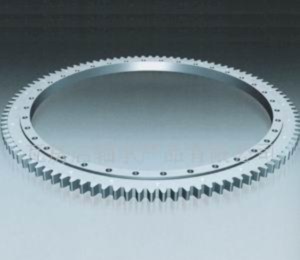
| Pinion / Gear Drive | Gears engaging a track on the rim | Medium to large wheels | Requires precise lubrication; durable |
| Center Axis Drive | Hydraulic or electric motors at the hub | Massive observation wheels | Complex gearbox maintenance; very quiet |
Manufacturing Standards and Quality Control
Verifying a supplier's production floor is non-negotiable for heavy amusement rides. Many suppliers assemble components but outsource the heavy steel fabrication. To mitigate risk, comprehensive Factory Audits are essential to confirm the facility has the heavy machinery, certified welders, and engineering software (like ANSYS or SolidWorks) required for structural modeling.
Need to verify a heavy equipment manufacturer? We deploy specialized engineers to audit amusement ride factories across Asia.
Talk to our teamDuring production, quality control must go beyond visual inspection. Welds on the main support legs and central axle are critical failure points.
Critical In-Line Inspection Checkpoints
- Non-Destructive Testing (NDT): Ultrasonic or X-ray testing on 100% of critical load-bearing welds.
- Material Certificates: Verification of steel mill test reports against actual delivered raw materials.
- Surface Treatment: Sandblasting (Sa2.5 standard) followed by epoxy zinc-rich primer and polyurethane topcoats.
- Component Traceability: Verifying the origin of critical components like PLCs (Siemens/Omron) and motors (SEW or equivalent).
- Pre-Assembly Testing: Factory test-fit of the central hub and partial spoke assembly to ensure alignment.
Executing proper Quality Control & Inspection during the fabrication phase prevents catastrophic fitment issues when the equipment arrives at your site.
Compliance and International Logistics
Amusement rides face strict regulatory hurdles. Depending on your market, the equipment must comply with standards such as EN13814 (Europe) or ASTM F2291 (United States). Navigating Compliance & Testing requires the manufacturer to provide comprehensive design calculations, risk assessments, and electrical schematics before production even begins.
Shipping a Ferris wheel is a massive logistical undertaking. A 50-meter wheel can require upwards of ten 40HQ containers. Central axles and large support base plates often exceed standard container dimensions, requiring Open Top or Flat Rack containers. Coordinating this Shipping & Freight demands precise packing lists and consolidation strategies to avoid port delays and excessive demurrage charges.
Pricing, MOQs, and Production Lead Times
Given the scale of the product, the Minimum Order Quantity (MOQ) is universally 1 unit. However, pricing and lead times vary wildly based on the wheel's height, cabin style (open gondola vs. enclosed, air-conditioned cabins), and lighting packages (standard LED vs. programmable RGB pixel mapping).
- Production Lead Times: Typically range from 60 to 120 days for standard designs under 40 meters. Custom observation wheels exceeding 80 meters can require 6 to 9 months of engineering and fabrication.
- Pricing Drivers: Beyond raw steel tonnage, costs are heavily influenced by cabin amenities, drive system origin (imported European motors vs. domestic equivalents), and the complexity of the control systems.
- Payment Terms: Standard terms for heavy machinery usually involve a 30% to 40% T/T deposit, with the balance paid after a successful factory acceptance test (FAT) and before container loading.
Managing multi-container shipments and factory acceptance tests for heavy machinery is complex. Let our experts handle the logistics and quality assurance.
Get a free consultationFrequently Asked Questions
Sourcing a Ferris wheel is as much a construction project as it is a procurement task. Success requires deep technical oversight, from validating metallurgical reports to managing out-of-gauge freight. By applying rigorous engineering checks and maintaining strict factory oversight, you can secure world-class amusement equipment that delivers both safety and long-term profitability.
Get Sourcing Help for Ferris Wheels
Tell us your requirements and our experts will connect you with verified manufacturers.