Electrolytic Cells
Source high-performance industrial electrolytic cells directly from vetted manufacturers and suppliers in China. Designed for chemical processors, industrial distributors, and procurement managers, our wholesale catalog features robust systems for chlor-alkali, hydrogen generation, and water treatment applications.
Sourcing industrial electrolytic cells requires a strict balance between initial capital expenditure and long-term operational efficiency. Whether you are procuring megawatt-scale alkaline electrolyzers for hydrogen production, specialized chlor-alkali cells, or compact units for electrochlorination, the core sourcing challenge is consistent: verifying electrode coating integrity, membrane quality, and structural tolerances before the equipment ever leaves the factory.
When buying chemical machinery overseas, relying solely on a supplier's spec sheet is a major risk. Success depends on auditing the manufacturer's actual fabrication capabilities, particularly their welding standards for exotic metals and their anode coating processes.
Critical Specifications for Bulk Procurement
Industrial buyers must specify exact operational parameters to ensure the cell stack performs efficiently under continuous load. Vague specifications lead to premature electrode degradation or catastrophic membrane failure.
Key parameters to define with your manufacturer include:
- Current Density (A/m²): Determines the production rate and heat generation. Higher current densities require advanced cooling and premium membrane materials.
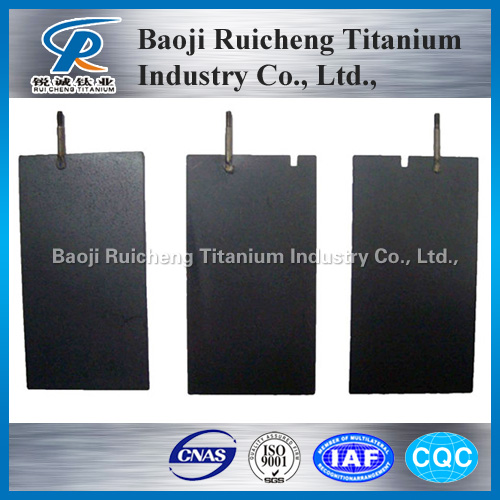
- Electrode Materials: Titanium substrates with Mixed Metal Oxide (MMO) coatings (Ruthenium-Iridium or Iridium-Tantalum) are standard for anodes, while cathodes typically utilize nickel mesh or activated carbon.
- Operating Pressure & Temperature: High-pressure cells (e.g., 30 bar for hydrogen) require specialized housing materials and rigorous hydrostatic testing.
- Specific Energy Consumption: Measured in kWh/kg or kWh/Nm³, this dictates the operational cost of the cell over its lifecycle.
| Parameter | Alkaline Electrolysis | PEM Electrolysis |
|---|---|---|
| Typical Electrolyte | 25-30% KOH solution | Solid polymer membrane |
| Current Density | Under 0.5 A/cm² | 1.0 to 2.0 A/cm² |
| Dynamic Response | Slow (minutes) | Fast (seconds) |
| Capital Cost | Lower (mature tech) | Higher (precious metals) |
Need help verifying technical capabilities and vetting specialized chemical machinery suppliers?
Talk to our teamManufacturing Quality & Factory-Floor Risks
The longevity of an electrolytic cell is won or lost in the manufacturing details. China is a global hub for electrolyzer manufacturing, but quality varies drastically between tier-one industrial fabricators and lower-tier assemblers.
When evaluating a factory, pay close attention to their titanium welding and coating facilities. Titanium is highly reactive at elevated temperatures; welding must be performed in strictly controlled, inert-gas environments (argon shielding) to prevent embrittlement. Furthermore, MMO coatings must be applied in multiple thin layers and thermally baked at precise temperatures. Rushed baking cycles lead to coating delamination and rapid voltage spikes during operation.
To mitigate these risks, implementing rigorous Quality Control & Inspection protocols during production is non-negotiable.
Critical Pre-Shipment Inspection Points
- Coating Thickness Verification: X-ray fluorescence (XRF) testing to confirm MMO coating weight and uniformity.
- Weld Seam Inspection: Dye penetrant or radiographic testing on all titanium and nickel structural welds.
- Hydrostatic Pressure Testing: Sustained pressure tests at 1.5x operating pressure to verify gasket and seal integrity.
- Electrical Resistance Testing: Measuring internal resistance across the assembled stack to ensure optimal contact.
For buyers requiring custom dimensions for retrofit projects or proprietary cell architectures, partnering with a facility capable of advanced OEM/ODM Services is essential. We strongly recommend conducting comprehensive Factory Audits to verify a supplier's engineering team, ISO certifications, and historical performance with similar industrial clients.
Lead Times, MOQs, and Pricing Realities
Procuring industrial electrolytic cells is a project-based endeavor, and timelines reflect the complexity of the equipment.
- Minimum Order Quantities (MOQs): For large-scale industrial cells (e.g., multi-megawatt stacks), the MOQ is typically 1 system. For smaller, modular electrochlorination cells or replacement electrode packs, MOQs generally range from 10 to 50 units.
- Lead Times: Standard modular cells may take 45 to 60 days to produce. Custom-engineered stacks, particularly those requiring specialized membranes or high-pressure certifications, typically require 90 to 120 days from drawing approval to final testing.
- Pricing Drivers: The cost of raw materials (titanium, nickel, iridium, ruthenium) heavily dictates pricing. Expect price fluctuations based on global precious metal indices. Additionally, the choice of membrane (e.g., imported Nafion vs. domestic equivalents) can shift the total cost of the cell stack by 15-30%.
Managing a complex machinery procurement project? Let our engineers handle supplier negotiation and production oversight.
Get a free consultationBuyer FAQ
Sourcing electrolytic cells is an exercise in risk management. The lowest quoted price often hides compromises in precious metal coatings or membrane quality, which inevitably leads to crippling downtime and higher operational costs. By enforcing strict engineering standards and conducting on-site verification, you can secure high-performance machinery that delivers reliable, long-term efficiency.
Get Sourcing Help for Electrolytic Cells
Tell us your requirements and our experts will connect you with verified manufacturers.