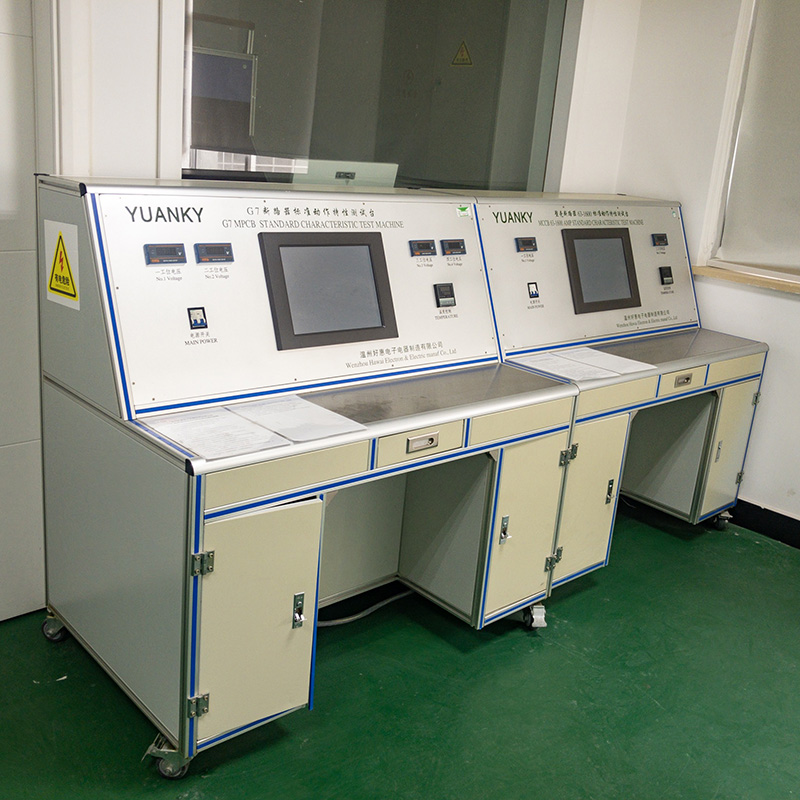
Electrical Testing Machines
Source commercial-grade electrical testing machines from vetted manufacturers and wholesale suppliers. Designed for importers, distributors, and industrial brands seeking reliable OEM production, our network delivers precision testing equipment that meets rigorous international compliance standards and measurement tolerances.
Sourcing electrical testing equipment for industrial distribution or production line use requires balancing measurement precision with manufacturing scale. The core challenge for buyers is verifying that a factory's stated accuracy specifications hold up across entire production batches and under varied environmental conditions, rather than just on a carefully tuned golden sample.
Critical Specifications for Bulk Buyers
When evaluating suppliers for multimeters, oscilloscopes, hipot testers, or LCR meters, the distinction between consumer-grade and industrial-grade equipment lies in the internal architecture. Precision relies heavily on the quality of Analog-to-Digital Converters (ADCs), internal shielding, and thermal stability.
| Component / Spec | Standard Commercial Grade | Industrial / Precision Grade |
|---|---|---|
| ADC Resolution | 8-bit to 12-bit | 16-bit to 24-bit |
| Internal Shielding | Basic PCB ground planes | Dedicated Mu-metal or copper enclosures |
| Thermal Drift | High (requires frequent zeroing) | Low (temperature-compensated references) |
| Safety Ratings | CAT II / Basic CAT III | True CAT III 1000V / CAT IV 600V |
To ensure the equipment meets these specifications, you must look beyond the spec sheet and examine the manufacturer's supply chain. High-end testing machines require authentic, low-tolerance ICs and precision resistors. If a factory relies on gray-market component brokers rather than authorized distributors, the risk of calibration drift and premature failure increases significantly.
Need to verify a factory's component sourcing and technical capabilities before placing a volume order?
Talk to our teamQuality Control on the Factory Floor
The reliability of electrical testing machines is won or lost during assembly and final calibration. A factory's quality management system must account for electrostatic discharge (ESD) protection, precise wave soldering, and rigorous burn-in processes.
When conducting Factory Audits, evaluate the supplier on the following manufacturing controls:
Factory Evaluation Checklist for Testing Equipment
- ISO 17025 accredited calibration lab on-site or partnered for final QA.
- Strict ESD protocols on the assembly floor (grounded mats, wrist straps, humidity control).
- Automated Optical Inspection (AOI) to detect soldering defects on high-density PCBAs.
- Burn-in testing chambers operating at elevated temperatures (typically 40°C to 50°C) for at least 24 to 48 hours to catch early component failure.
- Traceability of calibration certificates tied to specific unit serial numbers.
Implementing systematic Quality Control & Inspection before shipment is critical. Pre-shipment inspections should include functional testing against known reference standards (like Fluke calibrators) to ensure accuracy tolerances are met across the voltage, current, and frequency ranges.
Compliance and Safety Standards
Electrical testing equipment must adhere to strict international safety and electromagnetic compatibility standards. Importing non-compliant devices exposes your business to severe liability, especially if the equipment is used in high-voltage industrial environments.
- LVD and EMC Directives (CE): Required for the European market. The equipment must not emit excessive electromagnetic interference and must be immune to external noise.
- Measurement Category (CAT) Ratings: IEC 61010-1 defines safety categories (CAT I through CAT IV). A true CAT III or CAT IV rating requires specific internal clearances (creepage), high-rupture capacity (HRC) fuses, and robust input protection circuitry (PTCs and MOVs).
- Calibration Standards: While not a safety standard, adherence to NIST or ISO calibration traceability is often a hard requirement for B2B end-users.
If you are unsure whether a supplier's certifications are legitimate, engaging professional Compliance & Testing services can verify CE, FCC, and RoHS documentation through recognized third-party labs.
Typical MOQs, Pricing, and Lead Times
The manufacturing hub for electronics testing equipment is heavily concentrated in Guangdong province, China (specifically Shenzhen and Dongguan). Pricing and lead times vary based on the level of customization required.
For off-the-shelf designs with simple logo printing and customized user manuals, MOQs can be quite accessible. However, if you are developing a proprietary device with custom firmware or specialized measurement ranges, expect higher MOQs to absorb the R&D and tooling costs.
Planning a private-label line of testing equipment? Let's discuss realistic production timelines and costs.
Get a free consultationFrequently Asked Questions
Sourcing electrical testing machines requires looking past the outer casing and evaluating the integrity of the internal architecture and factory QA processes. By ensuring strict component sourcing, verifying safety compliance, and implementing robust pre-shipment calibration checks, you can build a highly profitable and reliable equipment brand.
Get Sourcing Help for Electrical Testing Machines
Tell us your requirements and our experts will connect you with verified manufacturers.