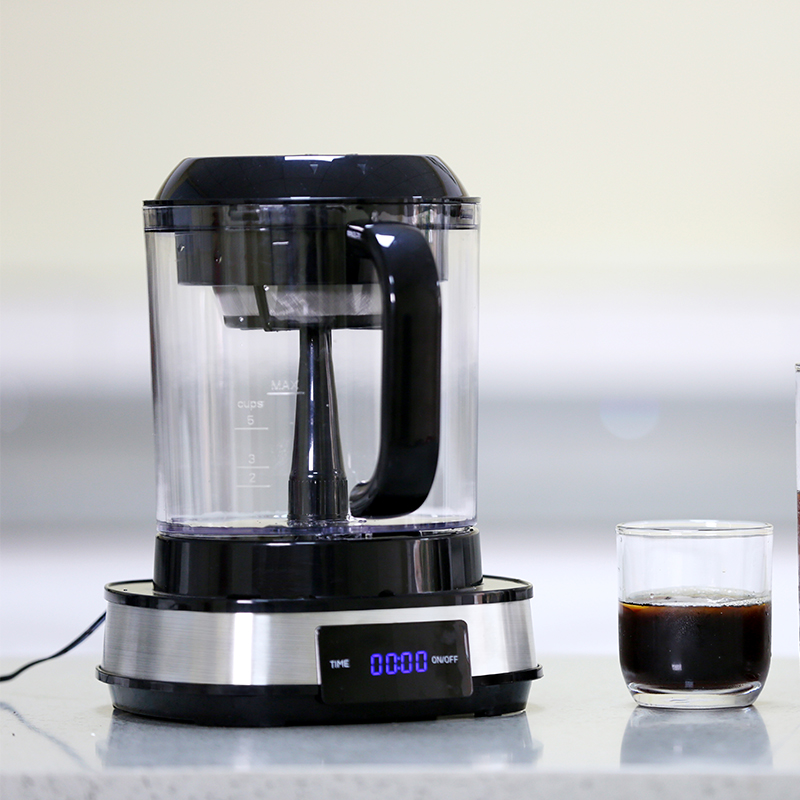
Electric Cold Brew Coffee Makers
Source premium electric cold brew coffee makers directly from vetted manufacturers and suppliers in Asia. Designed for importers, wholesale distributors, and appliance brands seeking reliable OEM and private-label production, this category features high-volume factory partners capable of delivering rapid-extraction technology with strict quality control.
Electric cold brew coffee makers represent a high-growth segment in small kitchen appliances, reducing traditional 12-to-24-hour steeping times to under 45 minutes using active extraction technologies. For bulk buyers and brands, the primary sourcing challenge lies in balancing robust, long-lasting electronics—specifically DC motors and PCBs—with stringent food-contact material compliance and watertight housing designs.
Extraction Technologies and Core Specifications
Unlike standard drip machines, electric cold brew makers rely on active agitation or pressure to accelerate extraction without heat. When specifying a product with a manufacturer, the extraction mechanism dictates the internal component cost, the required motor torque, and the overall unit lifespan.
| Extraction Method | Mechanism | Component Cost Profile | Typical Application |
|---|---|---|---|
| Vacuum Extraction | Creates negative pressure cycles to draw water through grounds | High (requires precision pumps and robust seals) | Premium / Prosumer models |
| Magnetic Agitation | Uses a magnetic base to spin an impeller inside the pitcher | Medium (requires strong rare-earth magnets and DC motor) | Mid-range consumer models |
| Water Circulation | Pumps water continuously from the base over the coffee bed | Low to Medium (standard micro-pumps) | Entry-level to mid-range models |
Beyond the extraction method, housing and pitcher materials are critical cost drivers. Pitchers are typically manufactured from high-borosilicate glass or BPA-free Tritan plastic. Tritan offers better durability for shipping and handling, while glass commands a premium retail perception. Filters must be constructed from food-grade SUS304 or SUS316 stainless steel, typically utilizing a micro-mesh of 300 to 400 microns to prevent sludge accumulation in the final beverage.
Need help identifying a factory with the engineering capabilities for custom extraction technology? We can manage the supplier vetting and technical negotiation.
Talk to our teamManufacturing Vulnerabilities and Quality Control
The intersection of water and electronics makes this product category susceptible to specific failure rates if manufacturing tolerances are not strictly enforced. Assembly lines in Guangdong and Zhejiang—the primary hubs for these appliances—must demonstrate rigorous testing protocols.
When auditing a factory or setting up your Quality Control & Inspection plan, pay close attention to the sealing architecture. Silicone gaskets must maintain integrity under repeated pressure cycles (especially in vacuum models) and daily washing.
Critical Factory Inspection Points
- Hi-Pot (High Potential) testing on the assembly line to ensure electrical insulation and safety.
- Water ingress testing around the PCB housing and motor shaft seals (IPX4 or higher depending on the base design).
- Motor lifespan testing (minimum continuous run-time benchmarks, typically exceeding 500 hours).
- Food-contact material documentation (FDA, LFGB, or REACH declarations for all plastics, silicones, and metals).
For brands adapting an existing white-label design, ensure the factory has up-to-date certifications for your target market. Partnering with a sourcing team that handles Compliance & Testing ensures that CE, RoHS, FCC, and UL/ETL certifications are legitimate and tied to the specific components used in your production run, not just a historical "golden sample."
OEM/ODM Customization, MOQs, and Pricing Realities
Most suppliers offer white-label designs that can be customized with your brand's CMF (Color, Materials, Finish) requirements. If you require unique pitcher shapes, proprietary UI/UX on the control panel, or custom extraction profiles, you will need to engage in OEM/ODM Services and invest in new injection molds.
Custom tooling for a completely new housing design typically adds 30 to 45 days to your initial development timeline and requires a higher upfront capital commitment. Tooling costs for plastic injection molds and custom glass blowing molds vary, but negotiating mold-fee rebates based on future order volumes is standard practice for serious buyers.
Managing tooling development, production schedules, and freight consolidation requires precision. Let us streamline your supply chain from factory floor to final warehouse.
Get a free consultationFrequently Asked Questions
Sourcing electric cold brew coffee makers requires a firm grasp of both small appliance electronics and food-safe material engineering. By focusing your supplier vetting on factories with proven motor-sealing architectures and verifiable compliance records, you can avoid the costly return rates associated with water ingress and premature component failure.
Get Sourcing Help for Electric Cold Brew Coffee Makers
Tell us your requirements and our experts will connect you with verified manufacturers.