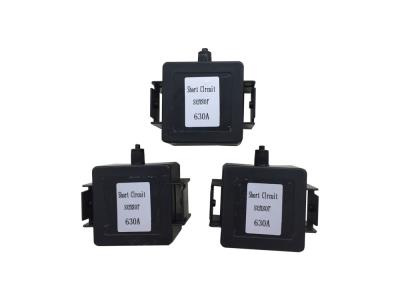
Earthing Devices
Source industrial-grade Earthing Devices in bulk directly from vetted manufacturers and wholesale suppliers. Designed for electrical distributors, procurement managers, and utility contractors, this category provides reliable grounding solutions for transmission and distribution networks, supporting high-volume import and custom OEM requirements.
Earthing devices form the critical safety backbone of any electrical transmission and distribution network. When sourcing grounding rods, clamps, and associated hardware in high volumes, procurement teams must balance volatile raw material costs against strict regulatory standards for fault current dissipation and long-term soil corrosion resistance. A failure in an earthing system is rarely detected immediately, making upfront manufacturer vetting and strict metallurgical specifications non-negotiable.
Material Configurations and Technical Specifications
The core of earthing device procurement lies in selecting the right material profile for the target soil conditions and budget. The industry relies heavily on three primary configurations, each with distinct manufacturing requirements.
| Material Type | Conductivity | Corrosion Resistance | Typical Application |
|---|---|---|---|
| Copper-Bonded Steel | High | Excellent (up to 30 years) | Utility & commercial grids |
| Solid Copper | Maximum | Exceptional | High-acidity soil, telecommunications |
| Galvanized Steel | Moderate | Fair (sacrificial coating) | Temporary setups, low-budget projects |
When drafting purchase orders for copper-bonded variants, precision is paramount. Vague specifications lead to inconsistent plating and premature field failure.
Critical Specifications for Procurement
- Copper Plating Thickness: Specify exact microns (e.g., 254 microns / 10 mil for UL compliance) rather than a generic 'heavy coating'.
- Tensile Strength: Ensure the steel core meets a minimum of 600 N/mm² to withstand being driven into hard soil without bending.
- Threading Method: Mandate roll-threaded ends rather than cut threads to ensure the copper layer remains intact across the thread profile.
- Purity: Specify 99.9% pure electrolytic copper for bonding to guarantee conductivity.
Need help verifying supplier metallurgical capabilities and plating standards?
Talk to our teamManufacturing Vulnerabilities and Quality Control
The primary point of failure for earthing rods and clamps occurs during the electroplating or cladding process. If the steel core is not thoroughly chemically cleaned and degreased before plating, the copper layer will lack proper adhesion. When the rod is driven into the ground, a poorly adhered copper layer will peel, fold, or flake, exposing the raw steel to immediate galvanic corrosion.
Catching these defects requires rigorous Quality Control & Inspection before the container is loaded. Standard factory acceptance testing should always include a bend test—bending the rod to a 90-degree or 180-degree angle to check for cracking or peeling in the copper jacket.
Furthermore, because earthing devices are critical life-safety components, they must often meet stringent international standards. Validating Compliance & Testing protocols, such as IEEE 80, IEC 62561, or UL 467, is essential. Relying solely on a supplier's provided certificate is risky; independent verification of the test reports ensures the products will clear customs and meet your local utility requirements.
Sourcing Mechanics: Pricing, MOQs, and Lead Times
Earthing device pricing is highly sensitive to the London Metal Exchange (LME) indices for copper and steel. Experienced buyers often negotiate pricing formulas tied to the LME rate at the time of production, rather than locking into fixed long-term pricing that forces manufacturers to cut corners if raw material costs spike.
For distributors and brands requiring custom stamping (such as part numbers, brand logos, or specific compliance marks), OEM/ODM Services add minimal lead time provided the tooling for the stamping dies is prepared in advance.
Optimize your procurement strategy and lock in reliable pricing structures.
Get a free consultationFrequently Asked Questions
Successfully sourcing earthing devices at scale requires moving past surface-level price comparisons and digging into the manufacturer's chemical processing capabilities and raw material integrity. Ensuring consistent micron thickness and core strength protects your brand from catastrophic field failures.
Get Sourcing Help for Earthing Devices
Tell us your requirements and our experts will connect you with verified manufacturers.