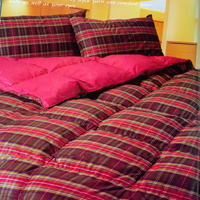
Duvet Cover Sets
Source premium duvet cover sets directly from vetted manufacturers and wholesale suppliers across Asia. Designed for importers, distributors, and bedding brands seeking reliable OEM and private-label production, our network delivers scalable volume, certified quality, and competitive pricing for global markets.
Sourcing duvet cover sets at scale requires balancing fabric cost with strict dimensional tolerances and finishing standards. In bulk textile manufacturing, a slight deviation in dye lots, marginal yarn quality, or improper cutting can render an entire production run unsellable. Success depends on issuing precise technical specifications to your factory and enforcing rigorous quality checks before the goods leave the facility.
Defining Technical Specifications
When negotiating with textile mills and cut-and-sew facilities, generic terms like "luxury feel" or "high quality" are meaningless. Buyers must define the exact construction of the fabric. The core cost drivers are fiber composition, yarn count, weave type, and finishing processes.
For cotton and linen blends, the yarn size (e.g., 40s, 60s, 80s) determines the fineness of the thread. Higher numbers indicate finer yarns, which require higher-grade, longer-staple raw cotton. Thread count (TC) should be specified using the metric or imperial standard for single-pick insertions to avoid factories artificially inflating the count using multi-ply yarns.
| Specification | Percale (Cotton) | Sateen (Cotton) | Microfiber (Polyester) |
|---|---|---|---|
| Construction | One-over, one-under weave | Four-over, one-under weave | Woven or knit synthetics |
| Typical Yarn/Weight | 40s to 60s single yarn | 60s to 80s single yarn | 85 to 120 GSM |
| Performance | Crisp, matte, highly durable | Silky drape, subtle sheen | Wrinkle-resistant, low cost |
Manufacturing Tolerances and Quality Control
The manufacturing process for duvet covers involves spreading, cutting, sewing, and finishing. Because duvet covers are large-format textiles, dimensional stability is a primary concern. Factories must account for fabric shrinkage during the cutting phase. If a 100% cotton duvet cover is not pre-shrunk (sanforized) or cut with a precise shrinkage allowance, it will fail to fit the insert after the end-user's first wash.
Stitching density, measured in stitches per inch (SPI), is another critical metric. A standard duvet cover requires 10 to 12 SPI for adequate seam strength. Dropping the SPI saves the factory time and thread but results in weak seams that burst during commercial laundering.
Critical QC Checkpoints for Duvet Covers
- Dimensional accuracy: Verify width and length post-wash against a tolerance of plus or minus 2 percent.
- Closure integrity: Test zipper pull strength or buttonhole stitching density.
- Seam construction: Check for overlocked interior edges to prevent fraying.
- Corner ties: Ensure internal corner ties are securely bar-tacked, not just single-stitched.
- Pattern alignment: For printed sets, verify that geometric patterns align squarely with the seams.
Catching these defects early is critical. Implementing robust Quality Control & Inspection protocols at the factory level prevents substandard goods from being shipped and protects your brand reputation.
Struggling with inconsistent dye lots or high defect rates? Let our on-the-ground experts manage your textile production and quality assurance.
Talk to our teamCompliance and Performance Testing
Bedding textiles must comply with chemical restrictions and performance standards in your target market. Relying on factory-provided certificates is risky; serious buyers mandate third-party lab testing for every new supplier or major production run.
Key performance tests include:
- Colorfastness: Testing resistance to fading from washing, dry rubbing, and wet rubbing (crocking). A rating of 4 or higher on the grayscale is standard for premium bedding.
- Dimensional Stability: Measuring shrinkage after three standard wash/dry cycles. Acceptable shrinkage is typically under 3 percent for treated cotton and under 1 percent for synthetics.
- Pilling Resistance: Using the Martindale or random tumble pilling test to ensure the fabric maintains its surface integrity.
Managing these testing requirements and ensuring the factory's raw materials meet regulations (like REACH in Europe) requires active oversight. Integrating Compliance & Testing into your sourcing workflow is non-negotiable for established brands.
Pricing, MOQs, and Lead Times
In textile manufacturing, the Minimum Order Quantity (MOQ) is rarely dictated by the sewing lines; it is dictated by the fabric mill. If you are ordering a stock fabric color, MOQs can be relatively low. If you require custom reactive dyeing or rotary printing, you must meet the mill's minimum yardage requirements.
Pricing is heavily influenced by raw material commodity prices (especially cotton futures) and the complexity of the finishing. Developing custom patterns and bespoke packaging requires tight coordination between the buyer and the factory. Utilizing professional OEM/ODM Services can streamline this product development phase and prevent costly miscommunications regarding fabric specs and printing screens.
Need to negotiate lower MOQs across a multi-SKU bedding collection? We can help consolidate your textile sourcing and optimize your supply chain.
Get a free consultationSecuring a reliable supply chain for duvet cover sets means moving beyond transactional factory relationships. By clearly defining technical specifications, enforcing rigorous in-line inspections, and understanding the realities of fabric mill MOQs, buyers can stabilize their quality and scale their bedding programs with confidence.
Get Sourcing Help for Duvet Cover Sets
Tell us your requirements and our experts will connect you with verified manufacturers.