Dusters
Source high-quality dusters from vetted suppliers and manufacturers in China and across Asia. Designed for importers, wholesalers, distributors, and brands seeking reliable OEM or private-label production. Secure competitive bulk pricing on durable cleaning tools engineered to professional standards.
Sourcing dusters in commercial volumes requires balancing material performance—specifically dust retention and surface safety—with structural durability. The primary sourcing challenge lies in maintaining consistent material quality across large production runs while ensuring the integrity of extension handles and connection joints under repeated use.
Material Specifications and Head Construction
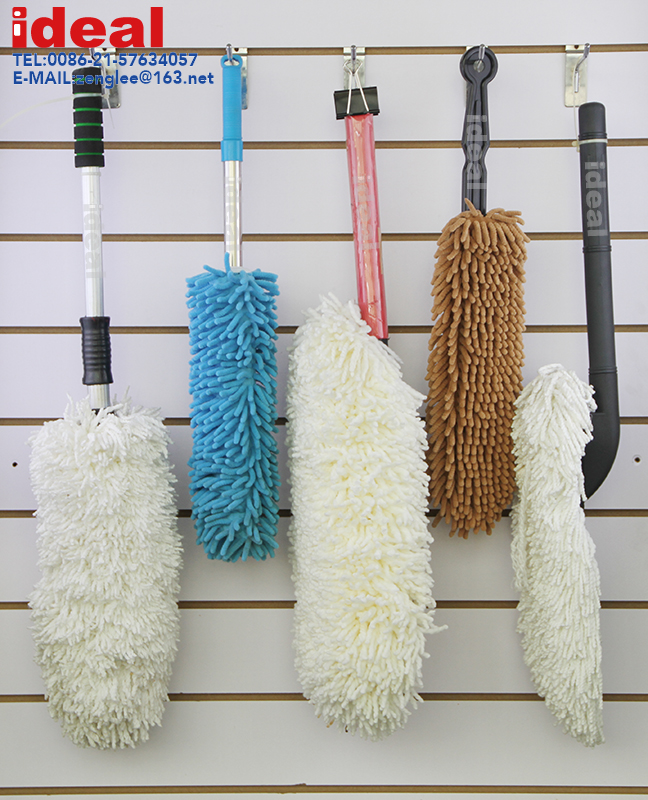
The effectiveness of a duster is dictated by the physical properties of its head material. When negotiating with manufacturers, specifying the exact material grade prevents the substitution of inferior fibers that shed or fail to trap particulates.
- Microfiber (Chenille and Noodle): The standard for washable dusters. Specify the blend ratio (typically 80 percent polyester to 20 percent polyamide) and the fabric weight in Grams per Square Meter (GSM). A standard commercial duster should utilize microfiber between 250 and 400 GSM. Lower GSM materials will degrade quickly after washing.
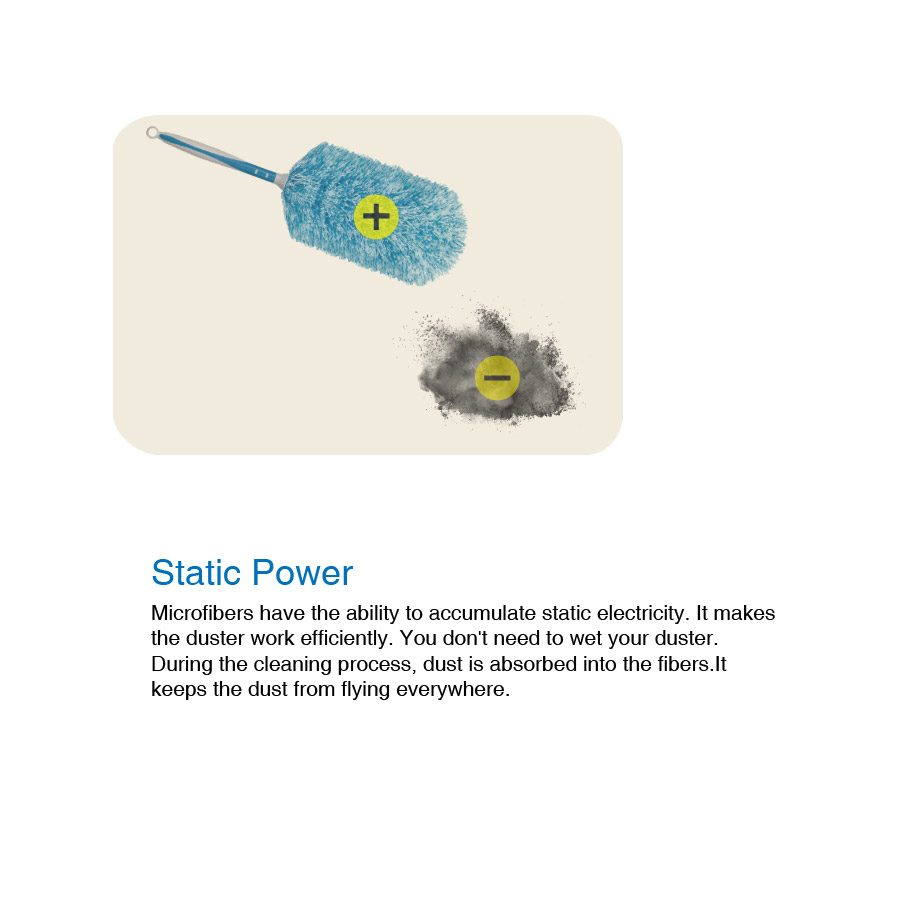
- Polypropylene (Electrostatic): Used for disposable or lightweight dusters. The fibers are extruded and crimped to create a static charge through friction. Specify the fiber denier and density to ensure adequate static generation.
- Natural Fibers (Ostrich Feather and Lambswool): Ostrich feathers are graded by length, width, and floss density. For premium lines, specify first-grade male feathers, which offer the highest density of barbules for trapping dust. Lambswool must be specified by pile length and tanning method to prevent premature shedding and odor.
Struggling to verify material grades with your current supplier? Let our sourcing experts secure the exact specifications your market demands.
Talk to our teamHandle Mechanics and Structural Integrity
For extendable or modular dusters, the handle and connection joint are the most common points of failure. Buyers developing custom product lines through OEM/ODM Services must pay close attention to the tooling of these components.
| Handle Material | Wall Thickness Spec | Durability & Cost Profile |
|---|---|---|
| Plastic (PP/ABS) | Solid or ribbed core | Low cost, prone to snapping under leverage |
| Aluminum Extrusion | 0.4mm to 0.6mm | Lightweight, rust-proof, moderate cost, requires secure locking joints |
| Stainless Steel | 0.3mm to 0.5mm | High rigidity, heavier, higher cost, susceptible to rust if poorly plated |
Connection Threads and Locking Mechanisms
If your duster heads are designed to be interchangeable, the thread standard is critical. Many Chinese factories use proprietary thread pitches unless instructed otherwise. Specify the ACME thread standard (often 3/4-5 UNC) if interoperability with standard extension poles in the US or European markets is required.
For telescopic handles, twist-lock mechanisms utilizing an internal plastic cam are standard. Specify virgin ABS or POM (Polyoxymethylene) for the internal cam; recycled plastics will wear down quickly, causing the pole to collapse during use.
Quality Control Variables
Catching defects before shipment protects your brand reputation and bottom line. Implementing rigorous Quality Control & Inspection protocols at the factory level is non-negotiable.
Critical Inspection Points for Duster Production
- Pull tests on natural fibers to measure shedding rates per 100 strokes.
- Torque testing on threaded joints to ensure they do not strip under standard rotational force.
- Load testing on fully extended telescopic poles to verify the internal cam locks securely.
- Visual inspection of wire cores (on bendable dusters) to ensure the protective rubber tip is securely glued and prevents scratching.
Pricing Drivers, MOQs, and Production Realities
The duster supply chain is highly segmented. Some factories specialize solely in microfiber knitting, while others focus on injection molding and metal tube extrusion. A supplier that handles full assembly in-house will generally offer better pricing and quality control. Conducting thorough Factory Audits helps verify whether a supplier is a true manufacturer or simply an assembler marking up purchased components.
- Typical MOQs: Expect Minimum Order Quantities of 3,000 to 5,000 pieces per SKU for standard models. Custom handle colors or branded retail packaging often push MOQs to 10,000 units.
- Lead Times: Standard production runs require 30 to 45 days. If custom injection molds are required for proprietary handles, add 25 to 35 days for tooling and sample approval.
- Pricing Variables: The primary cost drivers are the handle material (aluminum vs. steel wall thickness) and the volume/grade of the dusting material. Upgrading from a 0.3mm to a 0.5mm aluminum pole adds marginal cost per unit but significantly reduces return rates.
Need to consolidate your supply chain or negotiate better terms? We manage the entire sourcing lifecycle from factory vetting to final delivery.
Get a free consultationSuccessfully sourcing dusters in bulk requires looking past the surface appearance and dictating the hidden specifications—from aluminum wall thickness to internal cam materials. By controlling these variables, you ensure a reliable product that withstands commercial or heavy household use.
Get Sourcing Help for Dusters
Tell us your requirements and our experts will connect you with verified manufacturers.