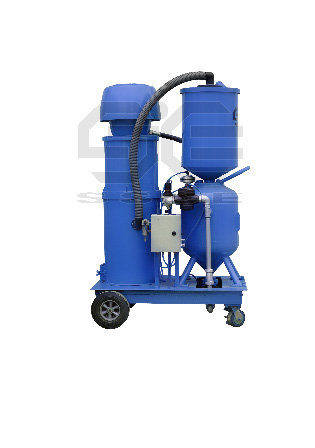
Dust Collectors
Source commercial and industrial dust collectors directly from vetted manufacturers and wholesale suppliers in Asia. Designed for importers, distributors, and brands seeking reliable OEM and private-label production, our network delivers high-performance filtration equipment built to your exact specifications.
Sourcing commercial and industrial dust collectors at volume requires a strict balance of airflow performance, filtration efficiency, and long-term motor reliability. A poorly manufactured unit does not just fail prematurely; it compromises workplace air quality and safety. For buyers importing in bulk, securing a factory capable of consistent sheet metal fabrication, precision impeller balancing, and certified electrical assembly is the core sourcing challenge.
Core Specifications for Bulk Purchasing
When negotiating with overseas manufacturers, generic product descriptions are insufficient. To ensure you receive units that perform as expected in commercial environments, you must define the technical parameters clearly.
- Airflow (CFM) and Static Pressure: High CFM (Cubic Feet per Minute) is useless if the unit cannot maintain sufficient static pressure to overcome ducting resistance. Specify the required static pressure at your target CFM.
- Motor Specifications: Specify TEFC (Totally Enclosed, Fan-Cooled) motors to prevent dust ingress. For industrial applications, ensure the factory uses 100% copper windings, as some lower-tier suppliers substitute aluminum to cut costs, which significantly reduces motor lifespan.
- Filter Media: The standard is often spunbond polyester, but specific applications require upgrades.
| Filter Media | Filtration Efficiency | Best Application |
|---|---|---|
| Standard Spunbond Polyester | MERV 11 to 13 | General woodworking, large particulates |
| PTFE Coated | MERV 15 to 16 | Fine dust, powder coating, sticky particulates |
| HEPA Upgrades | 99.97% at 0.3 microns | Metalworking, hazardous dust environments |
Beware of Inflated CFM Ratings
Many suppliers state "free air" CFM (airflow with no filters or ducting attached) rather than operational CFM. Always request the fan performance curve to verify actual operational airflow under load.
Need help verifying supplier performance claims? We audit factories and validate technical specifications to ensure you get exactly what you pay for.
Talk to our teamManufacturing Quality and Defect Prevention
The difference between a premium dust collector and a budget model is often found in the fabrication details. Sheet metal gauge dictates structural rigidity; units using steel thinner than 18-gauge are prone to vibration and noise. Furthermore, the housing must be continuously welded or heavily gasketed. Spot welding without proper sealing leads to vacuum leaks, which drastically reduces suction power.
Because these defects are difficult to spot in photos, conducting thorough Factory Audits before committing to a supplier is critical to verifying their fabrication capabilities.
During production, strict Quality Control & Inspection should focus on the following mechanical and electrical fail points:
Critical Factory Inspection Points
- Dynamic balancing of the impeller (unbalanced impellers cause bearing failure and extreme vibration).
- Verification of continuous welding and gasket integrity on all housing seams.
- Motor load testing to ensure operating amperage aligns with nameplate ratings.
- Inspection of filter seating mechanisms to ensure an airtight seal against the housing.
- Verification of CE, UL, or CSA compliance marks on all electrical switches and motors.
Sourcing Realities: MOQs, Lead Times, and Pricing
Pricing for dust collectors is heavily driven by the motor size (horsepower), the quality of the filter media, and the thickness of the steel housing.
If you are leveraging OEM/ODM Services to customize the unit's footprint, paint color, or filtration system for your brand, expect higher initial MOQs to cover the factory's setup and tooling costs.
Optimize your landed costs and streamline your supply chain with our end-to-end sourcing and negotiation support.
Get a free consultationFrequently Asked Questions
Successfully importing dust collectors requires looking past the spec sheet to understand how the unit is built on the factory floor. By establishing strict quality standards for sheet metal fabrication, motor sourcing, and impeller balancing, you can build a highly profitable, reliable product line that stands up to heavy commercial use.
Get Sourcing Help for Dust Collectors
Tell us your requirements and our experts will connect you with verified manufacturers.