Drying Equipment
Source commercial and industrial drying equipment directly from vetted manufacturers and suppliers in China and across Asia. Designed for importers, distributors, and commercial laundry brands, our network supports bulk wholesale orders and OEM/ODM production with guaranteed quality and compliance.
Industrial textile and commercial drying equipment requires a strict balance of thermal efficiency, mechanical durability, and precise moisture control. Sourcing these machines in volume means navigating complex specifications—from drum metallurgy and airflow dynamics to PLC programming—while ensuring the factory has the engineering depth to support continuous, high-load operation.
Key Technical Specifications for Industrial Dryers
When negotiating with manufacturers, vague specifications lead to underperforming machinery. Buyers must define the operational parameters clearly to ensure the factory uses appropriate components rather than cost-cutting on motors or insulation.
| Heating Method | Typical Application | Efficiency & Cost Impact |
|---|---|---|
| Steam Heating | Large commercial laundries, textile mills | High thermal efficiency if steam infrastructure exists; lower operational cost. |
| Electric Heating | Small to medium commercial setups | High energy cost; precise temperature control; easier installation. |
| Gas Heating | High-volume continuous drying | Fast heating cycles; requires strict safety compliance and exhaust management. |
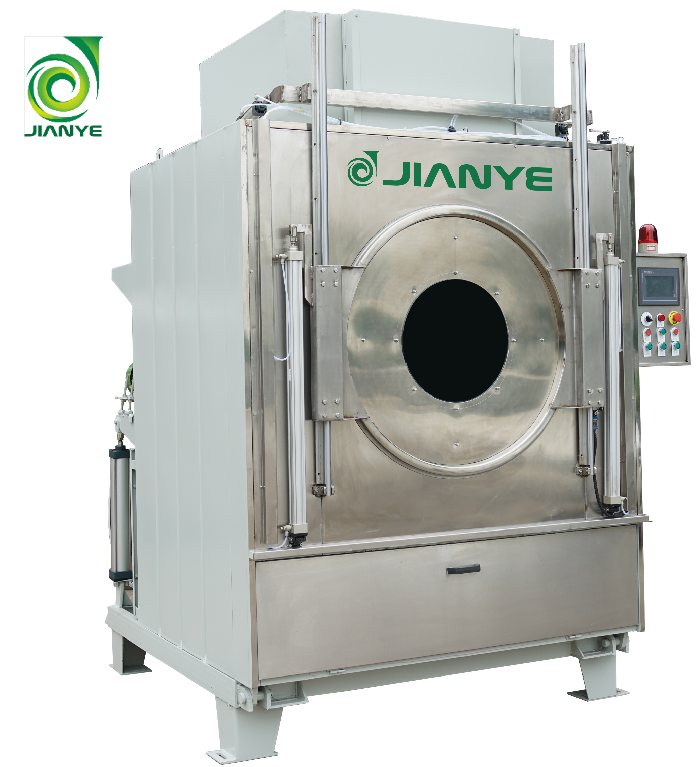
Beyond heating, pay close attention to drum construction. SUS304 stainless steel is the baseline for commercial units to prevent rust and fabric damage, but the thickness (typically 1.5mm to 3.0mm depending on capacity) dictates the machine's lifespan and structural integrity under heavy wet loads.
Manufacturing Variances and Quality Control
The difference between a machine that lasts a decade and one that fails in year two often comes down to factory-level assembly and component sourcing. Many manufacturers assemble rather than machine their own parts, meaning motor and inverter selection (e.g., Siemens, Yaskawa, or domestic equivalents) drastically impacts reliability.
Critical Inspection Points for Drying Machinery
- Drum Alignment & Sealing: Misalignment causes premature bearing wear and heat loss.
- Insulation Density: High-density aluminum silicate insulation is required to maintain thermal efficiency and protect outer panels.
- Welding Quality: Look for seamless TIG welding on the drum interior to prevent snagging delicate textiles.
- Electrical Safeties: Verification of overload protection, emergency stops, and door-switch interlocks.
Catching assembly flaws before the machinery is crated is critical. Implementing rigorous Quality Control & Inspection protocols during the final testing phase ensures the unit reaches operating temperature within the specified timeframe without excessive vibration or airflow leakage.
Ensure your machinery orders meet strict commercial standards before they ship.
Discuss quality controlEvaluating Factory Capabilities
The primary manufacturing hubs for textile and commercial washing equipment in China are concentrated in Jiangsu (particularly Taizhou) and Zhejiang provinces. While many trading companies operate in this space, partnering directly with a manufacturer provides better technical support and access to replacement parts. Conducting comprehensive Factory Audits is essential to verify their production capacity, CNC machining capabilities, and ISO 9001 compliance.
MOQs, Lead Times, and Logistics
Procuring heavy industrial equipment differs significantly from standard consumer goods. Commercial dryers require specialized handling and realistic production schedules.
Because these units are bulky and heavy, shipping requires careful planning. Flat-rack containers or specialized crating may be necessary for large continuous dryers. Coordinating Shipping & Freight early in the production cycle prevents costly delays at the port and ensures proper handling of sensitive control panels and motors.
Streamline your heavy machinery sourcing, from factory floor to final delivery.
Talk to our teamFrequently Asked Questions
Sourcing industrial drying equipment requires looking past the spec sheet and verifying the engineering integrity behind the machine. By validating component origins and enforcing strict pre-shipment testing, buyers can secure reliable, high-efficiency machinery that delivers long-term value.
Get Sourcing Help for Drying Equipment
Tell us your requirements and our experts will connect you with verified manufacturers.