Dry Coolers
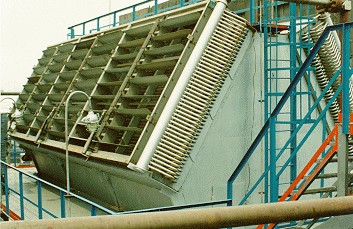
Source industrial dry coolers from vetted manufacturers and suppliers in China and across Asia. Designed for procurement managers, distributors, and brands seeking reliable OEM production, our network delivers high-capacity heat exchange equipment built to exact thermal specifications for bulk and wholesale orders.
Sourcing industrial dry coolers at scale requires navigating a fragmented supplier base where claimed thermal capacities often mismatch real-world performance. Whether you are equipping data centers, process cooling plants, or commercial HVAC systems, specifying the right coil geometry and fan configuration is only half the battle. The other half is ensuring the factory actually builds to those specs without cutting corners on tube wall thickness, fin density, or header brazing.
Core Specifications for Volume Orders
When negotiating with manufacturers, vague specifications invite substituted materials. A dry cooler's performance is highly sensitive to the ambient environment and the specific fluid dynamics of the application. To ensure accurate pricing and performance, your RFQ must clearly define the operating envelope.
Key parameters to lock down with the factory include:
- Heat Rejection Capacity: Specified in kW or MW at a strictly defined ambient temperature.
- Coil Geometry: Tube diameter (typically 3/8-inch, 1/2-inch, or 5/8-inch), tube material (copper or stainless steel), and fin spacing (Fins Per Inch - FPI).
- Fluid Specifications: Entering and leaving fluid temperatures, flow rates, and the specific glycol concentration (which alters the specific heat capacity and pressure drop).
- Acoustic Limits: Maximum sound pressure levels at a specific distance, critical for urban or residential installations.
| Fan Technology | Energy Efficiency | Speed Control | Initial Sourcing Cost |
|---|---|---|---|
| AC Axial Fans | Standard | Requires external VFD | Lower |
| EC (Electronically Commutated) | High (up to 30% savings) | Integrated / Modulating | Higher |
Struggling to verify if a supplier's performance software outputs match their actual manufacturing capabilities? We can help validate factory engineering data.
Talk to our sourcing teamManufacturing Tolerances and Quality Control
The physical assembly of a dry cooler dictates its lifespan and efficiency. Quality is often won or lost in the mechanical expansion of the tubes and the brazing of the headers. If the tubes are not properly expanded into the aluminum fins, the thermal contact resistance spikes, and the cooler will fail to meet its rated capacity.
Before committing to a high-volume order, conducting comprehensive Factory Audits is essential to verify that the supplier has automated tube expanders, CNC sheet metal punching for casings, and dedicated pressure testing bays.
Critical Defect Areas to Monitor
- Micro-Leaks in Brazed Joints: The complex header manifolds require highly skilled manual or automated brazing.
- Fin Damage During Assembly: Bent fins restrict airflow and reduce capacity. Factories must have proper handling procedures between the fin press and final assembly.
- Casing Corrosion: For outdoor units, standard galvanized steel is rarely enough. Ensure the factory applies proper powder coating (specifying micron thickness) or uses stainless steel for marine environments.
Factory Acceptance Testing (FAT) Requirements
- Nitrogen or helium leak testing of the coil at 1.5x design pressure
- Dielectric strength (Hi-Pot) testing of fan motor circuits
- Dimensional inspection of mounting points and pipe connections
- Verification of fin spacing (FPI) against approved drawings
- Dry run for fan vibration and acoustic measurements
Implementing rigorous Quality Control & Inspection protocols before the units are crated is the only way to catch these issues. Reworking a leaking manifold on a job site is prohibitively expensive.
Sourcing Economics: Lead Times, MOQs, and Cost Drivers
Pricing for dry coolers is heavily tethered to global commodity indices, specifically copper and aluminum. When negotiating long-term agreements or OEM contracts, it is standard practice to tie the unit price to a defined raw material index, allowing for transparent price adjustments if metal costs surge.
Because dry coolers contain a massive amount of empty space (air), they are notoriously inefficient to ship. A fully assembled V-type cooler can easily consume a 40-foot High Cube container. To optimize landed costs, sophisticated buyers often work with factories to design modular or flat-pack casing systems, significantly reducing freight volume. Coordinating this requires tight Shipping & Freight management to ensure the crating protects the fragile finned coils during transit.
Need to optimize your landed costs or develop a custom dry cooler line for your brand? Let our engineering and logistics teams streamline your supply chain.
Get a free consultationFrequently Asked Questions
Ultimately, successfully sourcing dry coolers at scale is about bridging the gap between theoretical thermal design and factory-floor execution. Relying on supplier-provided software outputs without verifying manufacturing tolerances is a high-risk strategy. By enforcing strict quality gates and optimizing the physical logistics of these oversized units, buyers can secure significant cost advantages without sacrificing field reliability.
Get Sourcing Help for Dry Coolers
Tell us your requirements and our experts will connect you with verified manufacturers.