Drum
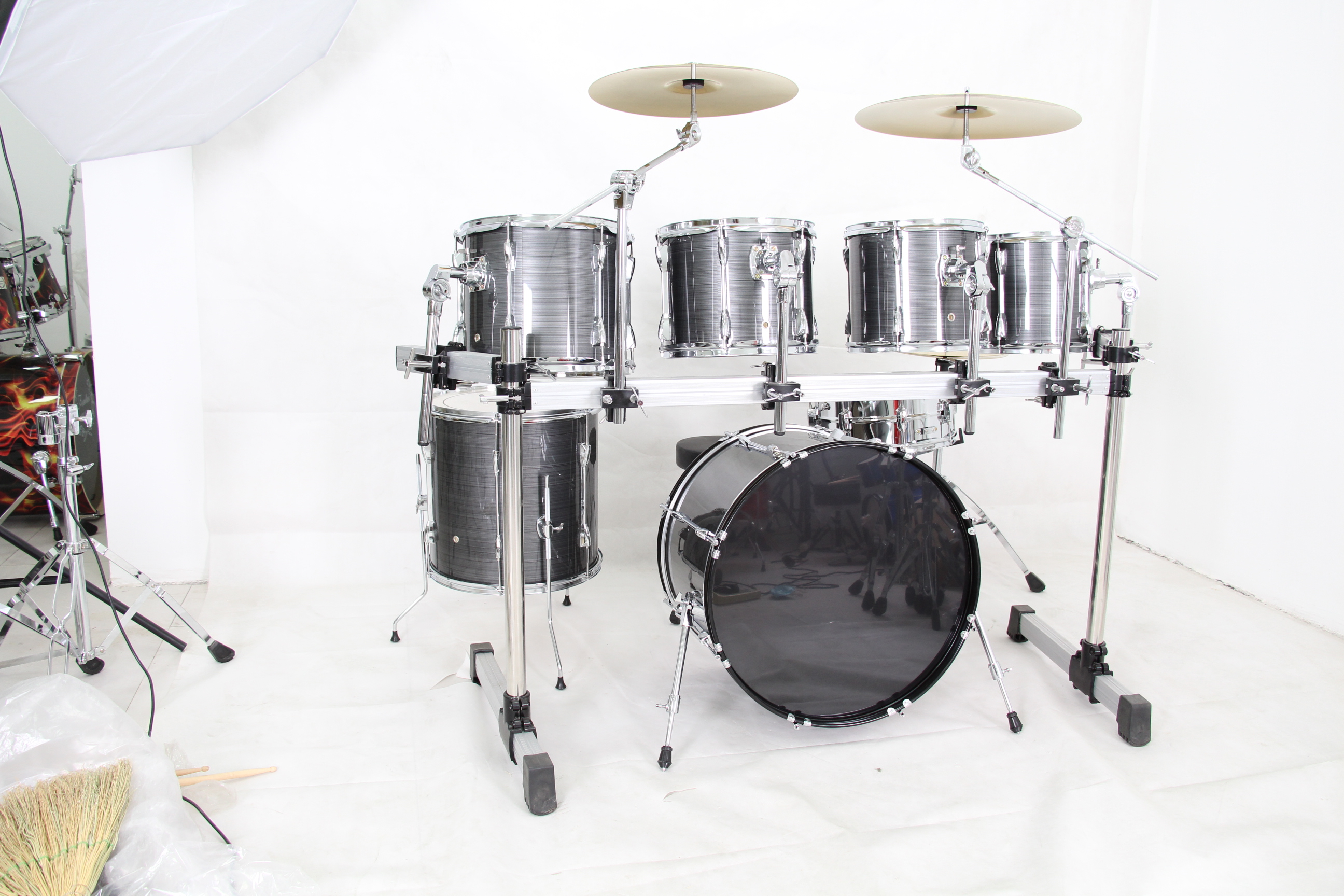
Source high-quality drums from vetted suppliers and manufacturers across Asia. Designed for importers, musical instrument distributors, and brands seeking reliable OEM and private-label production, our network delivers consistent acoustic and electronic percussion instruments at scale.
Sourcing drums at a commercial scale requires balancing acoustic performance with manufacturing consistency. Whether you are importing entry-level kits for wholesale distribution or developing a premium custom line, the core challenge remains the same: controlling material stability, hardware tolerances, and finish quality across large production runs. A minor deviation in shell roundness or bearing edge angle can ruin the instrument's tuning range and tonal projection.
Core Specifications and Shell Materials
The foundation of any acoustic drum is the shell. B2B buyers must clearly specify the ply count, wood species, and lamination process, as these dictate both the manufacturing cost and the final acoustic profile.
| Wood Species | Acoustic Profile | Typical B2B Application |
|---|---|---|
| Poplar | Warm tone, softer attack, less projection | Entry-level to mid-range wholesale kits |
| Birch | Boosted high frequencies, punchy low-end | Studio kits, mid-to-high tier OEM lines |
| Maple | Even highs and mids, warm lows, highly resonant | Premium private-label and professional lines |
| Steel / Brass | Bright, cutting, highly projected volume | Snare drums, timbales, specialty percussion |
Beyond the material itself, the bearing edge—the point where the drumhead meets the shell—must be specified. Standard 45-degree edges provide maximum attack and sustain, while rounded edges offer a warmer, vintage tone. Inconsistent bearing edges are a common defect in budget manufacturing, leading to drums that are impossible to tune.
Manufacturing Precision and Quality Control
Producing drums in bulk is heavily reliant on environmental controls and precision machinery. Wood must be properly cured, and shells must be molded under strict temperature and pressure conditions to ensure they remain perfectly cylindrical.
Critical Factory Quality Checks
- Moisture Content: Wood must be kiln-dried to a moisture content of 6 to 8 percent to prevent warping and ply separation.
- Shell Roundness: Cross-diagonal measurements must show zero deviation to ensure drumheads seat properly.
- Bearing Edge Flatness: Shells must be checked on a perfectly flat surface (like a marble table) to ensure no light passes through.
- Hardware Plating: Lugs, hoops, and tension rods should undergo salt-spray testing to verify resistance to pitting and rust.
- Wrap Adhesion: For PVC or celluloid wrapped finishes, glue must be applied evenly to prevent bubbling under temperature changes.
Relying on a factory's internal checks is rarely sufficient for new supplier relationships. Implementing independent Quality Control & Inspection during the shell molding phase and prior to final assembly is the most effective way to catch structural defects before the goods are containerized.
Ensure your drum supplier has the right CNC machinery and climate-controlled facilities before committing to a production run.
Talk to our teamOEM Customization and Hardware Selection
For brands utilizing OEM/ODM Services to build custom drum lines, hardware selection is just as critical as the shell. Die-cast hoops offer more rigid tuning and a sharper rimshot compared to triple-flanged hoops, but they significantly increase the cost and weight of the instrument.
Lugs and mounting suspension systems also require careful specification. Low-quality cast zinc lugs can crack under high tension. Buyers should specify the alloy grade and request documentation on the factory's casting and electroplating processes. If you are developing proprietary lug designs, verifying the supplier's tooling capabilities through comprehensive Factory Audits is a mandatory first step.
MOQs, Lead Times, and Supply Chain Realities
Drum manufacturing is a time-intensive process, particularly when dealing with organic materials like wood. Asian manufacturing hubs, primarily in Guangdong and Tianjin, offer different tiers of quality and scale.
Because drums contain a high volume of empty space (air), freight efficiency is a major cost driver. Shells are often shipped "nested" (smaller drums packed inside larger drums with hardware removed) to optimize container space.
Managing freight for bulky percussion instruments requires careful consolidation and container optimization.
Get a free consultationFrequently Asked Questions
Successfully importing drums requires balancing acoustic craftsmanship with industrial scalability. By strictly defining your material specifications, enforcing rigorous moisture and tolerance controls, and optimizing your Shipping & Freight strategy to account for volumetric weight, you can protect your margins and deliver a superior instrument to your market.
Get Sourcing Help for Drum
Tell us your requirements and our experts will connect you with verified manufacturers.