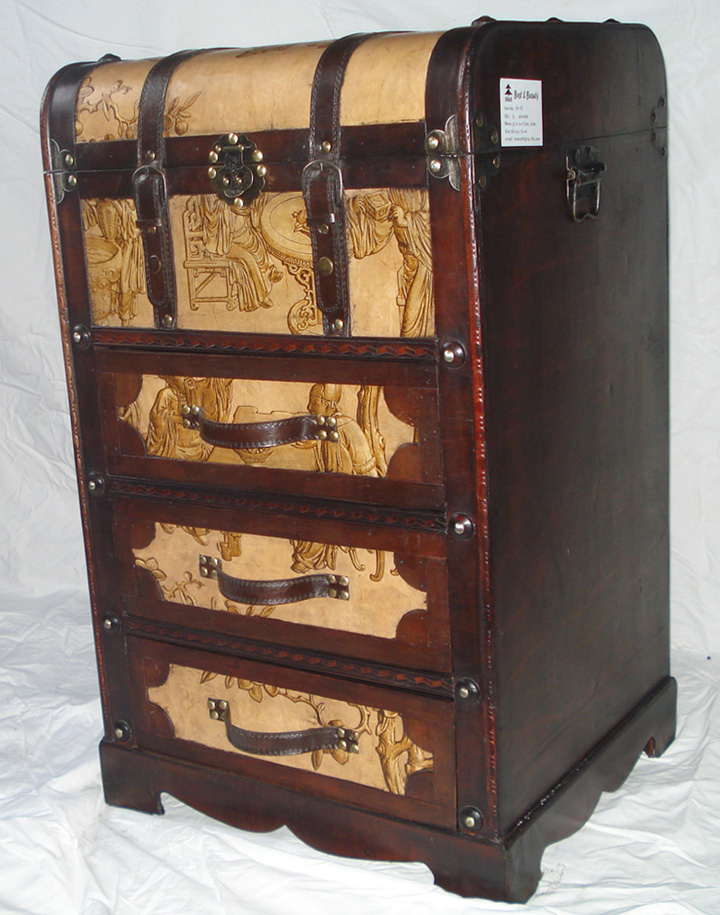
Dressers
Source high-quality dressers from vetted suppliers and manufacturers across Asia. Designed for importers, furniture wholesalers, and brands seeking reliable OEM and private-label production, our network delivers bulk bedroom furniture built to your exact material and hardware specifications.
Sourcing Commercial-Grade Dressers at Scale
Procuring dressers in high volumes requires balancing aesthetic appeal with structural integrity, hardware durability, and shipping density. Because dressers are heavy, multi-component casegoods, the margin for error on the factory floor is slim. A millimeter of misalignment in the drawer box or a poorly applied edge band can result in unacceptable defect rates. Success in this category depends on specifying the right core materials, demanding strict hardware tolerances, and ensuring absolute compliance with regional safety standards.
Core Specifications and Material Selection
The foundation of a reliable dresser lies in its core materials and surface treatments. While solid wood commands a premium, the vast majority of wholesale and private-label production relies on engineered woods (MDF or particleboard) to maintain dimensional stability and control costs.
When defining your specifications with a factory, you must clarify:
- Substrate Density: Standard particleboard may lack the screw-holding capacity required for heavy drawer slides. Specify high-density particleboard or MDF for structural panels.
- Surface Finish: Melamine is cost-effective and scratch-resistant, while wood veneers require precise climate control during pressing to prevent delamination.
- Edge Banding: Specify PVC or ABS edge banding with a minimum thickness of 1mm to 2mm on exposed edges to prevent chipping and moisture ingress.
- Drawer Hardware: The lifespan of a dresser is dictated by its drawer slides. Specify the exact type (side-mounted ball-bearing, under-mounted, soft-close) and the required weight rating per drawer.
Need help identifying manufacturers capable of meeting strict material and hardware tolerances? Let us handle the vetting process.
Talk to our teamManufacturing Quality and Regulatory Compliance
Casegoods manufacturing is highly automated, but assembly and finishing are where quality is won or lost. Buyers utilizing OEM/ODM Services must establish clear quality control checklists before the first production run begins.
Critical Compliance: The STURDY Act
If you are importing dressers into the United States, compliance with the STURDY Act and the updated ASTM F2057 safety standard is mandatory. This requires strict tip-over testing and the inclusion of compliant anti-tip restraint kits. Failure to meet these standards will result in customs seizures and recalls.
Beyond structural safety, formaldehyde emissions remain a primary regulatory hurdle. Ensure your supplier uses adhesives and substrates that comply with CARB Phase 2 or EPA TSCA Title VI standards. We strongly recommend rigorous Compliance & Testing protocols to verify these certifications before shipment.
Critical Pre-Shipment Inspection Points
- Drawer glide alignment: Check for smooth operation and uniform gaps (reveals) around drawer fronts.
- Edge band adhesion: Inspect for excess glue lines, peeling, or sharp edges.
- Hardware presence: Verify all cam locks, dowels, and anti-tip kits are included in the hardware blister pack.
- Moisture content: Ensure solid wood components are kiln-dried to 8-12 percent moisture to prevent warping.
- Drop testing: Verify ISTA 3A packaging compliance to ensure survival through the freight network.
Implementing robust Quality Control & Inspection at the factory level is essential to catch alignment and finish issues before the goods are containerized.
Shipping Density: Flat-Pack vs. Fully Assembled
The largest variable in landed cost for dressers is shipping volume. Buyers must choose between Ready-to-Assemble (RTA) flat-pack designs and fully assembled units.
| Format | Shipping Density | Damage Risk | Target Market |
|---|---|---|---|
| RTA / Flat-Pack | High (up to 3x more units per container) | Higher (panel corners vulnerable without EPS/honeycomb protection) | E-commerce, big box retail |
| Fully Assembled | Low (ships a significant amount of 'air') | Lower (rigid structure, easier to pad) | High-end retail, hospitality, wholesale showrooms |
Pricing, MOQs, and Lead Times
Furniture manufacturing requires significant economies of scale to justify machine setup times, especially for custom finishes or proprietary dimensions.
Pricing is heavily influenced by the thickness of the core panels (e.g., upgrading from 15mm to 18mm board), the complexity of the drawer fronts (routed MDF vs. flat panels), and the quality of the packaging. Before committing to a large order, conducting comprehensive Factory Audits ensures the supplier actually possesses the automated edge-banding and CNC routing machinery required to produce consistent quality at your target price point.
Optimize your furniture supply chain. Speak with our experts about balancing material costs, factory selection, and shipping efficiency.
Get a free consultationFrequently Asked Questions
Successful dresser sourcing comes down to controlling the unseen details. A beautiful exterior finish means nothing if the drawer slides fail under load or the unit fails compliance testing at the port. By defining strict material tolerances and enforcing rigorous packaging standards, you can secure reliable, high-margin casegoods that arrive ready for market.
Get Sourcing Help for Dressers
Tell us your requirements and our experts will connect you with verified manufacturers.