Dollies
Source heavy-duty dollies from vetted suppliers and manufacturers across Asia. Designed for importers, wholesalers, and brands requiring reliable bulk production and OEM/private-label capabilities, our network provides competitive pricing and consistent quality for all your material handling requirements.
Sourcing dollies in volume requires balancing load capacity, environmental durability, and caster performance. The core challenge in bulk procurement isn't just finding a factory that can mold plastic or cut wood; it's securing a manufacturer whose casters won't fail under dynamic loads and whose deck structures won't warp or fracture under continuous industrial stress.
Deck Materials and Structural Integrity
The foundation of any dolly is its deck. Manufacturers primarily utilize three material categories, each requiring specific production capabilities and structural reinforcements.
| Deck Material | Typical Applications | Manufacturing Critical Focus |
|---|---|---|
| HDPE / PP (Plastic) | Retail, washdown environments, food service | Injection molding rib design; ensuring sufficient resin thickness to prevent bowing. |
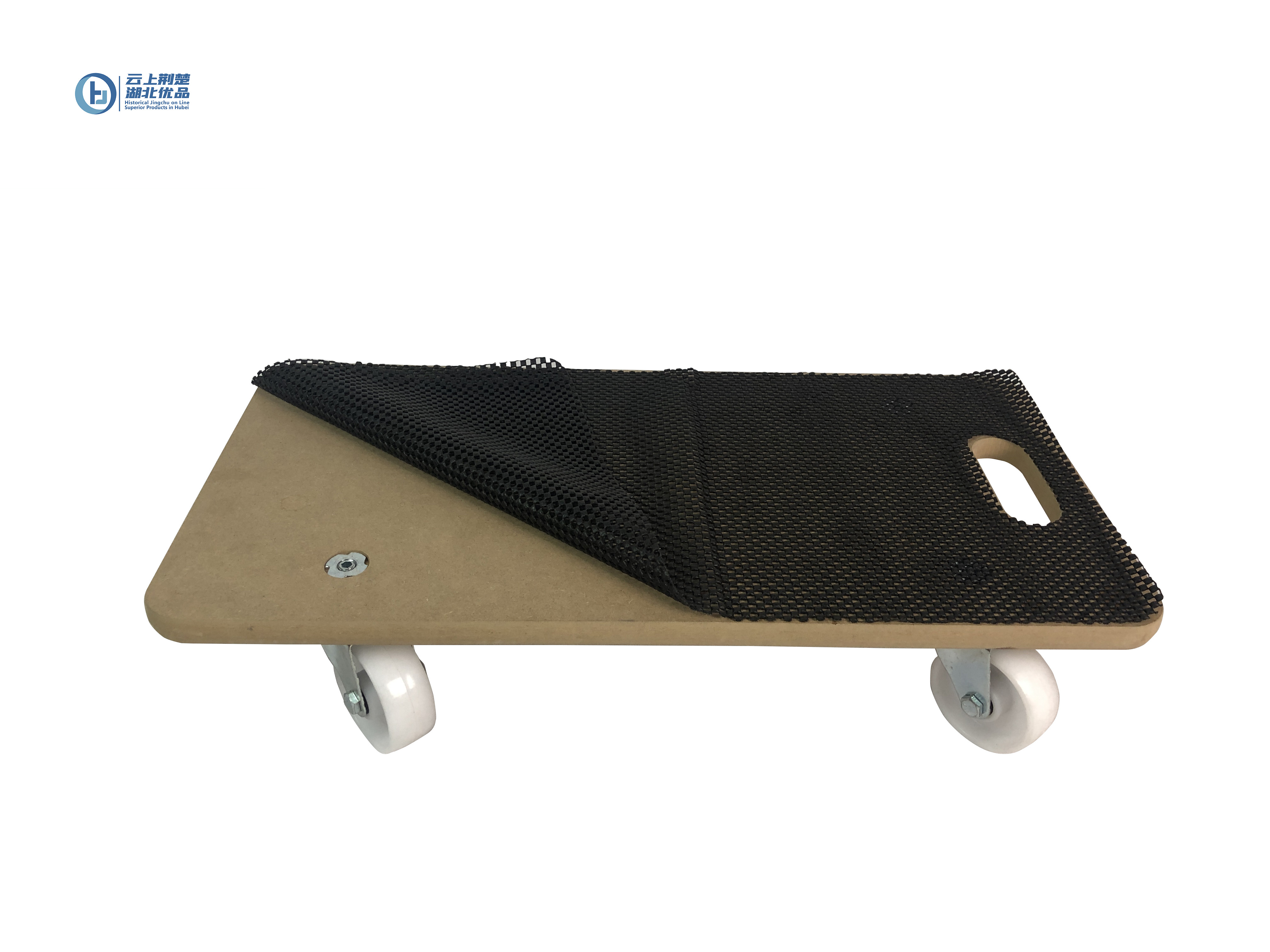
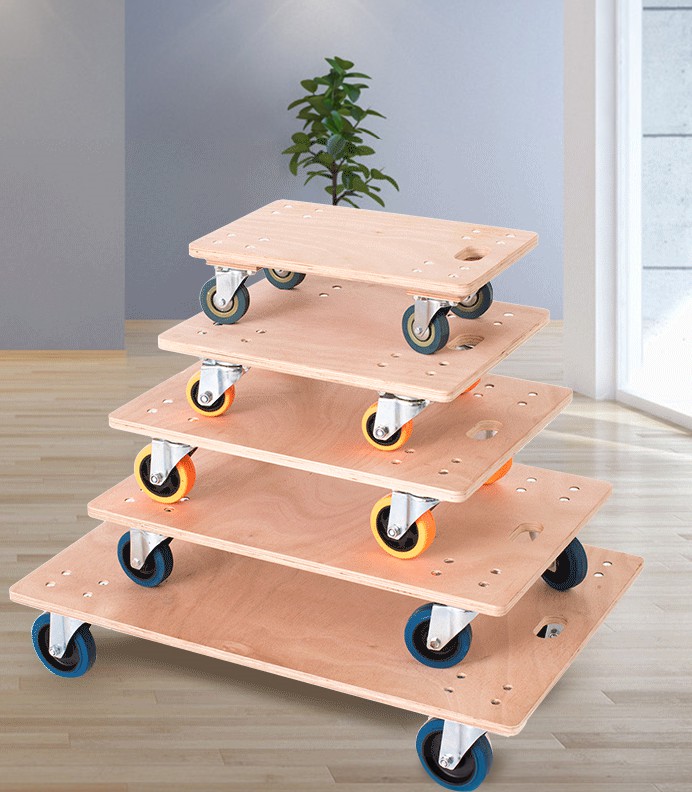
| Plywood / Hardwood | Furniture transport, dry logistics, moving companies | Wood grade selection; edge routing and carpet/rubber capping to prevent splintering. |
| Steel / Aluminum | Heavy industrial, manufacturing floors, automotive | Weld penetration; powder coating or galvanization thickness for corrosion resistance. |
When evaluating plastic dolly manufacturers, pay close attention to the underside ribbing. High-quality suppliers optimize the honeycomb or grid pattern to distribute weight evenly to the caster mounts. A poorly designed mold will result in a deck that passes static load tests but warps under dynamic, uneven loads.
Caster Selection: The Point of Failure
A dolly is only as reliable as its casters. Buyers often specify the deck material but leave the caster selection up to the factory, resulting in cost-cutting on bearings and wheel materials.
- Wheel Material: Polyurethane (PU) offers excellent floor protection and load capacity, making it ideal for warehouse environments. Thermoplastic Rubber (TPR) provides superior shock absorption for uneven surfaces but wears faster under heavy loads. Nylon is highly durable and resistant to chemicals, suited for industrial use, though it can be noisy.
- Bearing Quality: Specify precision ball bearings (e.g., 6200 or 6202 series) for smooth operation under load. Cheaper alternatives, like unground roller bearings or simple friction fits, will seize or degrade quickly when subjected to lateral forces.
- Mounting Hardware: Ensure the factory uses nyloc nuts or lock washers. Vibration during transport frequently causes standard nuts to back off, leading to caster failure.
Struggling with inconsistent caster quality from your current suppliers? Let us connect you with vetted material handling manufacturers.
Talk to our teamQuality Control and Factory Verification
The primary manufacturing hubs for material handling equipment in China are located in Zhejiang (Ningbo, Jinhua) and Guangdong (Foshan, Dongguan). While these regions offer dense supply chains, quality varies drastically between specialized material handling factories and general plastic or metal workshops taking on side projects.
Before committing to a high-volume run, professional factory audits are critical to verify the supplier's injection molding tonnage, welding automation, and testing facilities.
Critical Quality Control Checks for Dollies
- Dynamic Load Testing: Verify the dolly can handle its rated capacity over obstacles (e.g., 3mm threshold tests) without caster deformation.
- Impact Resistance: Drop tests for plastic decks to check for brittle fractures, especially in cold environments.
- Hardware Torque: Verification that all caster mounting bolts meet specified torque settings.
- Caster Swivel Resistance: Ensure swivel rigs rotate smoothly at maximum rated load without binding.
Implementing strict quality control & inspection protocols before shipment ensures that these structural and assembly standards are met, preventing costly failures in the field.
Buying Mechanics: MOQs, Lead Times, and Pricing
Procurement parameters depend heavily on the level of customization and the materials used.
Pricing is driven primarily by raw material costs (steel, aluminum, or virgin vs. recycled resin) and the grade of the casters. A heavy-duty TPR caster with a precision bearing can account for up to 40 percent of the total unit cost. Be wary of quotes that are significantly below market average; this almost always indicates the use of recycled, brittle plastics or low-grade casters that will fail under commercial use.
Need accurate pricing and lead times for your specific dolly requirements? We can help you source and negotiate directly with capable factories.
Get a free consultationFrequently Asked Questions
Sourcing industrial dollies at scale is an exercise in risk management, specifically regarding material fatigue and caster reliability. By clearly defining your load parameters, demanding high-grade casters, and verifying factory capabilities, you can secure a product that withstands rigorous commercial use. If you need dedicated support managing this process from factory selection to final delivery, our sourcing team is ready to assist.
Get Sourcing Help for Dollies
Tell us your requirements and our experts will connect you with verified manufacturers.