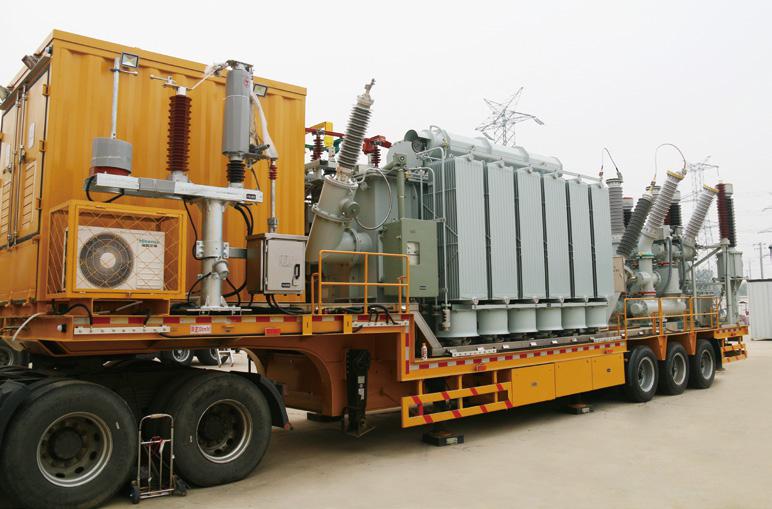
Distribution Engineering
Source distribution engineering equipment and contracting solutions directly from vetted manufacturers and EPC providers. Designed for international EPC contractors, utility developers, and large-scale electrical wholesalers, our network delivers high-voltage components, switchgear, and transformers built to strict international grid standards.
Sourcing equipment for distribution engineering projects—ranging from medium-voltage switchgear and distribution transformers to Ring Main Units (RMUs) and smart grid infrastructure—requires strict alignment with project specifications and international grid standards. Chinese manufacturers dominate the global supply chain for power distribution components, but successfully procuring these assets in bulk or for large-scale foreign engineering contracts demands rigorous supplier vetting, technical validation, and logistical planning.
Critical Equipment Specifications and Compliance
When procuring distribution network assets, the specifications must match the exact operating environment and regulatory framework of the destination country. Off-the-shelf purchasing is rarely viable for primary distribution equipment.
You must clearly define the following parameters when engaging suppliers:
Essential Specification Parameters
- System Voltage & Frequency: Nominal and maximum operating voltages (e.g., 11kV, 33kV) and frequency (50Hz vs. 60Hz).
- Insulation Levels: Basic Impulse Level (BIL) and power frequency withstand voltage.
- Short-Circuit Ratings: Symmetrical and asymmetrical fault current withstand capabilities, including duration (e.g., 25kA for 3 seconds).
- Environmental Conditions: Altitude, maximum ambient temperature, humidity, and seismic zone requirements.
- Enclosure Ratings: IP ratings for indoor vs. outdoor switchgear and RMUs, and IK ratings for mechanical impact resistance.
Compliance with international standards is non-negotiable. Ensure your manufacturer can provide type test reports from internationally recognized testing laboratories (such as KEMA, ASTA, or CESI) validating compliance with IEC 60076 for transformers and IEC 62271 for switchgear. If your project requires specific regional certifications, integrating compliance testing early in the procurement cycle prevents costly delays at customs or during site commissioning.
Need help verifying supplier type test reports and technical capabilities for your next distribution project?
Talk to our engineering teamManufacturing Validation and Factory Acceptance Testing (FAT)
The quality of distribution equipment is won or lost on the factory floor. Assessing a supplier's core manufacturing capabilities—such as their vacuum casting processes for dry-type transformers, or their CNC machining and busbar fabrication for switchgear—is critical. Relying solely on a polished catalog is a high-risk strategy in power engineering.
Before issuing a purchase order, conducting thorough factory audits ensures the facility has the necessary ISO 9001 quality management systems, automated testing bays, and skilled engineering personnel to execute your specifications.
Once production is complete, the Factory Acceptance Test (FAT) is the final hurdle.
Routine Testing
Verification of winding resistance, voltage ratio, and vector group for transformers; dielectric tests on main circuits for switchgear.
Mechanical Operation Tests
Ensuring circuit breakers, disconnectors, and earthing switches operate smoothly under specified control voltages.
Protection & Control Simulation
Secondary injection testing of protection relays and verification of interlocking schemes.
Visual & Dimensional Checks
Confirming paint thickness, galvanizing quality, and adherence to approved general arrangement drawings.
For buyers unable to attend FAT in person, deploying independent quality control inspectors to witness these tests ensures that no non-compliant equipment leaves the factory.
Sourcing Realities: Lead Times, MOQs, and Project Logistics
Procurement in distribution engineering is typically project-driven rather than inventory-driven. Minimum Order Quantities (MOQs) are often flexible, but pricing scales significantly with volume and standardization.
Logistics for power distribution equipment require specialized handling. Transformers and prefabricated substations are heavy, out-of-gauge cargo that demand careful route planning, flat rack containers, or break-bulk shipping. Coordinating shipping & freight concurrently with the manufacturing schedule is essential to avoid exorbitant storage fees at the port of loading.
Struggling with fragmented supply chains on your power contracting projects? Let us consolidate your procurement.
Get a project sourcing consultationFrequently Asked Questions
Successfully sourcing distribution engineering assets requires treating procurement as an extension of your project engineering team. By strictly defining technical parameters, demanding independent validation of quality, and actively managing the FAT process, you can leverage the manufacturing scale of Asian suppliers without compromising the reliability of your power network.
Get Sourcing Help for Distribution Engineering
Tell us your requirements and our experts will connect you with verified manufacturers.