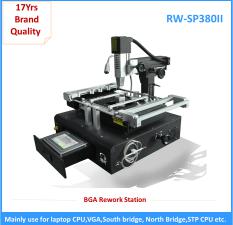
Desoldering Stations
Source high-performance desoldering stations directly from vetted manufacturers and suppliers in China and across Asia. Designed for importers, electronics distributors, and brands seeking reliable OEM or private-label production, this catalog offers bulk purchasing options for professional-grade rework and repair equipment.
Sourcing professional-grade desoldering stations at volume requires strict attention to component quality and thermal performance. The difference between a reliable rework tool and a high-return liability often comes down to internal pump architecture, heating element durability, and thermal recovery speed. When buying direct from overseas manufacturers, verifying these internal specifications is critical to protecting your brand's reputation in the industrial and electronics repair markets.
Core Technical Specifications to Define
When negotiating with factories, vague requirements lead to substituted components. You must clearly define the internal architecture, particularly the vacuum system and the thermal control loop.
Vacuum Pump Architecture
The pump is the heart of any desoldering station. Manufacturers typically offer two main types of internal pumps, each with distinct performance profiles and cost implications.
| Pump Type | Typical Suction | Maintenance | Best For |
|---|---|---|---|
| Diaphragm Pump | 40 to 50 kPa | Low (replaceable membranes) | Standard PCB repair, budget-friendly OEM lines |
| Rotary/Cylinder Pump | 80 kPa and above | Moderate (requires occasional cleaning) | Multi-layer PCBs, continuous industrial use |
Thermal Control and Heating Elements
A common corner cut by lower-tier suppliers is the use of cheap nichrome wire heaters instead of ceramic heating elements with integrated sensors. For professional markets, specify closed-loop PID (Proportional-Integral-Derivative) temperature control. This ensures rapid thermal recovery when the nozzle contacts a heavy copper ground plane, preventing the solder from freezing inside the nozzle tube.
Need help verifying supplier specifications? We can audit factory component sourcing to ensure your stations are built with genuine, durable parts.
Talk to our teamManufacturing Tolerances and Quality Control
The primary failure points in imported desoldering stations rarely involve the external housing; they are hidden inside the unit. Ensuring the factory has rigorous assembly standards is essential. Conducting thorough factory audits before mass production can reveal whether a supplier winds their own transformers or outsources them, which directly impacts electrical safety and longevity.
Critical Inspection Points
To prevent DOA (dead on arrival) units or premature failures, your quality control & inspection protocol must include functional testing under load.
Pre-Shipment Inspection Checklist
- Vacuum Seal Integrity: Test for air leaks between the glass tube, silicone seals, and the heating element housing.
- Transformer Winding Material: Verify copper windings are used instead of copper-clad aluminum (CCA) to prevent overheating.
- ESD Safety Verification: Ensure continuous grounding from the desoldering gun tip to the earth pin on the mains plug (resistance under 2 ohms).
- Thermal Calibration: Measure tip temperature against the digital display to ensure PID accuracy within 3 degrees Celsius.
- Nozzle Clearances: Check that inner diameters are manufactured to exact tolerances to prevent immediate clogging.
Sourcing Mechanics: MOQs, Pricing, and OEM Customization
Most professional desoldering stations are sourced from specialized hubs in Guangdong province (particularly Shenzhen and Dongguan) or Zhejiang province. Pricing is heavily dependent on the internal components (specifically the pump and transformer weight) rather than the external casing.
If you are developing a proprietary product line, leveraging OEM/ODM services allows you to customize the housing, digital UI, and pump specifications.
Planning a new line of soldering and rework equipment? Let us negotiate MOQs and manage the production schedule with vetted manufacturers.
Get a free consultationFrequently Asked Questions
Successfully importing desoldering stations requires looking past the digital display and focusing on the electromechanical reality inside the box. By defining precise component specifications and enforcing strict functional testing at the factory level, you can build a highly profitable, reliable product line.
Get Sourcing Help for Desoldering Stations
Tell us your requirements and our experts will connect you with verified manufacturers.