Daytime Running Lights
Source Daytime Running Lights from vetted manufacturers and suppliers in China and across Asia. This catalog is designed for auto parts importers, wholesale distributors, and aftermarket brands looking for reliable bulk purchasing or custom OEM production. Explore verified factories offering compliant, high-performance LED DRL systems.
Sourcing automotive daytime running lights (DRLs) requires balancing high-intensity light output with rigorous thermal and environmental durability. Because these lighting systems are mounted low on the front fascia and operate continuously while the vehicle is running, they face constant exposure to road debris, vibration, water ingress, and extreme temperature fluctuations. For volume buyers, selecting a manufacturing partner goes far beyond comparing unit prices; it requires verifying the factory's surface-mount technology (SMT) capabilities, their sealing processes, and their ability to meet strict regional road safety regulations.
Core Specifications and Manufacturing Standards
When specifying a DRL order, the bill of materials (BOM) and technical requirements dictate both the longevity of the product and its regulatory compliance. The critical areas of focus are the LED chip quality, the LED driver (constant current), thermal management, and the housing seal.
Thermal Management and Housing
Because DRLs operate constantly, heat dissipation is the primary factor in preventing premature LED degradation.
- Housing Material: Premium DRLs utilize die-cast aluminum housings acting as integrated heat sinks. Lower-cost universal models often rely on ABS or polycarbonate housings with minimal internal aluminum heat sinks, which increases the risk of thermal failure if driven at high currents.
- Lens Material: UV-resistant polycarbonate (PC) is standard. Ensure the factory applies an anti-UV and anti-scratch coating to prevent the lens from yellowing or hazing after a few months of sun exposure.
- Sealing Method: The lens and housing must be hermetically sealed. Ultrasonic welding provides the most consistent seal for plastic-to-plastic assemblies. For aluminum-to-plastic, automated robotic glue dispensing using high-grade automotive sealants is required. Manual gluing is a major red flag for high defect rates.
Struggling to find DRL manufacturers with verifiable E-mark or DOT certifications and automated sealing lines?
Talk to our teamCompliance and Quality Control
Selling automotive lighting in regulated markets requires strict adherence to standards like ECE R87 (Europe) or SAE J2087 (North America). A factory claiming "E-mark" must be able to produce the actual test reports from an accredited third-party lab matching the exact product tooling. Navigating Compliance & Testing is a critical step before finalizing any bulk order.
To prevent costly returns, your Quality Control & Inspection protocol at the factory must be rigorous.
Essential Factory-Level DRL Inspections
- Air leak testing: Conducted on 100 percent of units before water submersion to verify the housing seal.
- Aging tests: Continuous operation at maximum voltage for 8 to 24 hours in a heated chamber to catch early LED or driver failures.
- Vibration testing: Simulating road conditions to ensure internal solder joints and mounting brackets remain secure.
- Photometric testing: Verifying beam pattern, luminous intensity, and color temperature inside an integrating sphere or goniophotometer.
Relying on a supplier's internal QC is risky. Conducting independent Factory Audits prior to production ensures the facility actually possesses the testing equipment they claim to use.
Sourcing Dynamics: Universal vs. Vehicle-Specific
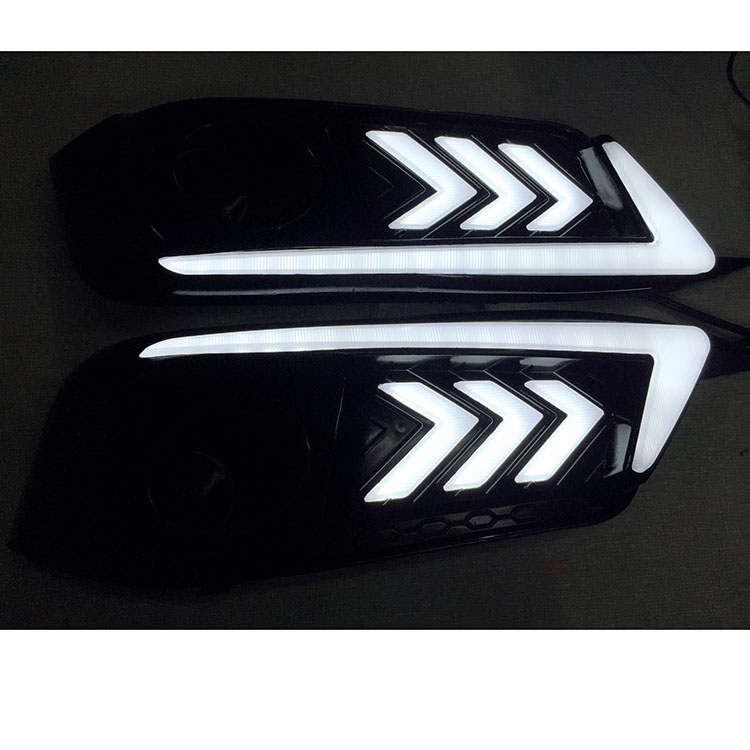
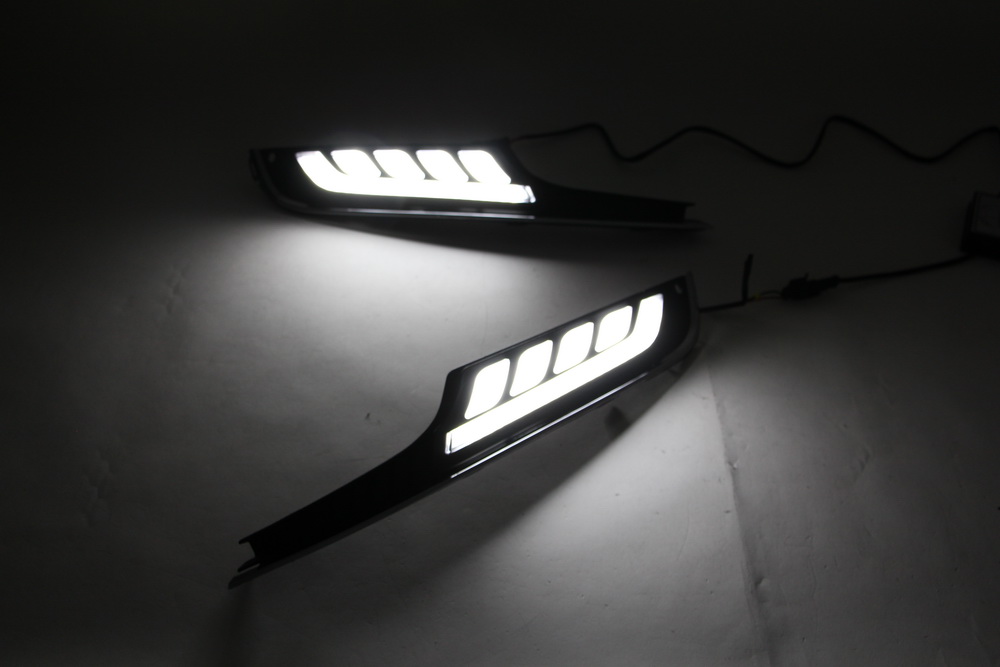
The DRL market is split into universal fitments (straight or curved LED bars designed to fit various grilles) and vehicle-specific replacements (molded bezels designed to replace factory fog light surrounds or bumper inserts).
Vehicle-specific DRLs are highly lucrative but require significant upfront investment in plastic injection molds for the bezels. If you are developing a custom line for specific vehicle models, partnering with a supplier experienced in OEM/ODM Services is essential to manage tooling accuracy and 3D scanning of the vehicle fascias.
Typical MOQs and Pricing Drivers
| Factor | Universal DRLs | Vehicle-Specific (OEM Fit) |
|---|---|---|
| Typical MOQ | 500 - 1,000 sets | 200 - 500 sets (per model) |
| Tooling Cost | None (off-the-shelf) | High (custom bezels & lenses) |
| Lead Time | 15 - 25 days | 35 - 50 days (post-tooling) |
| Unit Cost Driver | LED chip brand & driver | Mold complexity & housing material |
Note: Pricing and MOQs fluctuate based on raw material costs, chip availability, and factory capacity. The figures above represent typical industry baselines.
Need to negotiate tooling costs and MOQs for a custom vehicle-specific DRL line?
Get a free consultationFrequently Asked Questions
Successfully importing daytime running lights requires a deep understanding of automotive electrical systems, thermal dynamics, and international regulatory standards. Aligning with a manufacturing partner who possesses the right automated equipment and genuine compliance documentation is the only reliable way to protect your brand and your margins.
Get Sourcing Help for Daytime Running Lights
Tell us your requirements and our experts will connect you with verified manufacturers.