Cylindrical Gears
Source high-precision cylindrical gears from vetted manufacturers and suppliers across Asia. Designed for importers, distributors, and brands seeking reliable bulk wholesale or custom OEM production. Ensure consistent metallurgical quality, competitive pricing, and strict dimensional tolerances for your industrial machinery components.
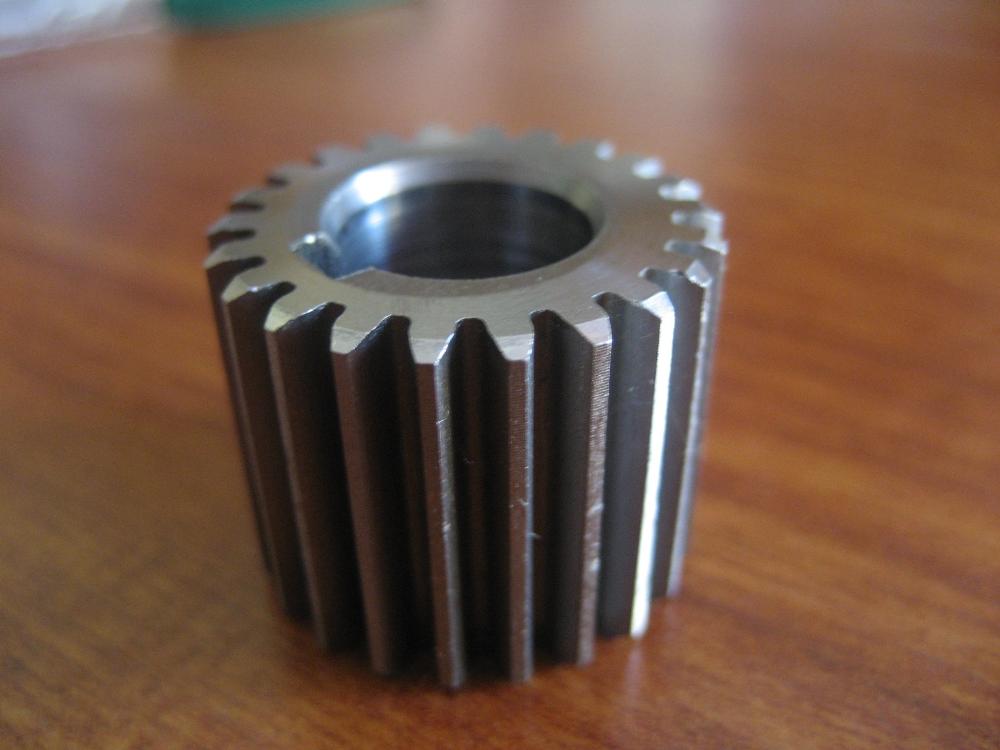
Cylindrical gears—encompassing both straight-cut spur gears and angled helical gears—are the foundational power transmission components in industrial machinery. When sourcing these gears in high volumes, the primary challenge is maintaining strict dimensional tolerances and metallurgical consistency across thousands of units, particularly after the stresses of heat treatment. Sourcing successfully requires aligning the factory's machining capabilities with your specific precision requirements and cost targets.
Defining Your Gear Specifications
To get accurate quotes and avoid production errors, technical drawings must specify more than just basic dimensions. Factories need complete gear data to determine the appropriate cutting tools (hobs or shapers) and inspection methods.
Key parameters to define clearly include:
- Module (m) or Diametral Pitch (DP): The standard measure of tooth size. Ensure your supplier works natively in your required system (metric vs. imperial tooling).
- Pressure Angle: Typically 20 degrees, though 14.5 degrees is still used in legacy replacement parts.
- Profile Shift Coefficient (x): Critical for avoiding undercut on gears with low tooth counts or for adjusting center distances.
- Tolerance Standards: Specify the exact grade (e.g., DIN 3962, ISO 1328, or AGMA 2015). Do not simply ask for "high precision."
| Precision Standard | Typical Application | Cost & Manufacturing Impact |
|---|---|---|
| DIN 8-9 / AGMA 6-7 | Agricultural machinery, low-speed conveyors | Baseline cost; achievable with standard hobbing. |
| DIN 6-7 / AGMA 8-10 | Industrial gearboxes, automotive transmissions | Moderate premium; requires precise shaving or grinding. |
| DIN 4-5 / AGMA 11-12 | Aerospace, high-speed robotics | High premium; demands specialized gear grinding and strict CMM verification. |
Manufacturing and Heat Treatment Realities
The true test of a gear manufacturer is not just how they cut the gear, but how they harden it. Heat treatment introduces distortion. How a factory manages this distortion separates capable suppliers from unreliable ones.
Most industrial cylindrical gears rely on materials like 20CrMnTi or 42CrMo, which undergo carburizing and quenching to achieve a hard wear surface (typically HRC 58-62) while maintaining a tough, ductile core.
Managing Heat Treatment Distortion
Advantages
- Pre-heat treatment shaving: Cost-effective for mid-precision gears (DIN 7).
- Post-heat treatment grinding: Essential for high-precision gears (DIN 6 and better) to correct distortion.
- In-house heat treatment: Allows the factory tighter control over temperature cycles and cooling rates.
Disadvantages
- Outsourced heat treatment: Common in smaller factories but introduces risk in batch-to-batch consistency.
- Grinding adds significant cycle time and cost to the final component.
Thorough Factory Audits are essential to verify whether a supplier has the specialized gear-grinding equipment (like Reishauer or Gleason machines) and the metallurgical lab necessary to validate case depth and core hardness.
Evaluating gear manufacturers requires deep technical vetting. Let Merhein assess their machining, heat-treatment capabilities, and quality systems before you place an order.
Talk to our teamQuality Control for Cylindrical Gears
Visual inspection is entirely insufficient for gears. If the involute profile or tooth spacing is off by microns, the gear will generate excessive noise, vibrate, and fail prematurely.
When establishing your Quality Control & Inspection protocols, mandate specific testing documentation from the factory:
Critical Gear Inspection Reports
- Gear Profile and Lead Inspection (using dedicated CNC gear measuring centers)
- Pitch Deviation (single and cumulative)
- Radial Runout (concentricity of the pitch circle to the bore)
- Material Certification (chemical composition of the steel lot)
- Hardness Test Report (including case depth verification for carburized gears)
Pricing, MOQs, and Lead Times
Pricing for cylindrical gears is driven heavily by raw material costs, the required precision grade, and production volume.
For standard catalog gears, MOQs can be quite low. However, if you require custom profiles, specific alloys, or proprietary hub configurations through OEM/ODM Services, expect higher minimums to justify machine setup times and custom hobbing tools.
Managing custom tooling, negotiations, and landed costs can be complex. Partner with us to streamline your gear sourcing and secure reliable production.
Get a free consultationFrequently Asked Questions
Sourcing cylindrical gears at scale is an exercise in risk management. The lowest quoted price often hides compromises in heat treatment or skipped inspection steps. By defining strict technical parameters and verifying factory capabilities upfront, you can secure components that deliver the longevity and performance your machinery demands.
Get Sourcing Help for Cylindrical Gears
Tell us your requirements and our experts will connect you with verified manufacturers.