Cushions
Source premium and everyday cushions from vetted manufacturers and wholesale suppliers across Asia. Designed for importers, distributors, and brands requiring reliable OEM and private-label production, our network delivers scalable volumes, consistent quality, and competitive pricing for bulk home textile sourcing.
Sourcing cushions at scale requires balancing tactile quality with strict unit economics. Whether you are developing performance outdoor textiles or luxury indoor accents, the core challenge lies in standardizing fabric specifications, fill weights, and finishing details across high-volume production runs. Moving from approved prototypes to mass production requires tight control over fabric mills, cut-and-sew facilities, and packaging protocols.
Defining Technical Specifications for Production
A common error in bulk cushion sourcing is relying on visual references rather than technical data. To ensure consistency across batches, your tech pack must explicitly define the cover fabric, the fill material, and the hardware.
Fabric and Shell Construction
The outer shell dictates both the aesthetic and the durability of the cushion. When working with suppliers, you must specify the fabric weight in GSM (Grams per Square Meter). A standard decorative indoor cushion typically utilizes fabrics between 150 and 300 GSM, while outdoor or heavy-duty commercial cushions require 300 to 600 GSM.
For commercial applications, specify the required abrasion resistance using the Martindale or Wyzenbeek rub test. Additionally, outline the exact closure method—such as a concealed zipper (specify the brand, like YKK or SBS, and the gauge) or a deep envelope closure.
| Fill Material | Cost Profile | Resilience & Recovery | Typical Application |
|---|---|---|---|
| Polyester Fiberfill (Hollowfibre) | Low | Moderate (flattens over time) | Standard decorative throws |
| High-Density Polyurethane Foam | Medium to High | Excellent | Seat cushions, outdoor furniture |
| Down / Feather Blends | High | Requires manual fluffing | Luxury indoor accents |
| Shredded Memory Foam | Medium | High (heavy weight) | Ergonomic or support cushions |
Struggling with inconsistent fill weights or seam failures across your textile shipments? Let our on-the-ground experts standardize your production and manage factory communications.
Talk to our teamFactory-Level Quality Control and Compliance
Quality is won or lost on the factory floor during the cutting, sewing, and filling stages. Inconsistent seam allowances lead to puckering, while uncalibrated blow-filling machines result in uneven cushion weights.
Implementing rigorous quality control and inspection is non-negotiable before shipment. In-line inspections should verify that the fabric grain aligns correctly with the pattern, especially for geometric prints.
Furthermore, cushions are subject to strict regional flammability and chemical regulations. Depending on your target market, you must ensure your factory can meet standards such as TB 117-2013 for the United States or BS 5852 for the United Kingdom. Utilizing proper compliance and testing services protects your brand from costly customs rejections or product recalls.
Critical Pre-Shipment Inspection Points for Cushions
- Fill weight verification: Weighing a random sample to ensure standard deviation is under 5 percent.
- Seam slippage and tensile strength tests on load-bearing edges.
- Zipper cycling: Testing the closure under lateral tension.
- Colorfastness testing: Checking for dye transfer (crocking) in both wet and dry conditions.
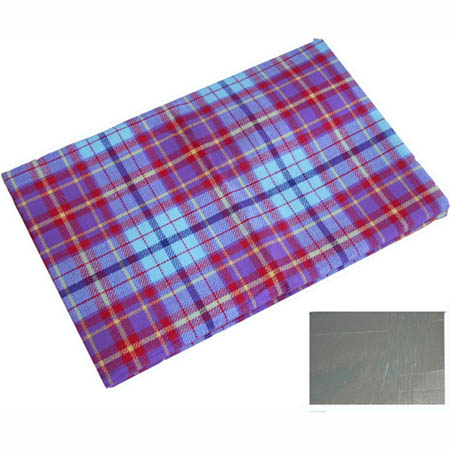
- Pattern matching: Verifying alignment at the seams for printed or woven designs.
Pricing Structures and Purchasing Mechanics
When importing cushions, the unit price is only one part of the landed cost equation. Because cushions are inherently high-volume, low-weight items, freight costs can easily destroy your margins if packaging is not optimized.
Vacuum compression packing is standard practice to maximize container space, often reducing shipping volume by up to 70 percent. However, the factory must test the specific fill material to ensure it fully recovers its loft after weeks in a compressed state.
Minimum Order Quantities (MOQs) for cushions are rarely dictated by the cut-and-sew process; they are driven by the fabric mills. If you are utilizing OEM/ODM services for custom prints or dyed-to-match (DTM) colors, expect higher minimums.
Need to optimize your landed costs? We help high-volume buyers negotiate better terms, manage MOQs, and implement cost-saving packaging solutions directly with the factory.
Get a free consultationFrequently Asked Questions
Successfully sourcing cushions at scale is an exercise in managing variables. By strictly defining your material specifications and enforcing rigorous pre-shipment inspections, you can eliminate the inconsistencies that plague bulk textile orders. Partnering with experienced sourcing professionals ensures your supply chain remains resilient, compliant, and cost-effective from the mill to your warehouse.
Get Sourcing Help for Cushions
Tell us your requirements and our experts will connect you with verified manufacturers.