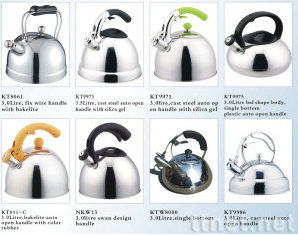
Cookware Parts
Source premium cookware parts from vetted manufacturers and suppliers in Asia. Designed for importers, wholesale distributors, and cookware brands seeking reliable OEM and private-label production. Secure bulk pricing on high-tolerance handles, lids, and hardware built to strict thermal and food-safety standards.
Sourcing cookware parts in bulk requires strict adherence to thermal, mechanical, and regulatory standards. Whether you are procuring components for final assembly or supplying aftermarket replacements, the structural integrity of these parts dictates the safety and lifespan of the finished product. Component failures—from shattered glass lids to degraded bakelite handles—can trigger costly recalls and damage a brand's reputation.
Securing reliable production means navigating material grades, tooling precision, and rigorous assembly tolerances.
Material Specifications and Thermal Tolerances
Cookware components must withstand repeated thermal cycling, mechanical stress, and exposure to moisture and acidic foods. Specifying the correct material grade is the first step in mitigating failure.
- Handles and Knobs: Bakelite remains the standard for cost-effective, heat-resistant handles, typically rated for continuous use up to 150°C. For higher thermal thresholds, silicone-coated overmolds (often applied over a metal or rigid nylon core) can withstand up to 250°C. Premium lines utilize cast stainless steel (SS201 or SS304) for oven-safe applications.
- Lids: Tempered glass lids require a standard thickness of 4mm to ensure adequate impact and thermal shock resistance. Rims are typically stamped from SS201 or SS304 to prevent corrosion from trapped steam.
- Hardware and Flame Guards: Rivets must be extruded from aluminum or stainless steel to prevent galvanic corrosion when mated with the cookware body. Flame guards (the protective collar between the handle and the pot) are typically stamped from aluminum or SS201.
- Induction Bases: Bottom plates affixed to aluminum cookware must be stamped from a ferritic stainless steel, such as SS430, to provide the necessary magnetic properties for induction ranges.
| Material | Max Continuous Heat | Typical Application | Tooling Type |
|---|---|---|---|
| Bakelite (Phenolic) | Up to 150°C | Economy/Mid-range handles | Injection / Compression |
| Silicone-Coated | Up to 250°C | Mid-range/Premium grips | Overmolding |
| Cast Stainless Steel | Over 300°C | Professional/Oven-safe | Die-casting |
Struggling to find suppliers capable of meeting strict thermal and material tolerances? Let us handle the vetting and sourcing process.
Talk to our teamManufacturing Processes and Quality Control
The production of cookware parts spans multiple manufacturing disciplines, from plastic injection molding to glass tempering and metal stamping. Defects often occur not in the raw material, but during the processing and finishing stages.
When evaluating a factory's capabilities, pay close attention to their tooling maintenance and assembly precision. Poorly maintained bakelite molds result in excessive flashing (sharp edges) that require manual grinding, increasing labor costs and creating an inconsistent finish. For silicone parts, insufficient post-curing time can leave volatile organic compounds (VOCs) in the material, which will fail strict Compliance & Testing protocols like LFGB or FDA food-contact standards.
Critical QC Checks for Cookware Parts
- Thermal Shock Testing: Rapidly cooling heated glass lids to verify tempering integrity.
- Torque Testing: Ensuring handles and knobs do not strip or crack under rotational force.
- Fit and Tolerance: Checking the curvature of metal brackets against the specific radius of the cookware body.
- Finish Inspection: Verifying the absence of sharp flashing on molded parts and burrs on stamped metal.
- Material Verification: PMI (Positive Material Identification) testing to confirm SS304 vs SS201.
Executing rigorous Quality Control & Inspection before the components leave the factory floor is essential to prevent assembly line bottlenecks when the parts arrive at your facility.
Tooling and OEM/ODM Customization
Brands looking to differentiate their cookware lines rarely buy off-the-shelf components. Custom handles, specific lid profiles, and branded knobs require proprietary tooling.
Developing custom parts involves significant upfront investment in molds. A standard bakelite injection mold can take 20 to 35 days to machine, while complex die-cast molds for ergonomic stainless steel handles require precise CNC machining and polishing. When engaging in OEM/ODM Services, ensure that your contract clearly stipulates mold ownership, expected tool life (number of shots), and maintenance responsibilities.
Typical MOQs, Lead Times, and Pricing Dynamics
Because cookware parts are high-volume, low-margin commodities, factories operate on strict economies of scale. Purchasing in low quantities often results in disproportionately high unit costs due to machine setup times.
Pricing is heavily influenced by raw material commodity markets (aluminum, steel, phenolic resin). Currency fluctuations and the complexity of the finish (e.g., soft-touch spray coating on bakelite vs. standard matte) will also drive unit costs.
Need realistic cost modeling for custom cookware tooling and bulk component orders? We can help structure your procurement.
Get a free consultationFrequently Asked Questions
Successfully sourcing cookware parts in volume comes down to controlling tolerances across multiple material types. By prioritizing rigorous factory vetting and specifying exact material grades, buyers can secure components that assemble seamlessly and perform reliably under intense thermal stress.
Get Sourcing Help for Cookware Parts
Tell us your requirements and our experts will connect you with verified manufacturers.