Cookie Tools
Source high-quality wholesale cookie tools directly from vetted manufacturers and suppliers. Designed for importers, distributors, and bakeware brands, our factory-direct network supports bulk purchasing, custom OEM/ODM production, and private-label packaging. Secure reliable supply chains with compliant, food-grade materials.
Sourcing commercial-grade cookie tools—ranging from precision metal cutters and stamps to extrusion presses—requires strict adherence to food-contact safety standards and consistent manufacturing tolerances. For volume buyers, the primary challenge lies in balancing material integrity, such as rust-resistant alloys or pure food-grade silicone, with competitive unit costs at scale. A slight deviation in material thickness or tooling precision can lead to product failure, compliance issues, or poor end-user experience.
Material Specifications & Manufacturing Precision
The durability and performance of cookie tools depend entirely on the raw materials specified during the procurement phase. Manufacturers typically offer several tiers of materials, each with distinct cost profiles and compliance implications.
Stainless Steel vs. Tinplate
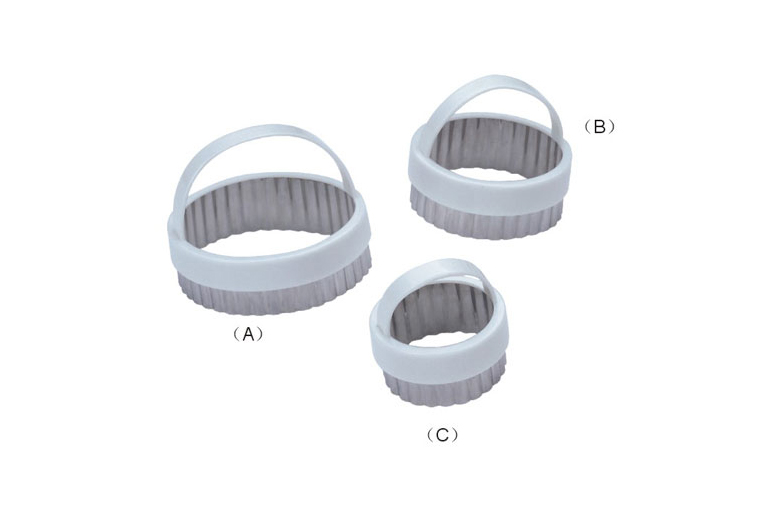
For cookie cutters and metal presses, material choice dictates longevity. Tinplate is highly cost-effective but prone to rust if the tin coating is compromised. Stainless steel is the industry standard for premium lines, but buyers must specify the exact grade:
- Grade 430: The standard for mid-market bakeware. It offers good corrosion resistance and is magnetic.
- Grade 304: The premium choice. It provides superior rust resistance and durability, though at a higher raw material cost.
Thickness is another critical specification. Standard cutters range from 0.25mm to 0.3mm. For heavy-duty or commercial-use tools, specifying a thickness of 0.4mm or higher prevents bending and warping during use.
Plastics and Silicone
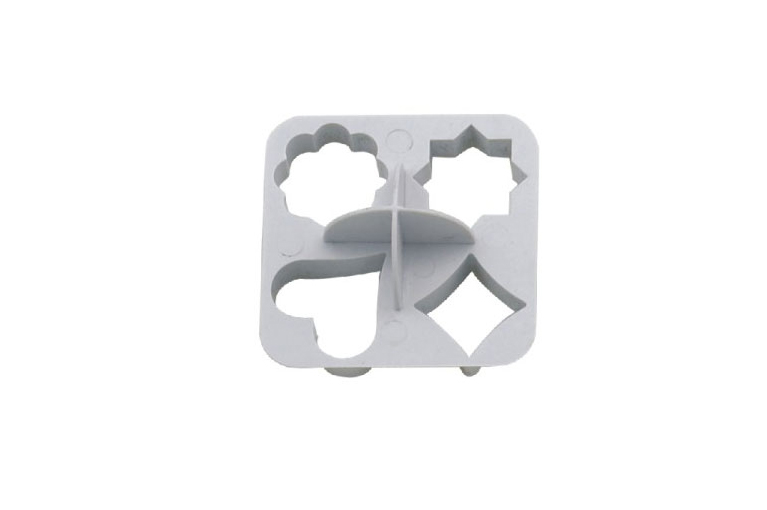
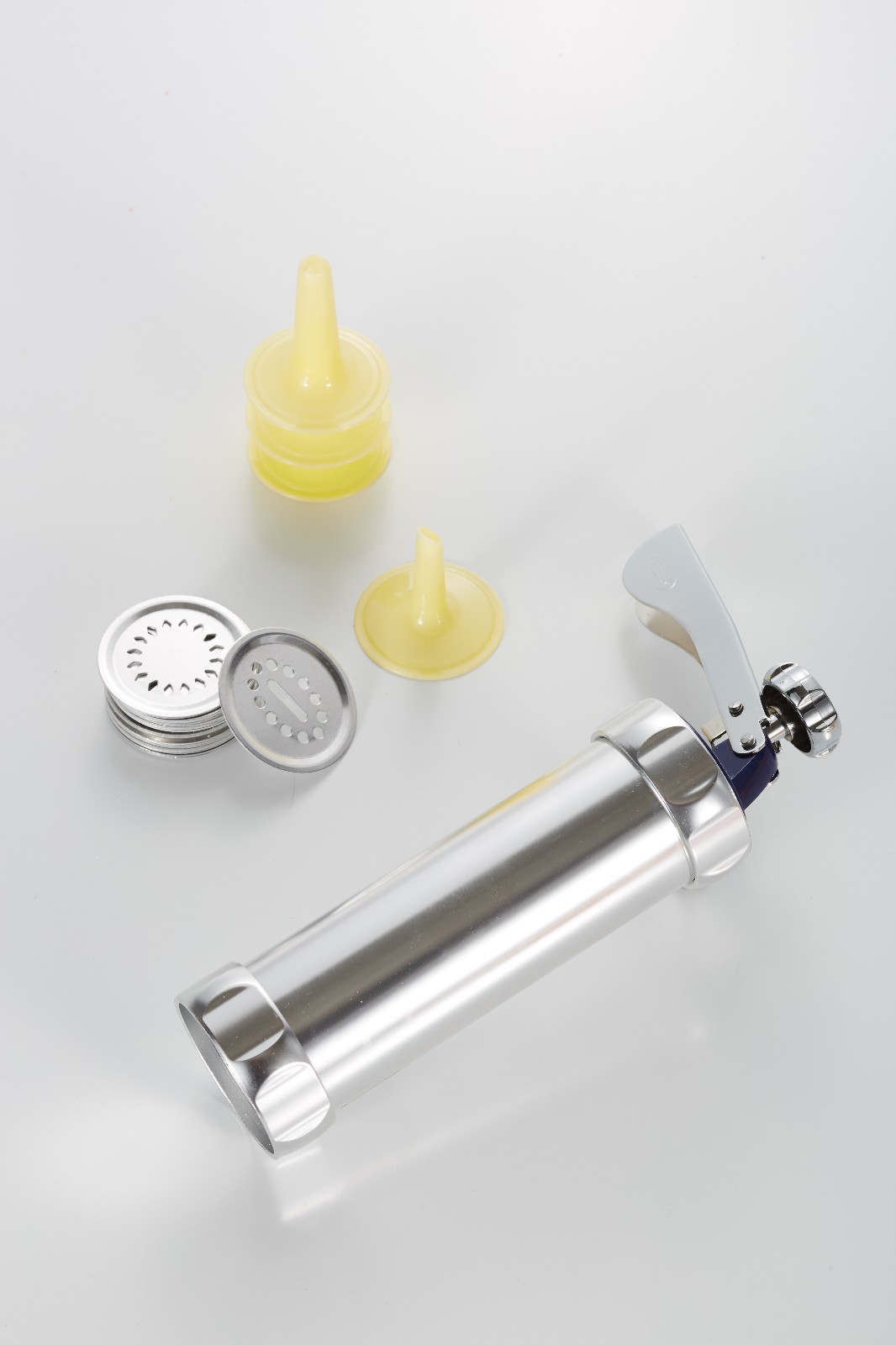
For stamps, presses, and molds, ABS and Polypropylene (PP) are common. ABS offers high rigidity for intricate stamp details, while PP provides excellent fatigue resistance for moving parts. If sourcing silicone molds, specify platinum-cured silicone over peroxide-cured variants to ensure zero odor transfer and strict compliance with global food safety regulations.
| Material | Common Grades/Types | Primary Application | Cost Profile |
|---|---|---|---|
| Stainless Steel | 304, 430 | Cutters, press barrels | Medium to High |
| Tinplate | Standard commercial | Promotional/budget cutters | Low |
| Plastic | ABS, PP | Stamps, extrusion discs | Low to Medium |
| Silicone | Platinum-cured | Molds, press seals | Medium to High |
Ensure your custom bakeware specifications meet strict food-contact compliance before production begins.
Get a free consultationQuality Control on the Factory Floor
Quality is won or lost during the tooling and assembly phases. Spot-welded metal cutters, for instance, must have smooth, fully integrated seams. Poor welding leaves gaps that harbor bacteria or sharp burrs that present safety hazards. For plastic injection-molded tools, improper cooling times or worn molds result in flash (excess plastic along seams) or warping.
Implementing rigorous Quality Control & Inspection protocols is essential. Focus on these critical checkpoints during pre-shipment inspections:
Cookie Tool QC Checkpoints
- Weld Integrity: Inspect metal seams for smooth finishes, zero burrs, and complete fusion.
- Edge Rolling: Ensure top edges of cutters are fully rolled for user safety without trapping debris.
- Dimensional Tolerance: Verify cutter shapes and press discs match CAD specifications within 0.5mm.
- Surface Finish: Check for uniform polishing on metals and zero flash or sink marks on plastics.
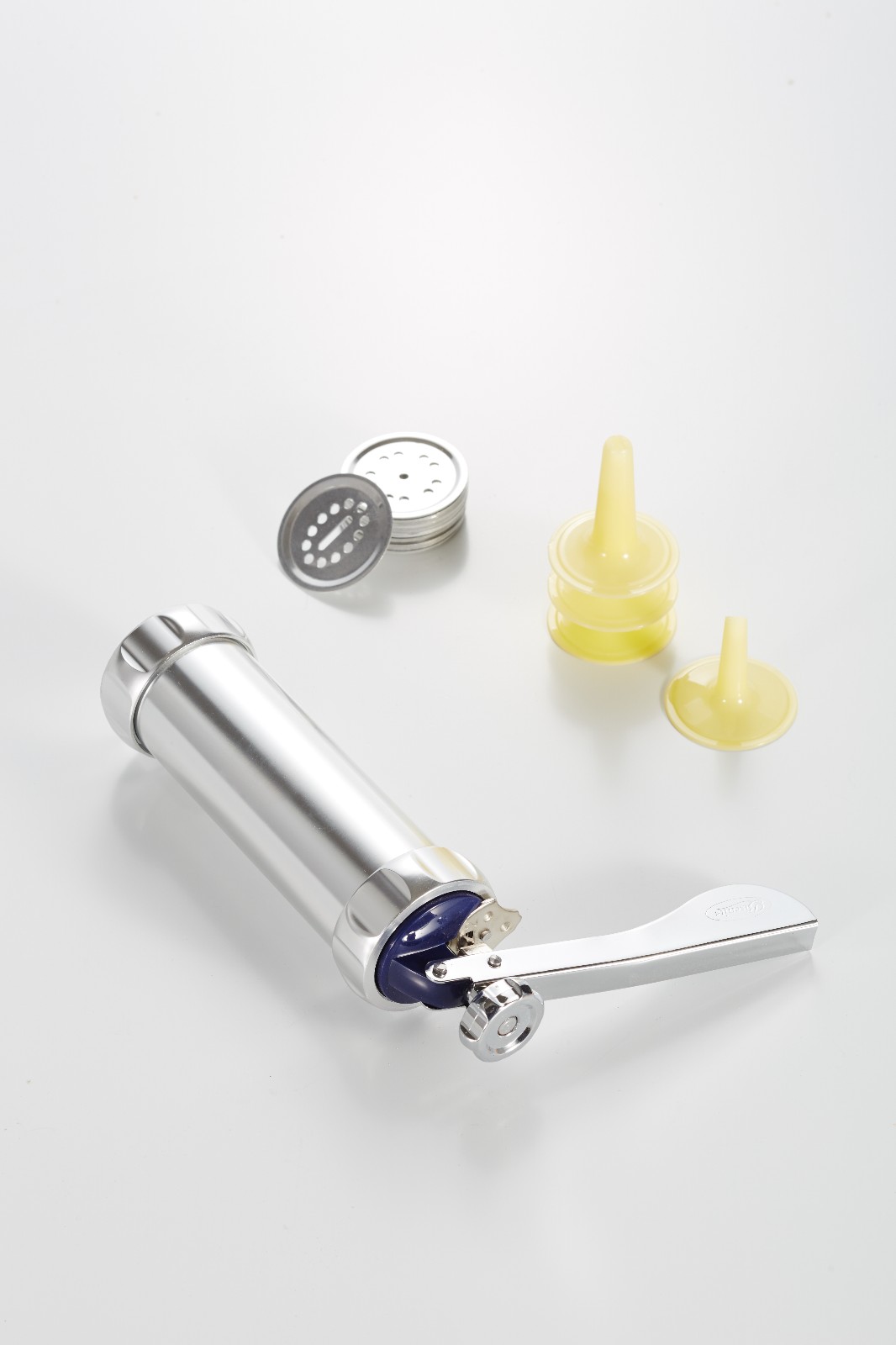
- Mechanism Testing: Cycle cookie presses to ensure smooth ratcheting and tight seals.
OEM/ODM Customization and Tooling
Many brands differentiate themselves through custom shapes, branded stamps, or proprietary press designs. Engaging in OEM/ODM Services requires a clear understanding of tooling costs and ownership.
Custom metal cutters usually require simple stamping dies, which are relatively inexpensive and quick to produce. Conversely, custom plastic stamps or complex cookie press mechanisms require injection molds. These molds demand higher upfront capital and longer lead times but drastically reduce the unit cost at high volumes. Always clarify mold ownership terms in your supplier agreement before opening new tooling.
Buying Mechanics: MOQs, Lead Times, and Pricing
Pricing for cookie tools is driven by raw material commodity rates, tooling complexity, and finishing requirements (such as PVD coatings for colored metals).
When negotiating, volume is your strongest lever. However, ensure the factory actually possesses the injection molding or metal stamping capacity to meet your seasonal peaks. Conducting thorough Factory Audits helps verify their machinery, workforce size, and sub-tier supplier network for raw materials.
Streamline your supply chain with factory-direct pricing, verified capacity, and end-to-end quality management.
Talk to our teamFrequently Asked Questions
Successfully sourcing cookie tools requires moving beyond unit price and focusing on material grades, tooling precision, and strict food-contact compliance. By partnering with vetted, capable manufacturers, bulk buyers can secure durable, high-margin bakeware that consistently performs in the kitchen.
Get Sourcing Help for Cookie Tools
Tell us your requirements and our experts will connect you with verified manufacturers.