Container Houses
Source premium Container Houses from vetted suppliers and manufacturers across Asia. Designed for importers, real estate developers, and wholesalers purchasing in bulk, our network delivers reliable structural integrity and scalable OEM production. Ensure your next project meets rigorous market standards with direct factory pricing.
Sourcing container houses in bulk requires navigating a complex intersection of structural engineering, local building codes, and international freight logistics. Whether you are procuring modular units for rapid deployment, workforce housing, or permanent residential developments, the manufacturer's fabrication standards dictate the lifespan and safety of the final structure. Buying at scale means you cannot afford inconsistent welding, substandard insulation, or non-compliant electrical rough-ins.
Structural Specifications and Manufacturing Realities
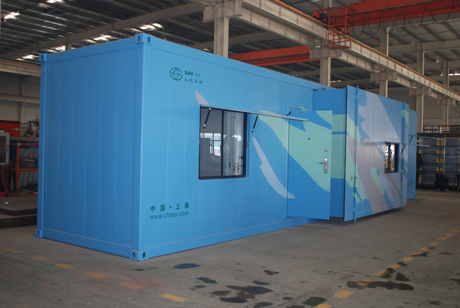
The core of any container house is its steel frame and paneling. Factories typically produce units using either cold-rolled galvanized steel (for flat-pack and expandable models) or modified Corten steel (for repurposed ISO shipping containers).
When evaluating a manufacturer, pay close attention to the steel thickness and the galvanization process. A standard flat-pack corner post should utilize steel no thinner than 2.5mm to 3.0mm to ensure stacking capabilities and structural rigidity.
| Container Type | Primary Structure | Insulation Compatibility | Logistics Profile |
|---|---|---|---|
| Flat-Pack Modular | Cold-rolled galvanized steel | EPS, PU, or Rockwool sandwich panels | High efficiency (4 to 6 units per 40HQ) |
| Expandable Container | Welded steel chassis with hinges | Pre-installed composite panels | Moderate (1 to 2 units per 40HQ) |
| Modified ISO | Corten steel corrugated panels | Spray foam or internal batts | Standard shipping container footprint |
Insulation and Climate Control
Thermal performance is a major failure point in lower-tier production. Sandwich panel walls are standard, but the core material drastically alters the unit's fire rating and R-value. EPS (Expanded Polystyrene) is cost-effective but offers lower fire resistance. PU (Polyurethane) provides superior thermal insulation and structural rigidity. Rockwool is essential for projects requiring strict fire-rated compliance. Ensure your supplier can source and certify the specific panel grade your destination market demands.
Verifying a factory's structural engineering capabilities is resource-intensive. Let us handle the technical vetting and supplier qualification for you.
Talk to our teamQuality Control on the Factory Floor
A container house is only as good as its weakest weld and its thinnest coating. Because these units are subjected to dynamic loads during shipping and static loads on-site, rigorous Quality Control & Inspection is non-negotiable.
Many buyers discover too late that their units suffer from water ingress due to poor sealing or rapid rusting due to inadequate surface preparation. Before committing to a large order, robust Factory Audits are highly recommended to verify the manufacturer's welding certifications (such as ISO 3834) and automated painting facilities.
Critical Pre-Shipment Inspection Points
- Weld integrity: Inspect corner castings and load-bearing joints for porosity or cold laps.
- Coating thickness: Verify primer and topcoat micron thickness using a digital gauge to ensure rust resistance.
- Water-tightness: Demand spray testing on roof seams and window/door flashings.
- Electrical rough-in: Ensure all pre-wired conduits and distribution boxes match destination country codes (e.g., UL, CE, AS/NZS).
- Dimensional tolerance: Check diagonal measurements to ensure flat-pack components will align perfectly during on-site assembly.
Pricing Drivers, MOQs, and Logistics
The true cost of a container house lands heavily on international freight. The unit price is only one part of the equation; how efficiently the product packs into a standard 40-foot High Cube (40HQ) shipping container defines your landed margin.
- MOQs: Most reliable factories set Minimum Order Quantities at 1 to 4 units (often dictated by what fills a single 40HQ container). For custom OEM designs or specific structural modifications, MOQs typically rise to 10+ units.
- Lead Times: Standard flat-pack models usually require 25 to 35 days for production. Custom layouts or modified ISO containers can take 45 to 60 days, depending on the complexity of the interior fit-out.
- Logistics: Flat-pack units are highly optimized for shipping, allowing up to 6 standard 20-foot units to fit inside a single 40HQ. Modified fully-assembled ISO containers, however, ship as their own freight, which requires specialized handling and higher shipping costs. Coordinating this requires expert Shipping & Freight management to avoid port delays and unexpected crane fees.
Struggling with high freight costs and inefficient loading? Our supply chain team can optimize your container house orders for maximum margin.
Get a free consultationFrequently Asked Questions
Sourcing container houses successfully means looking past the surface aesthetics and scrutinizing the structural steel, insulation grades, and logistical footprint. By partnering with a team that understands the intersection of heavy manufacturing and global freight, you can secure reliable, compliant units that protect your bottom line.
Get Sourcing Help for Container Houses
Tell us your requirements and our experts will connect you with verified manufacturers.