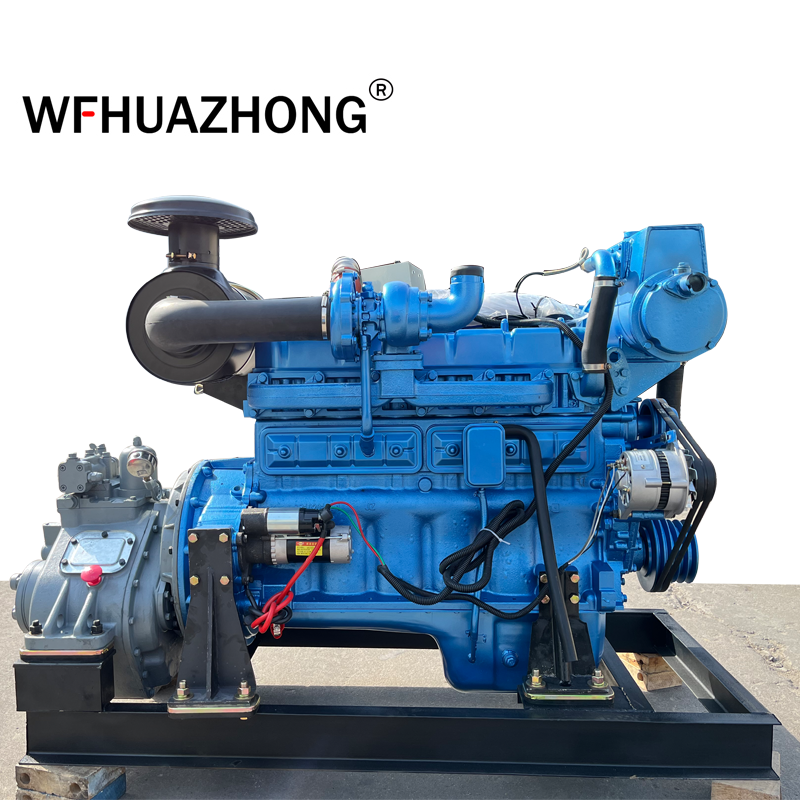
Compression-ignition?internal combustion piston marine engines
Source compression-ignition internal combustion piston marine engines from vetted manufacturers and suppliers. Designed for shipbuilders, marine equipment wholesalers, and fleet procurement managers looking for reliable, scalable bulk purchasing and OEM production.
Sourcing compression-ignition internal combustion piston marine engines (marine diesel engines) requires strict attention to power output, fuel efficiency, and maritime regulatory compliance. For bulk buyers, distributors, and commercial shipbuilders, identifying a manufacturing partner capable of meeting International Association of Classification Societies (IACS) standards and emission regulations is the primary hurdle in the procurement process.
Defining Core Engine Specifications
When approaching manufacturers, technical specifications must be rigidly defined to ensure the engine matches the intended vessel's operational profile, whether for propulsion or auxiliary power generation.
| Specification | High-Speed Engines | Medium-Speed Engines |
|---|---|---|
| Operating RPM | 1,000 to 3,000 RPM | 400 to 1,000 RPM |
| Typical Applications | Patrol boats, yachts, fast ferries | Tugs, fishing vessels, cargo ships |
| Power-to-Weight | High (Compact footprint) | Moderate (Heavier block construction) |
| Fuel Tolerance | Marine Gas Oil (MGO) / MDO | Heavy Fuel Oil (HFO) / Blends |
Beyond speed and displacement, buyers must specify the cooling system architecture. Manufacturers typically offer keel-cooled configurations for vessels operating in debris-heavy or shallow waters, and heat exchanger (raw water) configurations for standard offshore applications.
Manufacturing Capabilities and Quality Control
The reliability of a marine diesel engine is determined at the foundry and the CNC machining center. Engine blocks must be cast from high-grade gray iron or compacted graphite iron (CGI) to withstand continuous torsional stress and high cylinder pressures.
Need to verify a factory's machining tolerances and testing capabilities? Merhein can evaluate facilities before you place an order.
Talk to our teamAssessing a supplier requires looking past their catalog and examining their production floor. Relying on comprehensive factory audits ensures the supplier possesses the necessary multi-axis CNC machinery to maintain strict tolerances on cylinder bores and crankshaft journals.
Once production is complete, rigorous quality control is non-negotiable. Every unit should undergo a Factory Acceptance Test (FAT) on a dynamometer.
Critical Factory Acceptance Test (FAT) Checkpoints
- Continuous load testing at 100% and 110% rated power
- Specific Fuel Oil Consumption (SFOC) verification across the RPM curve
- Lube oil pressure and temperature stability under maximum load
- Vibration analysis on engine mounts and crankshaft
- Exhaust gas temperature and back-pressure monitoring
Certifications and Maritime Compliance
Marine engines face some of the strictest regulatory environments of any machinery. Procurement managers must ensure the factory can produce engines compliant with IMO (International Maritime Organization) Tier II or Tier III emission standards, depending on the vessel's operating region (e.g., Emission Control Areas or ECAs).
Furthermore, engines destined for commercial vessels typically require type approval or individual certification from an IACS member society (such as ABS, DNV, or Lloyd's Register). Integrating compliance testing into your sourcing strategy early prevents costly customs rejections or vessel commissioning delays.
Pricing, Lead Times, and Logistics
The heavy machinery sector operates on distinct timelines and minimum order quantities (MOQs). Because marine engines are capital-intensive, factories generally accommodate lower MOQs, though volume discounts apply for distributors ordering container loads.
Due to their immense weight and dimensions, marine engines require specialized logistics. Moving a multi-ton engine block safely from an Asian manufacturing hub to a global shipyard involves flat-rack containers, heavy-lift cranes, and precise securing protocols. Coordinating this through specialized shipping and freight channels is critical to avoid transit damage to sensitive fuel injection systems or turbochargers.
Managing heavy freight and complex factory negotiations takes time. Let Merhein streamline your marine equipment supply chain.
Get a free consultationBuyer FAQ
Procuring compression-ignition marine engines in bulk is an exercise in risk management, requiring deep technical alignment with the factory and rigorous oversight during production. By focusing on IACS compliance, strict FAT protocols, and secure logistics, buyers can source high-performance marine propulsion systems that deliver long-term reliability.
Get Sourcing Help for Compression-ignition?internal combustion piston marine engines
Tell us your requirements and our experts will connect you with verified manufacturers.