Compact Discs
Source bulk Compact Discs from vetted suppliers and manufacturers across Asia. Designed for importers, distributors, and brands requiring high-volume OEM or private-label optical media, this catalog connects you with facilities equipped for precise injection molding, replication, and custom packaging.
While optical media is a mature product category, sourcing high-quality compact discs at scale requires navigating a highly consolidated supplier base. With many tier-one factories shifting focus or decommissioning lines, securing reliable production for blank CD-Rs, CD-RWs, or replicated media demands rigorous vetting. For professional buyers, the challenge lies in ensuring consistent polycarbonate purity, dye application, and low error rates across high-volume runs.
Technical Specifications: Dye and Reflective Layers
The longevity, compatibility, and reliability of a recordable compact disc depend entirely on the chemical composition of its recording dye and the quality of its reflective layer. When specifying requirements to a factory, standardizing these materials is critical.
| Dye Type | Characteristics | Typical Lifespan |
|---|---|---|
| Phthalocyanine | Transparent or light green tint; highly resistant to UV degradation. | Over 100 years (Archival Grade) |
| Cyanine | Blue/green tint; highly compatible with older, slower reader drives. | 10 to 50 years |
| Azo | Deep blue; excellent data stability and broad write-speed support. | Up to 100 years |
The reflective layer, sputtered over the dye, is typically aluminum for standard data discs or silver alloy for premium audio and archival media. Silver offers superior reflectivity, which reduces read errors, but requires precise edge-sealing with protective lacquer to prevent oxidation (disc rot).
Manufacturing Variables and Quality Control
Producing a compact disc involves high-precision injection molding of optical-grade polycarbonate, followed by spin-coating the dye, sputtering the reflective metal, and UV-curing a protective lacquer. Because much of the world's optical media manufacturing equipment is aging, on-site factory audits are essential to verify machine maintenance, cleanroom protocols, and stamper condition.
Critical Production Checks
- Polycarbonate purity: Use of recycled PC introduces microscopic impurities that cause read errors.
- Sputtering uniformity: Uneven aluminum or silver layers cause localized drops in reflectivity.
- Lacquer curing: Insufficient UV curing leads to rapid dye degradation and physical vulnerability.
- Stamper wear: Worn glass masters or stampers increase jitter and track eccentricity.
Struggling to find reliable optical media factories? Let us vet the suppliers and secure your production lines.
Talk to our teamAcceptable Error Tolerances
Visual inspections are insufficient for optical media. You must mandate strict adherence to Red Book (Audio) and Orange Book (Recordable) standards. Implementing stringent pre-shipment quality control using professional disc analyzers is non-negotiable to catch microscopic defects before containers are loaded.
Packaging and Surface Printing
The top surface of the disc and its final packaging significantly impact both unit cost and shipping volume. For custom branding, factories offer screen printing (up to 5 colors) or offset printing (for photorealistic images). Alternatively, thermal or inkjet-printable surfaces can be specified for end-user customization.
Packaging Formats for Bulk Shipping
Advantages
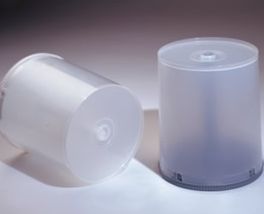
- Shrink-wrapped spindles (cake boxes) maximize container space and drastically reduce freight costs.
- Bulk wrap (no spindle) offers the absolute lowest unit cost for duplication houses.
Disadvantages
- Standard jewel cases are highly fragile and ship a large volume of empty air.
- Paper or Tyvek sleeves require automated insertion lines, increasing lead times if the factory lacks equipment.
If you require custom retail packaging, complex inlays, or specialized casing, coordinating with branding and design services early in the sourcing process ensures the factory can meet your presentation standards without delaying shipment.
Pricing, MOQs, and Lead Times
Optical media is a volume-driven commodity. Pricing fluctuates based on the cost of raw polycarbonate, the chosen dye/reflective materials, and the packaging format.
- Minimum Order Quantities (MOQs): For blank CD-Rs on spindles, MOQs typically start at 50,000 to 100,000 units to justify the machine setup. For replicated media (stamped from a glass master), MOQs are lower, usually between 1,000 and 5,000 units per master.
- Lead Times: Standard production runs take 15 to 25 days. However, custom packaging or specialized offset printing on the disc surface can add 7 to 10 days to the schedule.
Need to lock in competitive pricing for bulk optical media? We negotiate directly with top-tier Asian manufacturers to stabilize your supply chain.
Get a free consultationFrequently Asked Questions
Navigating the compact disc supply chain today is less about finding cutting-edge technology and more about securing stable, high-quality production from a shrinking pool of capable manufacturers. By enforcing strict material standards and rigorous defect testing, you can maintain profitability and protect your brand's reputation in this mature market.
Get Sourcing Help for Compact Discs
Tell us your requirements and our experts will connect you with verified manufacturers.