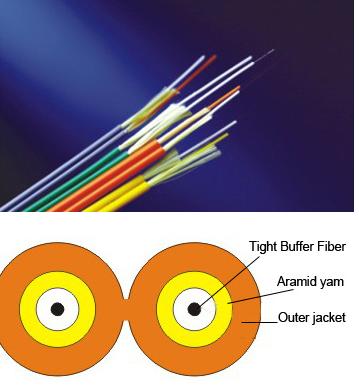
Communication Cables
Source high-performance communication cables from vetted suppliers and manufacturers in Asia. Designed for telecommunications importers, wholesalers, and brands seeking reliable bulk purchasing or custom OEM production. Ensure signal integrity and compliance across your entire supply chain.
Procuring communication cables at scale requires balancing rigid technical specifications with volatile raw material costs. The core challenge in sourcing bulk telecommunications cabling is ensuring absolute signal integrity and regulatory compliance while navigating a landscape where manufacturers frequently cut corners on conductor purity and jacket thickness to maintain margins.
Critical Specifications in Cable Manufacturing
The performance of any communication cable is dictated by the quality of its raw materials and the precision of its assembly. When negotiating with factories, your specification sheet must leave no room for interpretation.
Conductor Material and Gauge
The most significant cost driver and performance factor is the conductor. While solid bare copper is the standard for permanent network installations, Copper Clad Aluminum (CCA) is heavily marketed by low-cost suppliers. If a factory quote seems unusually low, they are likely quoting CCA or undersized conductors (e.g., drawing 24 AWG down to 24.5 AWG to save copper).
| Feature | Solid Bare Copper | Copper Clad Aluminum (CCA) |
|---|---|---|
| Conductivity | Excellent (Standard reference) | Lower (Higher resistance) |
| PoE Suitability | Safe for high-power PoE | Unsafe (Overheating risk) |
| Flexibility & Durability | High (Resists breaking) | Brittle (Prone to micro-fractures) |
| Cost Profile | Premium (Tied to LME copper) | Budget (Significantly cheaper) |
Shielding and Jacket Materials
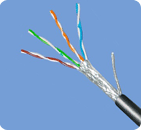
Electromagnetic interference (EMI) and crosstalk are mitigated through proper shielding (UTP, FTP, STP, or S/FTP). You must specify the exact braiding coverage (e.g., 60 percent vs. 90 percent aluminum or tinned copper braid). Furthermore, jacket material must align with the destination market's fire safety regulations. PVC is standard, but European markets strictly require Low Smoke Zero Halogen (LSZH) under the Construction Products Regulation (CPR).
Struggling with inconsistent cable performance or failed compliance tests? Let us vet your suppliers and enforce strict manufacturing standards.
Talk to our teamManufacturing Tolerances and Quality Control
Quality is won or lost during the extrusion and twisting phases. In twisted pair cables, the pitch (the rate of twisting) must vary precisely between pairs to cancel out Near-End Crosstalk (NEXT). If the factory's twisting machinery vibrates or operates too fast, the pitch becomes inconsistent, leading to immediate performance failures.
Before committing to a high-volume order, conducting thorough factory audits is crucial to verify that the supplier maintains calibrated extrusion lines and in-house testing equipment.
Essential Factory-Level Quality Checks
- Fluke Network Testing: Verify passing results for NEXT, Return Loss, and Attenuation on full 305m (1000ft) runs.
- Conductor Resistance Testing: Ensure Ohms per kilometer align with the specified AWG standard.
- Jacket Thickness & Eccentricity: Check that the conductor is perfectly centered within the insulation to prevent signal leakage.
- Aging and Tensile Tests: Confirm jacket durability under thermal stress and physical tension.
Implementing rigorous quality control protocols, including pre-shipment inspections and random sampling for third-party lab verification, is the only way to prevent receiving containers of non-compliant cable.
Pricing Drivers, MOQs, and Lead Times
Communication cable pricing is highly commoditized and directly tied to the London Metal Exchange (LME) copper index. Factories typically quote prices valid for only 3 to 7 days due to copper volatility. If you require specialized branding, custom jacket colors, or specific packaging (e.g., custom pull-boxes or wooden spools), leveraging OEM/ODM services will slightly increase lead times but offers significant brand value.
When importing to heavily regulated markets, ensure you budget for compliance and testing (such as UL listing, RoHS, or CPR certification), as non-compliant cables are frequently seized at customs or rejected by commercial installers.
Need to align your cable procurement with volatile copper markets? We can help structure your purchasing and manage supplier negotiations.
Get a free consultationFrequently Asked Questions
Sourcing communication cables requires a meticulous approach to technical specifications and a deep understanding of raw material markets. By enforcing strict quality controls and partnering with verified manufacturers, you can secure reliable, high-performance cabling that protects your margins and your brand's reputation in the market.
Get Sourcing Help for Communication Cables
Tell us your requirements and our experts will connect you with verified manufacturers.