Commercial Dough Mixers
Source commercial dough mixers directly from vetted manufacturers and suppliers across Asia. Built for restaurant equipment wholesalers, distributors, and catering brands seeking reliable OEM or private-label production, our network provides bulk access to heavy-duty mixing equipment engineered for high-volume foodservice applications.
Sourcing commercial catering machinery requires balancing motor reliability, stringent food safety compliance, and manageable landed costs. Commercial dough mixers are high-torque, heavy-duty machines where a single point of failure in the gearbox or electrical board leads to unacceptable downtime for the end-user. When importing these units in bulk, verifying the underlying component quality at the factory level is just as critical as negotiating the unit price.
Core Specifications & Drive Systems
When evaluating a manufacturer's catalog, the distinction between planetary and spiral mixers will dictate the internal engineering requirements. However, the most critical factor for longevity across all mixer types is the drive system and motor quality.
Buyers must specify the exact motor winding material. Many lower-tier factories use copper-clad aluminum (CCA) to cut costs, which significantly reduces the motor's lifespan under heavy loads. Always specify 100% pure copper motors with built-in thermal overload protection.
| Drive System | Power Transfer | Maintenance Profile | Best Application |
|---|---|---|---|
| Gear-Driven | Direct, high torque efficiency | Higher repair cost, requires regular lubrication | Low-hydration, heavy doughs (pizza, bagels) |
| Belt-Driven | Smooth, slip-protected under load | Lower cost, requires periodic belt replacement | High-hydration doughs, general bakery use |
| Hybrid (Belt & Gear) | Balanced torque and speed | Moderate maintenance, complex assembly | High-capacity industrial spiral mixers |
Need help verifying factory capabilities? Our engineering team can review supplier BOMs and ensure your mixers are built with commercial-grade components.
Discuss your equipment specsQuality Control & Compliance Standards
Importing commercial food equipment into Western markets requires strict adherence to both electrical safety and sanitation standards. A factory claiming "CE certification" on their Alibaba profile often only holds a self-declared certificate for a single component, not the fully assembled machine.
For the US market, ETL or UL marks for electrical safety, alongside NSF certification for food-contact sanitation, are non-negotiable for most commercial end-users. For Europe, CE and RoHS are mandatory. Navigating these requirements often involves rigorous compliance testing through accredited third-party labs.
Critical Pre-Shipment Inspection Points
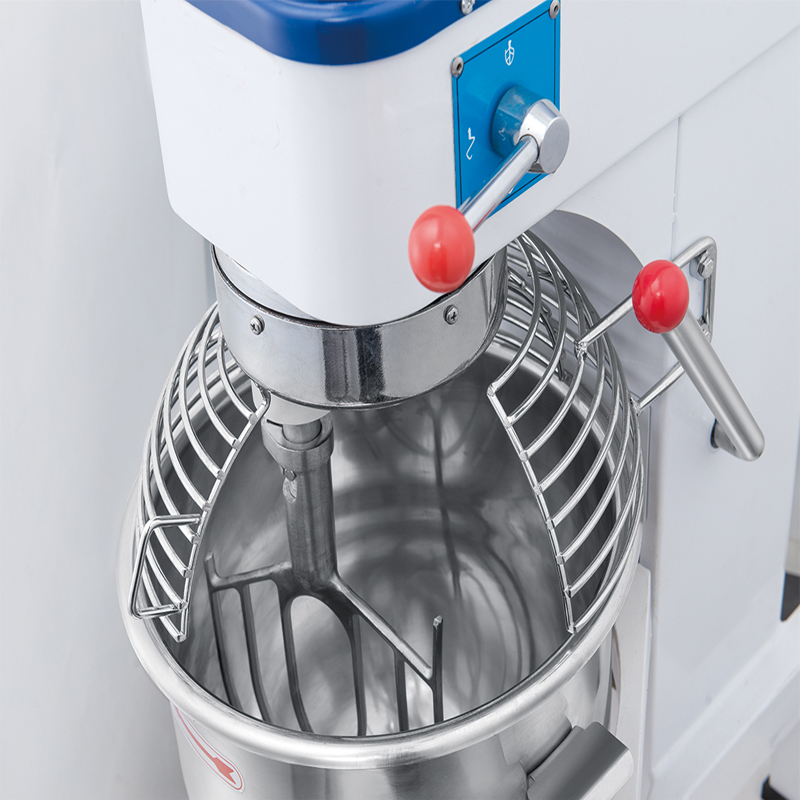
- Material Verification: Ensure the bowl, dough hook, and wire whip are genuine SS304 or SS316, not lower-grade stainless steel.
- Noise & Vibration Testing: Decibel levels should remain under 75dB at maximum RPM; excessive vibration indicates poor shaft alignment.
- Heat Dissipation: Run the mixer at 80% capacity for 30 minutes; motor housing temperatures must remain within safe operational limits.
- Safety Micro-switches: Verify that the machine immediately cuts power when the bowl guard is lifted or the bowl is lowered.
- Electrical Safety: Perform high-voltage (Hi-Pot) and ground continuity tests on every unit.
If you are buying in volume, implementing strict quality control protocols before the goods leave the factory is the only reliable way to prevent costly container-load defects.
Pricing Drivers, MOQs, and Lead Times
The wholesale price of a commercial dough mixer is primarily dictated by its capacity (measured in liters or maximum flour capacity in kilograms), the motor wattage, and the origin of its electronic components. Units utilizing premium inverters (such as Schneider or Siemens) and branded bearings (like NSK) will command a 15% to 25% premium over domestic Chinese equivalents, but offer vastly superior reliability.
For brands looking to establish their own equipment lines, leveraging OEM/ODM services allows for custom powder-coated finishes, proprietary digital control panels, and localized plug/voltage configurations. Customizations typically require a higher MOQ (often 50 to 100 units) and an extended initial lead time for tooling and sample approval.
Looking to import commercial mixers under your own brand? We manage the entire process from factory selection to final delivery.
Get a sourcing quoteFrequently Asked Questions
When importing heavy, high-value machinery like commercial dough mixers, the cost of a single defective shipment far outweighs the savings of skipping due diligence. Partnering with a sourcing team that conducts thorough factory audits ensures you are buying from a true manufacturer with robust engineering capabilities, not a trading company marking up inferior goods.
Get Sourcing Help for Commercial Dough Mixers
Tell us your requirements and our experts will connect you with verified manufacturers.